Buffalo Trades Draft Capital for Zellweger; Kekalainen Signals Immediate Defensive Upgrade
By Ty Whitney ·
The Sabres' new GM moves into the second round to acquire a young defenseman, betting that Zellweger's production arc justifies the price in assets.
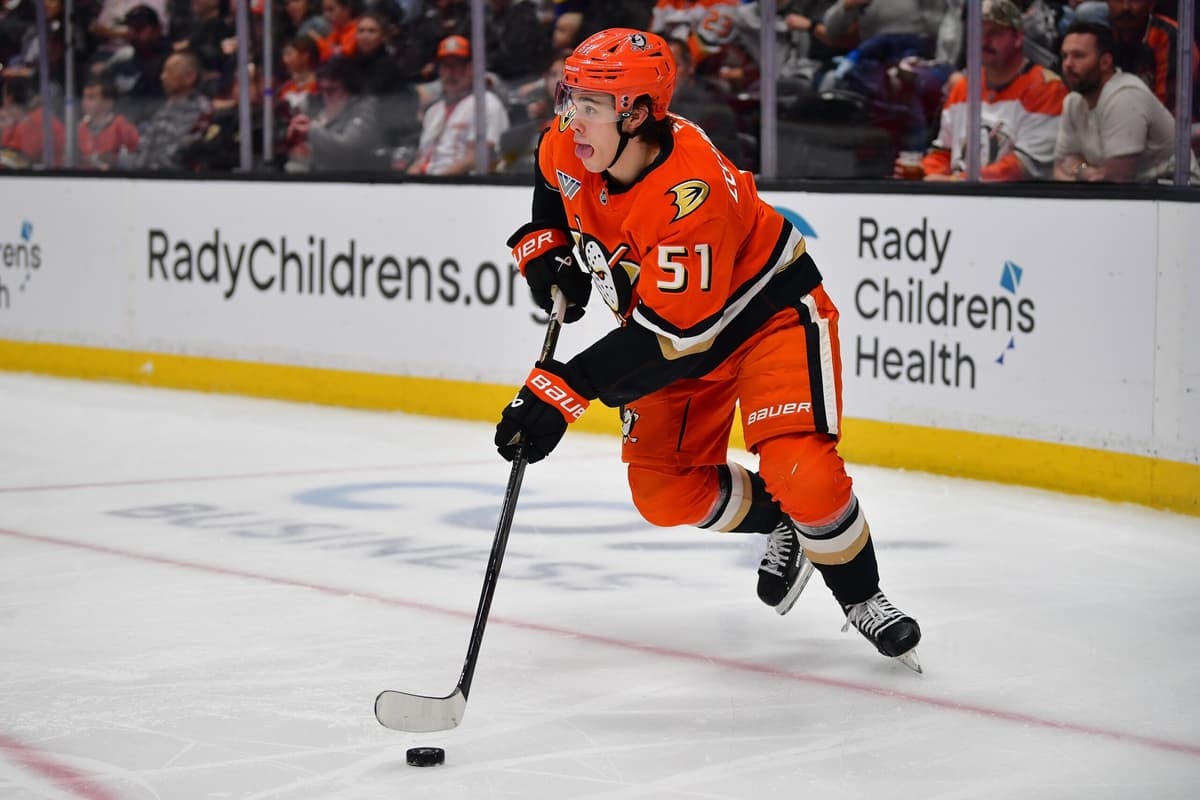
Buffalo's front office announced Friday that it has acquired defenseman Olen Zellweger from Anaheim in exchange for forward Anton Wahlberg and the 45th overall pick in Saturday's draft. The move represents an aggressive early statement from general manager Jarmo Kekalainen, who has spent the offseason reshaping a roster that finished last season outside the playoff frame. Zellweger, 22, is a restricted free agent who logged 22 points across 76 games with the Ducks in 2025-26—a pace that extrapolates to roughly 19 points over 82 games, placing him in the middle tier of NHL defensemen by offensive output.
The acquisition signals that Kekalainen views Zellweger's trajectory as steeper than the 22-point baseline suggests. Anaheim was willing to move him, but Buffalo's willingness to spend a second-round selection and a young forward in year two of a cost-controlled deal indicates internal conviction about his ceiling. Wahlberg, 20 and a restricted free agent himself, has shown marginal production in limited opportunity—the Sabres are betting that the depth improvement at a premium position outweighs the developmental upside they're surrendering on the forward line.
For prop construction, the key variable is Zellweger's on-ice environment in Buffalo versus Anaheim. The Ducks finished 2025-26 near the bottom of the league in pace-adjusted shot generation, which naturally suppresses a defenseman's chance to accumulate assists and shots on goal. Buffalo's rebuild is still in its infancy, but the team's commitment to acquiring mid-tier talent like Zellweger suggests they're moving away from bottoming-out asset management. That shift will likely result in more structured offensive sequences, more power-play exposure for Zellweger, and a higher ceiling on his assist rate than what Anaheim's environment could support.
Zellweger's restricted free agent status means contract talks are imminent. The 22-point baseline over 76 games will anchor the conversation, but if Kekalainen's internal projection is that a change of team unlocks 28-32 points in an improved system, the RFA negotiation could settle at a contract that reflects that upside rather than the 2025-26 actuals. For bettors, this creates a timing puzzle: early-season props on Zellweger's assist or shot output should price in the Anaheim malaise, but by mid-season, if Buffalo's offensive system does generate more shooting volume around him, those markets will reprice upward. The Sabres' trade cost suggests they believe the adjustment is real and durable, not a seasonal fluke.