Montreal's Defensive Suffocation Exposes Carolina's Playoff Vulnerability
By Erik Schwartz ·
A six-goal beatdown in Game 1 of the Eastern Conference finals reveals a structural mismatch: the Hurricanes' possession dominance collapses when Montreal forces them to execute in tight spaces.
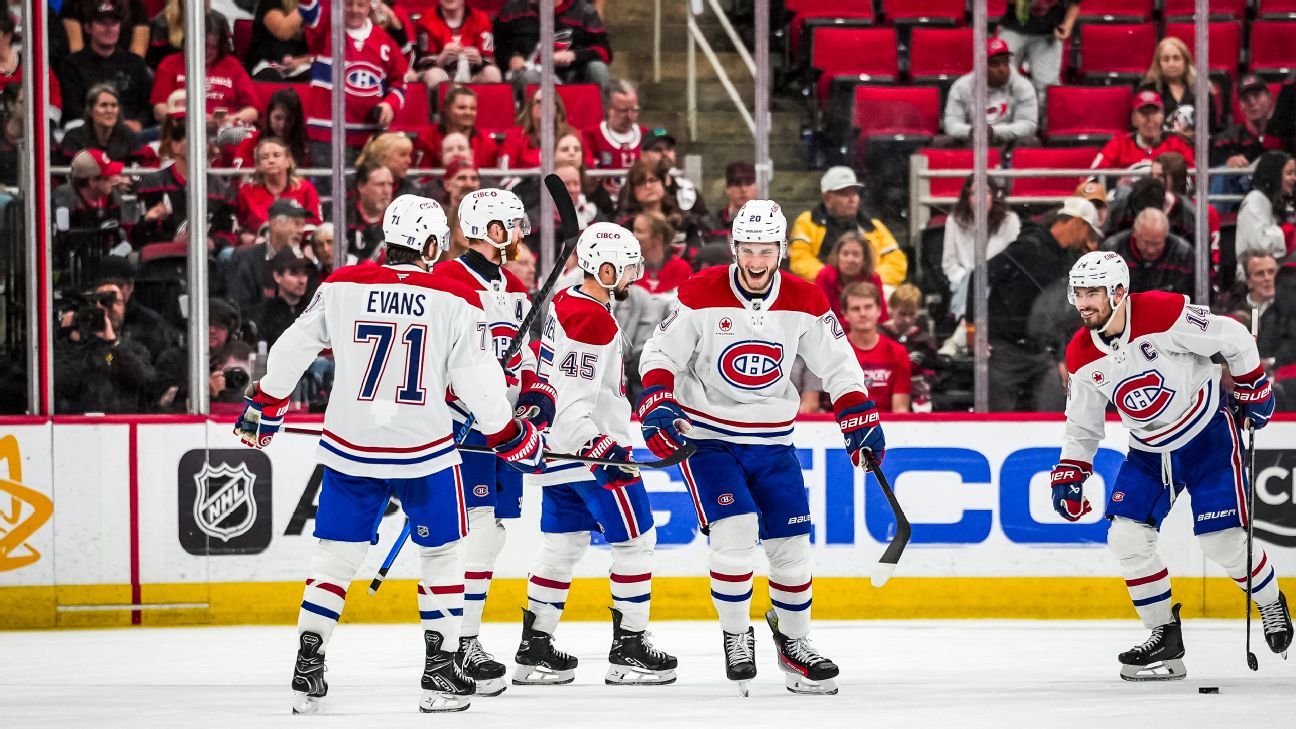
Montreal dismantled Carolina 6-2 in Game 1 of the Eastern Conference finals Thursday, a margin that understates the tactical gap. The Canadiens scored four goals in the opening frame—a pace that obliterated what Carolina had surrendered across two playoff sweeps. But the real story isn't Montreal's offensive heat; it's how the Hurricanes' defensive structure fractured under pressure, and what that tells us about the series and individual prop exposure going forward.
Carolina arrived at this series having allowed just five goals in a first-round sweep of Ottawa and five more against Philadelphia in the second round. That efficiency vanished entirely. The Hurricanes controlled possession (61.9% shot-share at 5-on-5), yet Montreal's goaltender Jakub Dobes made 25 saves while absorbing 30 blocked shots—a staggering volume that flipped possession into a liability. When a team with Carolina's pedigree loses the efficiency battle while dominating puck touches, it points to a specific problem: they're forcing passes into congested areas rather than creating clean looks. Montreal's defense—anchored by Kaiden Guhle's ice-reading and neutral-zone positioning—collapsed the Hurricanes' spacing and made them pay for every mistake.
Frederik Andersen started for Carolina but surrendered four in the first period and was pulled. That decision shapes Game 2 calculus considerably. Andersen's season numbers suggest he's more than capable at the position; the issue isn't his talent, it's that Montreal's system attacked the perimeter and created second-chance chaos. When a goaltender gets shelled in the first period of a playoff series, the narrative around save percentage and goals-against instantly becomes noise. The Hurricanes' D-corps needs to tighten gaps and reduce tip-ins; Andersen's Game 2 line will be priced reflecting Thursday's damage, not underlying talent.
For prop bettors, this game redistributes risk across the series. Montreal's efficiency—four goals on clean possession exits in the first fifteen minutes—is unsustainable, but the Hurricanes' inability to execute in compressed ice isn't. If you faded Montreal team totals before Game 1 based on Carolina's postseason discipline, Game 2 requires a full recalibration. Carolina's goaltending props (Andersen saves, goals-against) will open inflated due to recency, but the real edge lies in Hurricanes skater props: expect Carolina to receive fewer high-danger chances in Game 2 if they continue cycling in the perimeter without converting. The structural problem isn't scoring volume—it's creation quality under duress.
Montreal's possession deficit entering this series (45.6% shot-share, lowest of the Final Four) now reads differently. It wasn't a weakness; it was evidence of a team built to thrive on counterattack and defensive positioning. Game 1 confirmed the blueprint works against Carolina's particular offensive approach. Expect tighter games ahead, lower totals, and goalie lines that overcorrect before settling into the true series risk profile.