Spence's 61% xGF Anchors Ottawa's Blue Line: Senators Lock in Defensive Cornerstone at $5M AAV
By Erik Schwartz ·
Jordan Spence's elite underlying metrics justify a four-year extension as the Senators rebuild around analytics-validated depth.
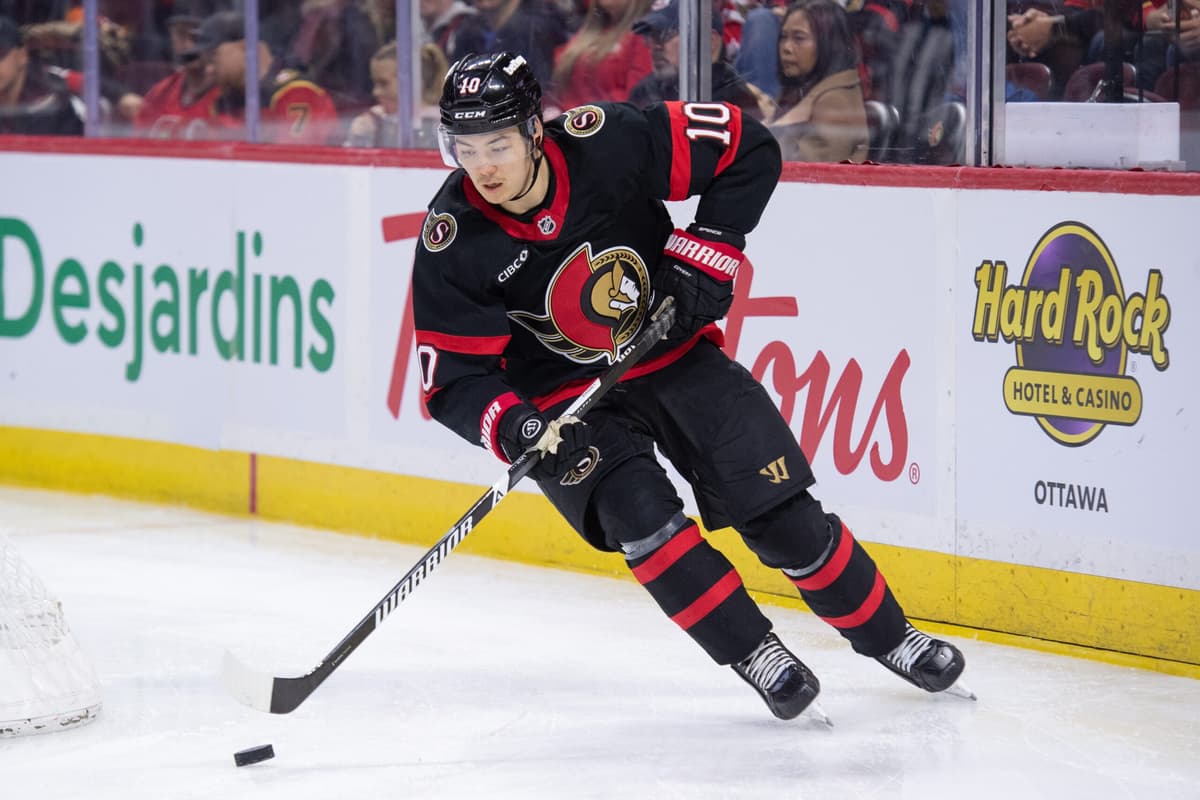
The Ottawa Senators locked in defenseman Jordan Spence to a four-year extension carrying a $5 million cap hit on Friday, a move that signals confidence in the 25-year-old's analytical profile despite organizational upheaval around him. Spence completed his first season in Ottawa—his debut year after a trade from Los Angeles last summer—with 31 points in 73 games, a plus-15 rating, and 18:44 of average ice time. Those counting stats alone would justify a mid-tier contract for a depth defenseman. The deeper signal is the underlying data.
Spence controlled a remarkable 61.76 percent of expected goals at 5-on-5 with him on the ice. That figure—well above the 50th percentile for NHL defensemen seeing meaningful minutes—reveals a player whose defensive positioning and gap control are suppressing high-danger chances against. For context, defensemen posting 60%+ xGF over a full season across meaningful deployment represent the league's structural anchors on the blue line. Spence achieved that as a 24-year-old in his first stint with a new organization, skating heavier minutes than he did in Los Angeles and still improving his analytics.
The extension arrives amid significant roster churn in Ottawa. GM Steve Staios traded captain Brady Tkachuk to Florida without roster return, then pivoted to acquire winger William Eklund from San Jose using the No. 9 pick. Those moves signal a rebuild that will test Spence's stability on the backend. But from a betting lens, his xGF profile matters more than team direction. The Senators' defense-driven structure—which will likely emphasize shot suppression and low-event hockey as younger players mature—is built for players who win possession battles. Spence's 61.76 xGF rate survived a 73-game sample and heavy usage. That durability suggests his underlying value is not a single-season blip.
For live prop markets, Spence's extension locks him into a role where shots on goal against will remain a critical edge for modeling opponent totals. Teams facing Ottawa will face a defenseman commanding his ice time in a top-four deployment; his xGF footprint means fewer high-quality shots should reach the crease. When the Senators play as a road team later this season, Spence's presence is a structural drag on opponent shot volume. In-season, his minutes and matchups will influence total unders; his contract security makes him a reliable defensive fixture for the entire four-year term. The extension also removes any trade-deadline uncertainty that could have disrupted his playing time—a clean signal for consistency-based prop construction moving forward.