MacFarland's Nashville Audition Signals Deeper Front-Office Upheaval Than Trotz Exit
By Erik Schwartz ·
Colorado's GM has permission to explore a president-level role in Nashville, marking the Predators' bid to overhaul their entire hockey operations structure after consecutive playoff collapses.
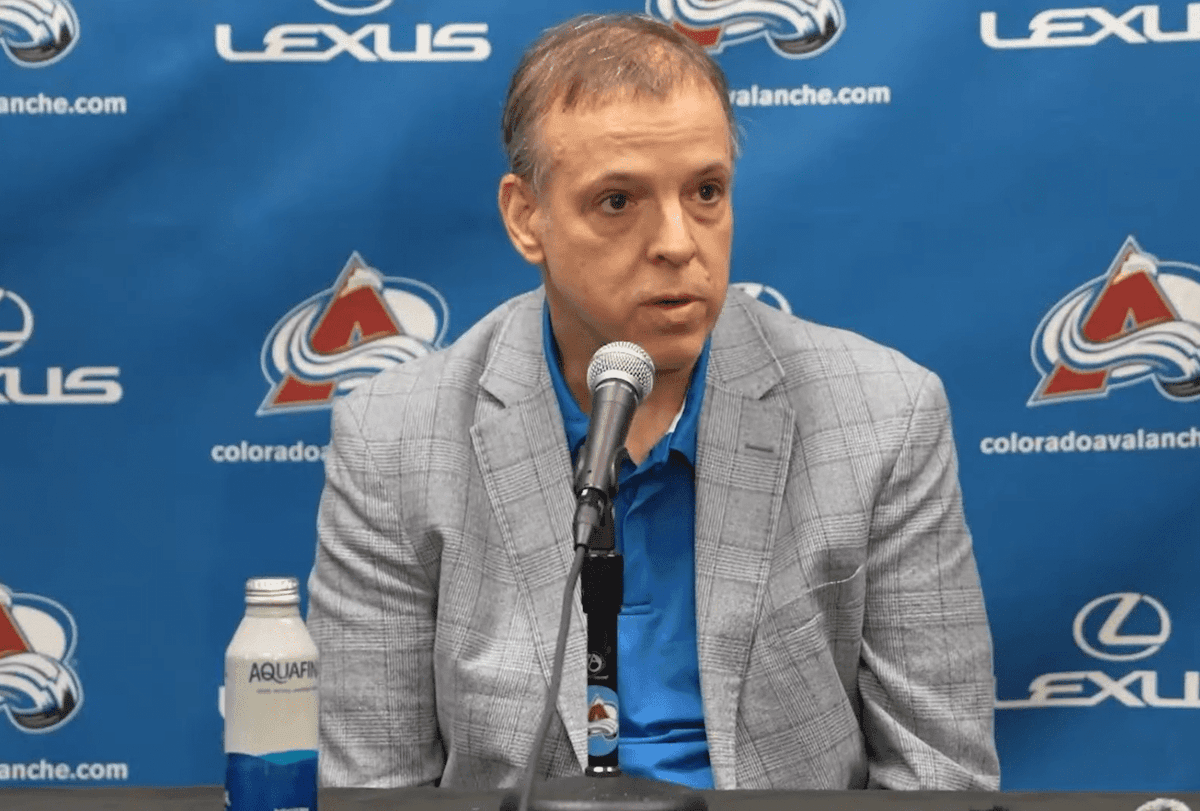
The Colorado Avalanche have granted Chris MacFarland permission to discuss a position with the Nashville Predators, per Sportsnet's Elliotte Friedman. The scope of the conversation points beyond a standard GM replacement: Nashville is hunting for a front-office executive, likely at the president or senior vice-president level, suggesting the franchise views its problems as systemic rather than roster-specific. MacFarland's willingness to engage—he was promoted to the Avalanche GM role in July 2022—signals that a meaningful elevation, not a lateral shuffle, is on the table.
MacFarland inherited a Stanley Cup-winning roster and sustained elite performance through aggressive roster surgery. His January 2025 trade of Mikko Rantanen to Carolina for Martin Necas and Jack Drury was the kind of swing-for-the-fences move that defines a GM willing to reshape a roster mid-stride. He followed it by acquiring Brock Nelson at the deadline and locking both Necas and Nelson to long-term extensions. The result: Colorado finished the regular season 55-16-11, tops in the NHL, then swept Los Angeles and Minnesota before collapsing entirely against Vegas in the Western Conference Final. That sweep—despite possessing the league's best regular-season record—is the kind of failure that sticks with ownership and often triggers front-office reckoning.
Nashville's desperation is obvious. Barry Trotz stepped away from the GM role in January after two consecutive misses: a 38-34-10 finish that narrowly missed the playoffs in 2025-26, followed by a 30-44-8 disaster in 2024-25 despite aggressive free-agency additions (Stamkos, Skjei, Marchessault). The franchise is 0-for-2 on high-profile veteran acquisitions, which suggests that the problem isn't money but organizational coherence. Bringing in MacFarland—or someone of his pedigree—at a president-of-hockey-operations level amounts to an admission that the Predators need cultural realignment, not just a new GM.
For bettors, this matters because front-office instability—particularly when it extends beyond the GM desk into the C-suite—often precedes roster fragmentation and inconsistent performance. If MacFarland takes the Nashville job, it signals the Predators are 6-12 months away from a meaningful player purge or restructuring. Incumbent contracts (Stamkos, Skjei, Marchessault) will be on the table for trade discussions. That kind of organizational reset typically produces season-long volatility: teams with new leadership structures tend to underperform their talent level early while integration settles. A betting angle here is to fade Nashville team totals for the first half of the 2026-27 season if MacFarland arrives—the Predators' win total is set before the front office is fully operational, and the market hasn't yet priced in the disruption cost of a president-level leadership change mid-arc.
The Avalanche's own betting exposure is narrower but real. Losing a GM who orchestrated a 55-win regular season to a divisional rival creates organizational noise. Colorado's odds to return to the Finals may compress slightly as market participants price in the distraction of replacing MacFarland's successor—that's not a massive edge, but it's worth monitoring early-window movement on Colorado's playoff odds over the next 48 hours. The team's talent is intact, but the hand that built this roster is leaving.