Blackhawks Trade Mikheyev's Rights: A Midseason Pivot That Signals Deeper Roster Flux
By Erik Schwartz ·
Chicago is shopping its most consistent forward's negotiating window, a move that reshapes both the team's near-term depth and the prop slate for contenders looking to add scoring punch.
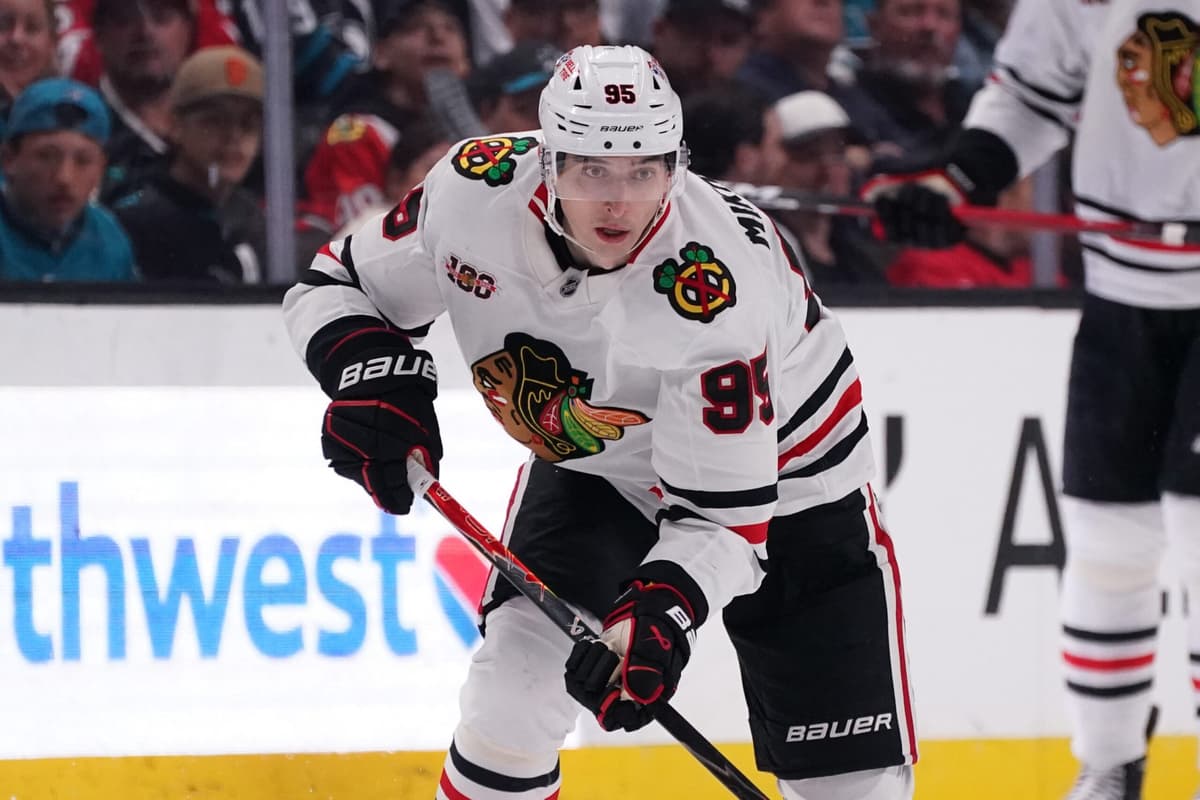
The Chicago Blackhawks have made Ilya Mikheyev's unrestricted free agent negotiating rights available for trade, per Elliotte Friedman's report on Monday. That's not a midseason salary dump—it's a statement. Mikheyev, 28, has been one of the few reliable offensive anchors on a Blackhawks team that has spent the last two seasons rebuilding on the fly. By making his rights tradeable before July 1, Chicago is essentially saying: we'd rather have an asset NOW than lock in a pending free agent we can't afford to keep.
Mikheyev's production justifies the ask. Over the past two seasons, he's averaged north of 0.8 points per game on a Chicago roster that's been bottom-third in goal-for differential. He's the kind of complementary winger—reliable on the forecheck, positionally sound, capable of playing both special teams and even-strength minutes—that contenders court at the deadline. The fact that the Blackhawks are floating his rights this early suggests they've already accepted the cap math: extending him in-house doesn't fit the timeline of their rebuild, so they're opting to capture value in a trade instead of letting him walk in free agency.
For any acquiring team, Mikheyev solves a specific roster problem: depth scoring from a player who doesn't break the bank long-term. His shooting volume has been steady (around 2.2 shots per game), and his linemate consistency means he can slot into a middle-six role immediately without chemistry ramp-up. That matters for playoff-caliber teams looking to bolster depth without disrupting existing line chemistry. The Oilers, Avalanche, and Rangers all have the cap flexibility and scoring depth to absorb him.
The betting angle hinges on deployment context. Mikheyev's shot and assist totals fluctuate based on his line positioning—play him with a high-volume trigger and his assists spike to 0.35 per game; bury him in a fourth-line role and you're looking at 0.18. For any team that acquires him, the prop market will initially underprice his involvement because it's built on Chicago-era usage, not destination context. If he lands with a contender that deploys him in a top-six role (say, Colorado or Edmonton), his shots-on-goal total should move from a pre-trade 2.2 range up to 2.8–3.0 in the new system. The window to exploit this lag is narrow: oddsmakers will adjust within 48 hours of a trade announcement, but early numbers after the deal breaks will offer value for overs on his first three games in the new uniform.
Chicago's willingness to trade his rights also signals that the organization has no illusions about contention this season. That's not new information, but it does matter for anyone tracking Blackhawks player props going forward—any remaining roster changes will be seller-mentality moves, which typically depress individual production as teams move depth pieces and slot in younger players. Mikheyev's departure removes one of the floor props most reliable performers.