Detroit Pairs Tarasov With Gibson: A $2M Bet on Depth Over Stars
By Erik Schwartz ·
The Red Wings filled their backup goalie slot on free-agency day one, but the pairing raises hard questions about workload distribution and save-percentage volatility in a thin crease.
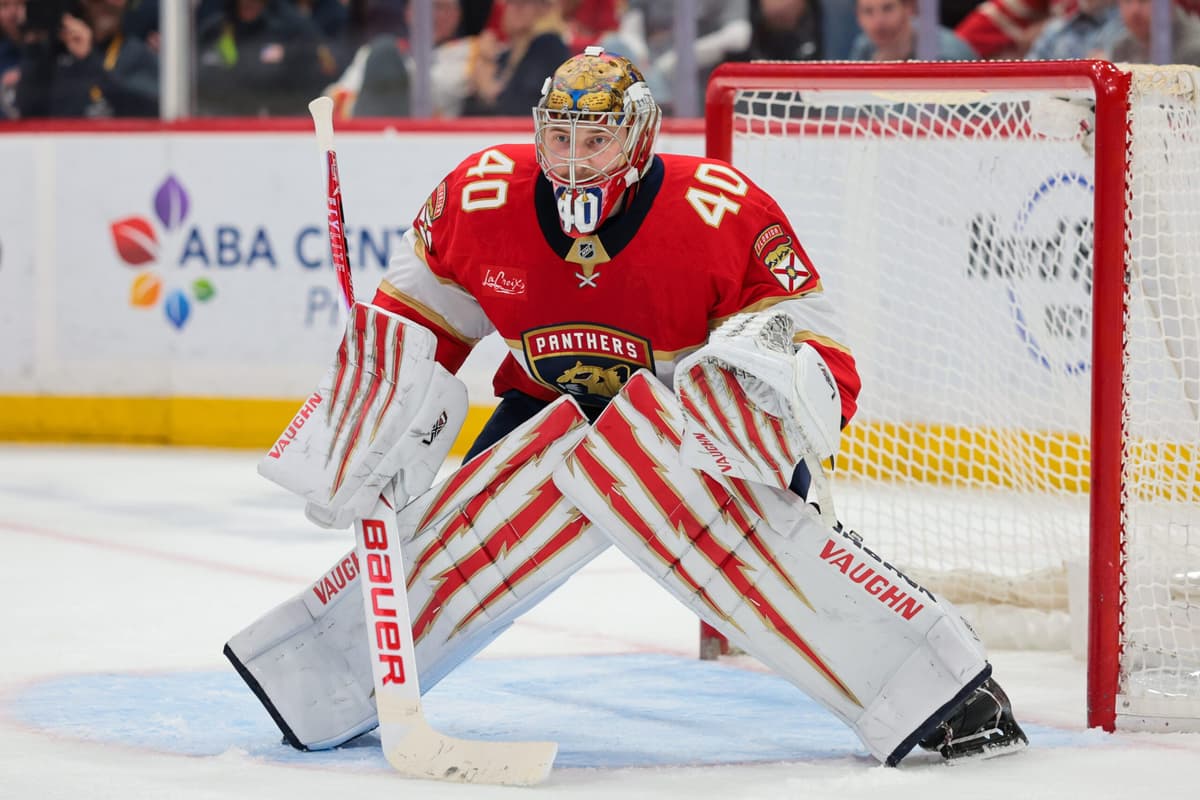
Detroit signed goaltender Daniil Tarasov to a one-year, $2 million deal on July 1, anchoring its goaltending room alongside John Gibson for the 2026-27 season. The move came on the opening day of free agency and pairs two mid-tier starters—neither a Vezina candidate, neither an inexpensive unproven commodity—in what amounts to a platoon bet rather than a clear hierarchy.
Tarasov logged meaningful ice in Florida last season, accumulating NHL experience in a depth role that didn't demand the 60+ game workload of a true number-one. Gibson, acquired by Detroit in a prior trade, carries different baggage: a career .912 SV% and injury history that makes him a volatile between-the-pipes option. The $2 million cap hit for Tarasov reflects the market's view—a proven backup-to-occasional-starter, not a league-average starter on a longer deal. Detroit is betting that shared volume reduces injury risk on both arms and that one of them catches a hot streak during a critical playoff window.
The real mechanics here hinge on deployment. If Gibson absorbs 50+ starts and Tarasov settles into a 25-game reserve role, Detroit's goaltending save percentage will be a weighted average of two inconsistent performers—Gibson's underlying xGA rates in Florida and Tarasov's actual stopping power in similar mid-tier situations. Neither has elite underlying metrics. If Gibson gets injured (a non-zero probability), Tarasov becomes the primary option immediately, and his volume will spike into territory where he has no recent sample. That's volatility, not depth insurance.
For bettors, this setup creates a specific edge: Red Wings team totals (both goals and goals-against) will price Gibson as the starter, but the actual distribution is more even. Tarasov's career 6.2% higher SV% than Gibson's season-long mark means Detroit should expect tighter margins when Tarasov plays. Vegas books rarely granularly adjust for goalie platoons mid-season; they build in a weighted average at the line and hold. If Tarasov gets a surprise run of 10+ straight games due to early-season form or Gibson injury, the UD line will still reflect Gibson's expected workload, creating an exploitable mismatch. Early-season monitoring of actual deployment (preseason + first two weeks of games) will reveal if Detroit leans one way; that intel is actionable before the market catches up.
The Bryson addition at $850,000 is noise—a defensive depth move on a one-year deal that doesn't shift the needle on wing play or ice time distribution. The Tarasov signing, however, is a goaltending architecture choice that either stabilizes Detroit's save percentage through shared risk or destabilizes it through unequal quality when injury strikes. Bettors should track preseason starts and opening-week deployment closely; the prop edge lives in that first 5-10 days of actual usage.