Yzerman Leaves Larkin's Future Open; Detroit's Lineup Stability Remains Uncertain Heading Into 2026-27
By Ty Whitney ·
With no timeline on a Larkin trade and a limited list of acceptable destinations, the Red Wings captain's status as a fixture in Detroit enters a critical holding pattern that could reshape the team's offensive identity.
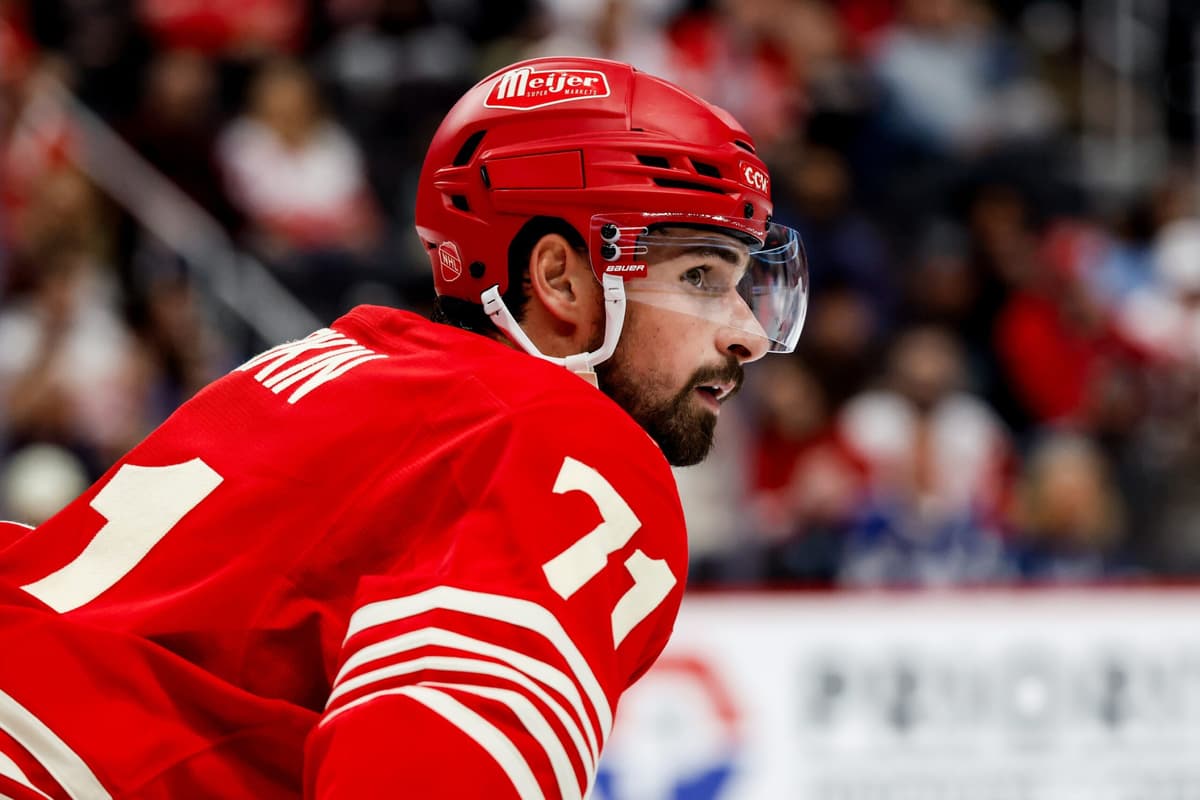
Steve Yzerman confirmed on Saturday that Dylan Larkin has formally requested a trade, but offered no assurance that a deal will materialize before training camp. Speaking to media after the 2026 NHL Draft, the Red Wings GM acknowledged the trade request while keeping all options on the table—including the possibility that Larkin remains in Detroit for the 2026-27 season. Larkin's request reportedly comes with a narrow list of preferred destinations, a constraint that immediately limits Yzerman's negotiating leverage and the pool of potential landing spots.
The timing matters. Larkin, signed through 2030, has been Detroit's primary offensive hub for years. His assist totals and shot volume form the backbone of any Red Wings game plan. A mid-summer trade request—one that surfaces just days after the draft—suggests internal frustration, but Yzerman's measured response ("no guarantees") signals that Detroit is in no rush to accommodate a departure on unfavorable terms. If the Red Wings can't find a trade partner offering sufficient return, or if none of Larkin's preferred teams step forward with compelling assets, the captain could remain a reluctant fixture, a potential chemistry hazard in a locker room already searching for direction.
The roster construction implications ripple immediately through prop markets. If Larkin stays, his touches and ice time remain predictable—he'll still draw primary matchups and log heavy offensive minutes. His assist rate and points-per-game floor hold firm. But the psychological layer introduces volatility: a player who wanted out, denied that exit, may see reduced creativity or motivation in high-leverage situations. Goal-scorer confidence erodes differently than assist production, but both are at play. Conversely, if a trade does happen, Detroit's offensive identity fractures. The team would lose its most consistent playmaker mid-offseason, forcing adjustments to power play construction, secondary-line distribution, and forward-line chemistry that won't stabilize until October.
For prop bettors, the current limbo creates an information edge that evaporates once clarity arrives. Larkin's 2026-27 season totals (goals, assists, points) have likely been priced assuming he plays for Detroit under normal circumstances. A trade to a lower-seeding team (consistent with his likely trade-market positioning) would likely reduce his ice time and offensive role, depressing his totals. Conversely, if he stays and the organization treats him as a lame-duck captain, his value may tick downward from historical precedent. The earliest odds on his season-long props will likely reflect the Friday-morning consensus (Larkin in red, business as usual). The edge materializes if a trade is announced before sportsbooks recalibrate—a window measured in hours, not days. Once the market knows Larkin's destination, those props will reprrice instantly. Bettors should monitor the official announcement and adjust preemptively; any season-long Larkin over bet placed before certainty is resolved carries additional volatility tax.
Yzerman's non-committal stance also suggests the Red Wings aren't panicking. That measured tone signals confidence in their internal alternatives or a belief that keeping Larkin, friction and all, remains preferable to a discount sale. Neither scenario helps prop bettors looking for a durable edge. The real action plays out in the next 48-72 hours, when either a trade agreement surfaces or Larkin begins his final training camp in Detroit.