Detroit Red Wings' Organizational Reckoning: What the 2025-26 Collapse Means for 2026-27 Betting Markets
By PropBetEdge Editorial Team ·
When a GM publicly calls for a full organizational audit, the betting market should be paying attention — roster upheaval and identity crises don't resolve overnight.
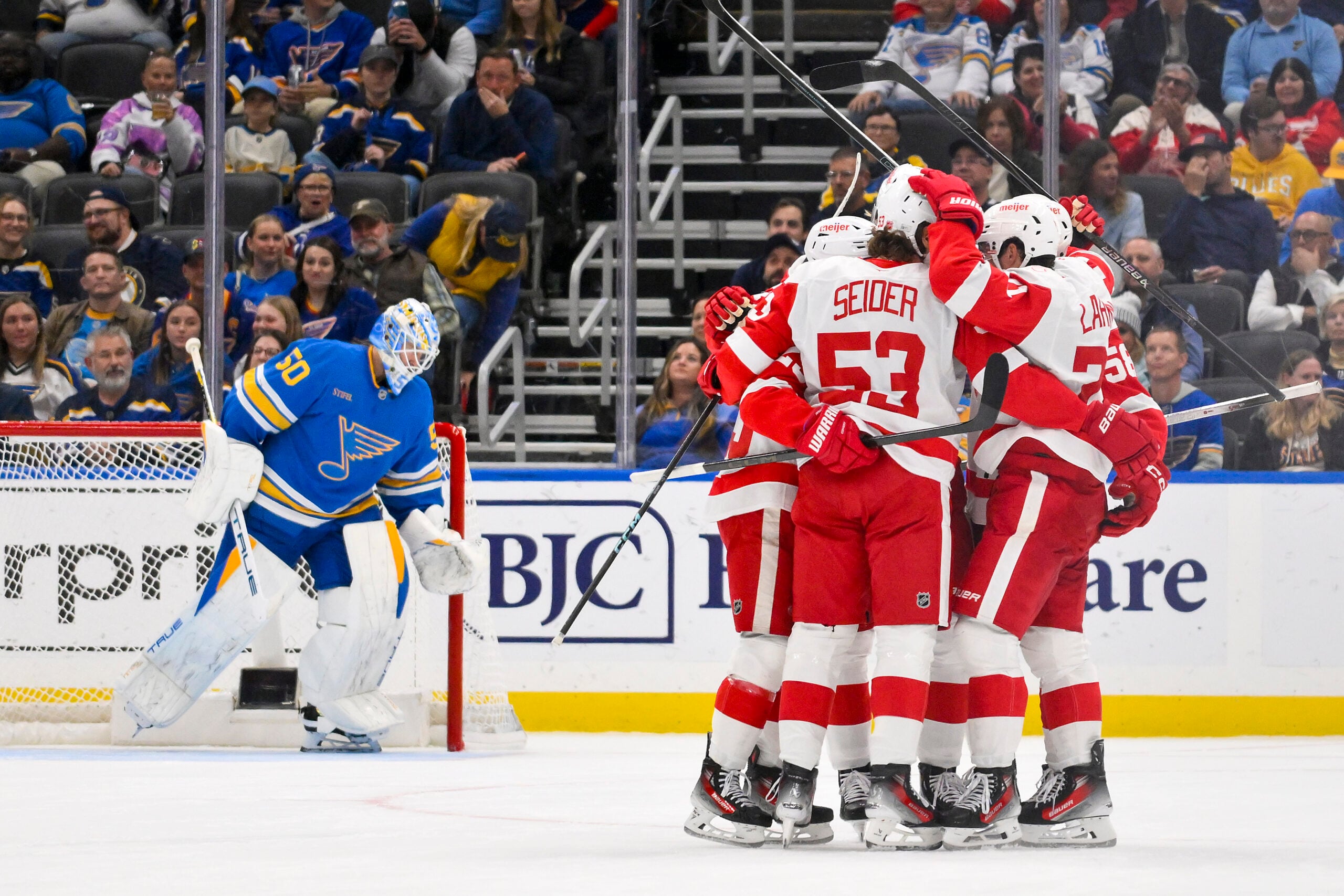
Steve Yzerman stood at the podium following Detroit's 2025-26 season and said the quiet part loud: everything about the Red Wings organization needs to be reassessed. 'It would be ignorant to not have an in-depth look at our team and our organization,' he said. That's not standard postgame damage control — that's a GM signaling structural change, and it has direct implications for how the Red Wings line up, how they score, and how opponents attack them next fall.
The core problem Yzerman is wrestling with isn't talent — it's identity. Detroit played without a coherent system in 2025-26, leaving forwards in undefined roles and defensemen without clear deployment logic. Head coach Todd McLellan needs to answer a fundamental question before training camp opens: what does a 'hard to play against' Red Wings team actually look like? Until that answer crystallizes, the on-ice product remains volatile. A team without identity tends to be inconsistent in shot generation, defensive structure, and goalie workload — all variables that matter enormously when you're pricing player props and game totals.
On the roster side, Detroit enters the offseason with roughly $15 million in cap flexibility after accounting for likely re-signings — most notably Patrick Kane on the UFA market and Simon Edvinsson as the key RFA. The RFA group including Sebastian Cossa, Amadeus Lombardi, Carter Mazur, and William Wallinder carries minimal leverage, which means Detroit can realistically allocate that cap space toward a significant trade acquisition. The offseason trade pool is unusually rich: Toronto, Vancouver, New Jersey, Nashville, and St. Louis all have new general managers, and Calgary, Los Angeles, Edmonton, and Winnipeg are expected to move pieces. That's the kind of environment where Detroit can swing for a top-six forward or a shutdown defenseman who fundamentally reshapes the lineup.
For bettors, the uncertainty here is the signal. A Red Wings team in identity transition — new system, potentially new linemates across the top six, and a goaltending picture that hinges on Cossa's development — is one you fade on team totals and individual production props until the picture clarifies in October. Lucas Raymond and Moritz Seider are locked-in usage anchors, but any newly acquired forward scrambles the points-per-game baselines for everyone around them. If Detroit lands a legitimate scoring center or a physical power-forward presence in a trade, it redistributes ice time and changes the power-play deployment that drives the highest-value prop categories.
Goalie props deserve particular scrutiny. Cossa's workload and save percentage are direct functions of the defensive structure McLellan installs — a team without identity leaks shot quality, and a young goalie absorbing 30-plus shots against Atlantic Division power plays is a different proposition than one protected by a structured defensive system. Watch how Detroit constructs its blue line depth this summer. If Edvinsson gets a significant role and a defensive acquisition follows, Cossa's saves props and goals-against lines become interesting again. Right now, they're too noisy to touch with confidence.