Rangers Lock in Garand With Two-Year Deal; Backup Competition Shifts for 2026-27
By Erik Schwartz ·
Dylan Garand's extension signals New York is confident enough in the 24-year-old to phase out the uncertainty at backup goaltender.
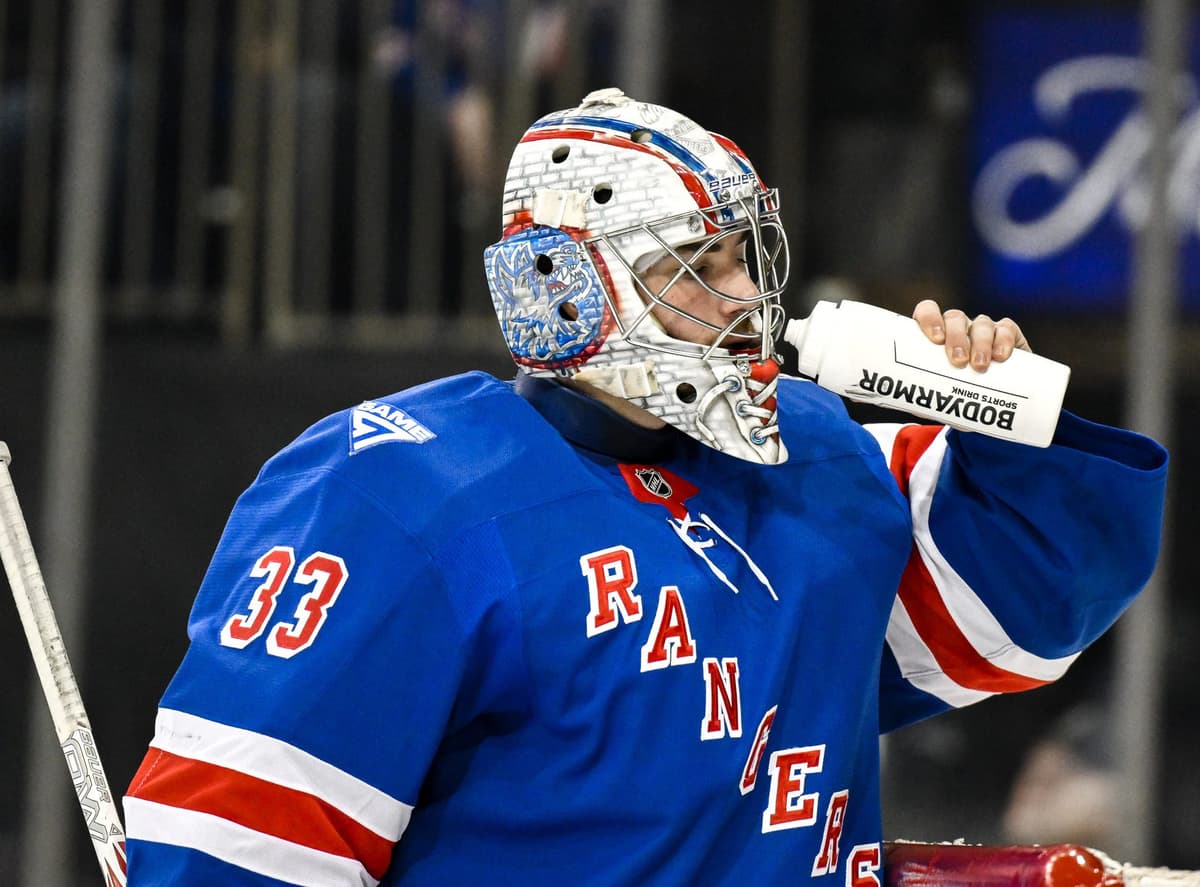
The New York Rangers have extended goaltender Dylan Garand to a two-year contract carrying an $875,000 cap hit, the club announced Sunday. Garand, 24, has appeared in just three NHL contests this season—posting a 2-0-1 record with a .948 save percentage—while splitting the bulk of his 2025-26 workload between the AHL and the league. The deal includes a two-way clause in year two, meaning Garand will earn the same salary whether playing in Hartford or New York after the 2026-27 campaign begins.
Garand's three-game cameo is the kind of limited sample that normally doesn't warrant a multi-year commitment at the NHL level. But the metrics he posted were sharp: in his debut against Winnipeg on March 22, he stopped 35 of 37 shots in an overtime loss; five days later, he allowed just one goal on 29 shots in a 6-1 win over Chicago. Over 36 AHL games with Hartford, he posted a 16-15-2 record with one shutout and an .896 save percentage—solid, if unspectacular, depth performance. The Rangers' willingness to lock in a $400,000 AHL salary in year one speaks to organizational confidence that Garand will remain a viable depth option and potential future starter if injuries strike.
From a roster construction angle, the extension amounts to an internal franchise bet against spending on the goaltending market. By committing to Garand at sub-$900K cap, the Rangers avoid a more expensive veteran backup search and signal that their long-term blueprint includes the 6'1" goaltender as a safety valve behind their starter. Whether he earns primary reps or stays a spot-start option will depend entirely on how the team views its top-of-depth-chart situation heading into 2026-27.
For bettors, Garand's contract extension carries modest implications for workload-dependent props. The deal doesn't guarantee he'll see significant ice time; it simply removes speculation about his future with the organization. If Garand receives spot starts against weaker offensive teams—a likely scenario for a depth goaltender—his save percentage props (.900+ range) could offer value if the Rangers deploy him in favorable matchups. Conversely, any games in which he plays will carry elevated variance because his three-game sample is too small to calibrate expectations. Watch for line placement in schedule releases; spot starts against sub-.50 xG/60 offenses (rebuilding teams, defensive systems) will be the time to lean on Garand saves props, while avoiding him in back-to-backs or high-volume shot scenarios. The extension itself doesn't change his role materially—it simply confirms he'll remain on the organization's radar, reducing the risk that he's traded or waived during the offseason.