Schneider's $5.5M Deal Signals Rangers' Defenseman Investment Stabilizes Lineup Composition
By PropBetEdge Editorial Team ·
New York settles Braden Schneider at $5.5 million for 2026-27, avoiding arbitration and locking in a 23-year-old blue-liner entering his prime defensive window.
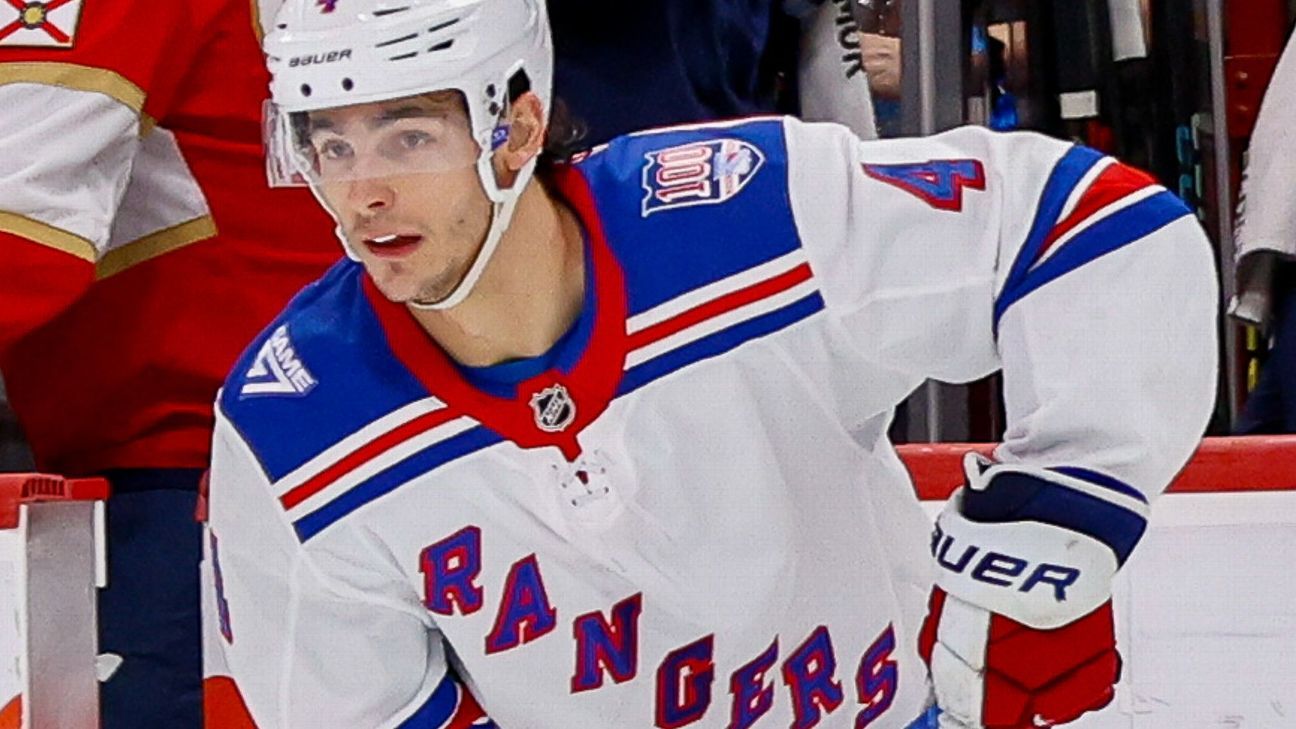
The New York Rangers and defenseman Braden Schneider agreed Monday to a one-year, $5.5 million contract, circumventing salary arbitration and settling the restricted free agent's compensation before a hearing scheduled for later this month. Schneider, 24, will earn $3.3 million more annually than his previous $2.2 million cap hit—a sharp 150% raise that reflects both his production trajectory and the Rangers' internal valuation of his defensive anchor role.
The financial jump tells a clear story: Schneider has become a roster pillar. He played 20:27 per game last season, a career high, and logged all 82 games while posting 2 goals and 16 assists from the back end. Over 368 career games, he's accumulated 87 points—modest offensive volume, but that's not why the Rangers are paying him. Schneider was drafted 19th overall in 2020 and is now in his sixth NHL season, the window where defensive prospects either solidify as core anchors or regress into role-player territory. The Rangers are betting on the former.
Arbitration avoidance carries organizational weight beyond salary smoothing. By settling pre-hearing, the Rangers prevent a public valuation fight that could either undersell Schneider's market rate (emboldening other RFAs to push harder) or overshoot and anchor future comp disputes. The one-year term also keeps New York flexible: Schneider will return to arbitration eligibility after 2026-27, meaning the Rangers retain negotiating leverage if his ice time shrinks or if the market for defensemen softens.
From a roster-construction angle, the $5.5 million commitment matters because it locks in a known cost for a 20-plus-minute defenseman heading into training camp. Rangers fans tracking lineup stability will note that Schneider's elevated ice time—up from prior seasons—signals head coach confidence in his match-up flexibility. That defensive responsibility will translate to elevated shot-suppression metrics: players who log 20+ minutes per night against top offensive threats consistently post higher save rates and lower expected goals against for their goaltenders. If Schneider continues to see that volume against league-leading shot generators, backup and starter save percentages should reflect the team's improved defensive organization.
The arbitration dodge also preserves salary cap runway for New York to address other offseason needs without the risk of an arbitrator imposing a ceiling-breaking award. For prop bettors monitoring Rangers team totals or goalie performance, Schneider's locked-in role at elevated minutes is a predictive anchor: teams with stable, high-volume defensemen posting strong plus-minus records tend to generate more consistent defensive metrics across their goalies' start sheets. Monitor whether Schneider's next contract cycle (post-2026-27) accelerates upward—if his ice time remains at or above 20:00, the market for similar defensemen will have shifted significantly.