Pettersson Trade Talk Heats Up, Sasson Cracks Team USA, and Öhgren's Quiet Rise: What It All Means for Vancouver's Roster Math
By Ty Whitney ·
The Canucks are asking uncomfortable organizational questions this offseason — and the answers will reshape every Vancouver prop line you see next October.
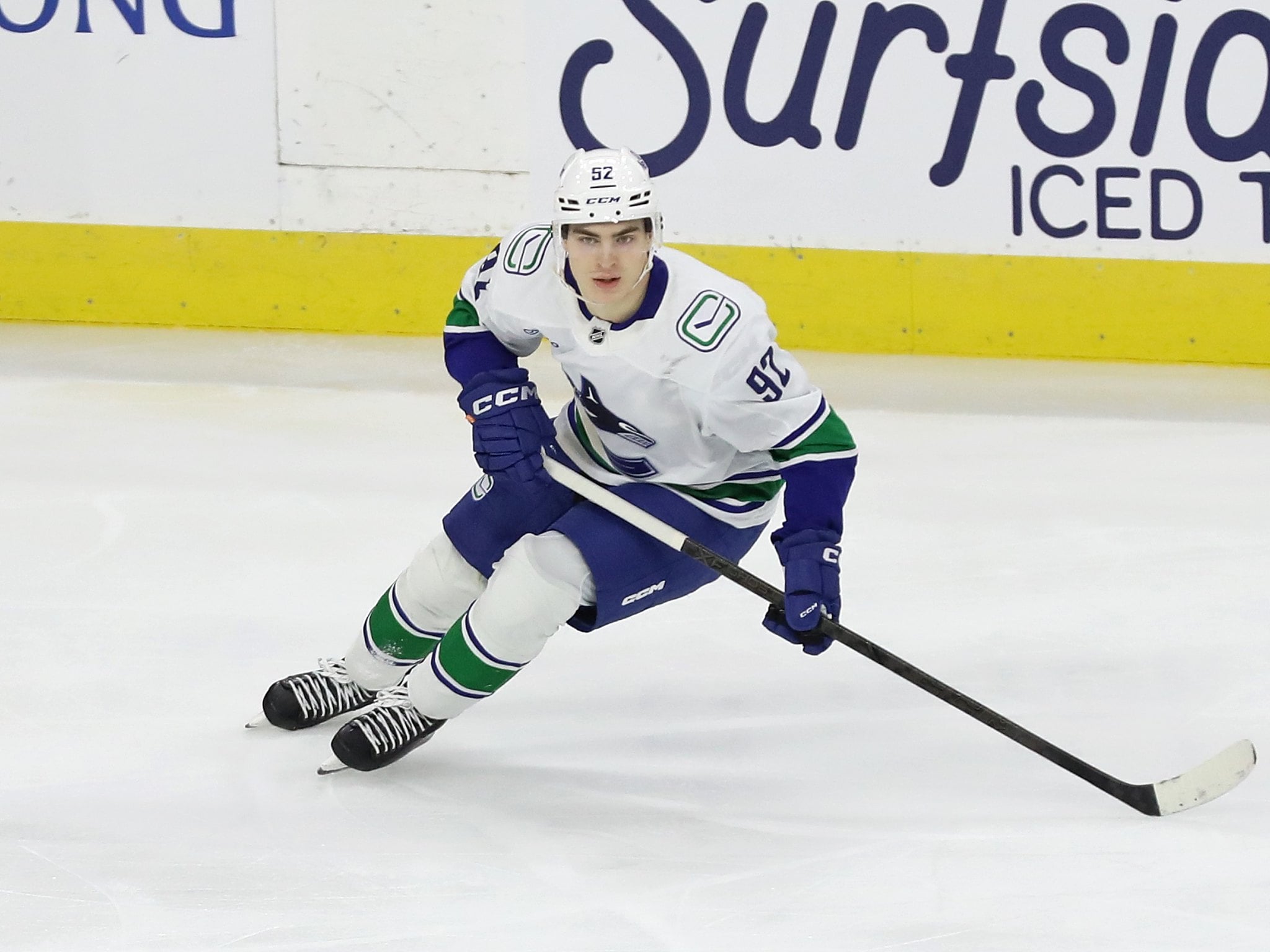
The Vancouver Canucks missed the playoffs and the noise hasn't died down — it's gotten louder. Per The Hockey Writers, radio chatter that started around Anaheim center Mason McTavish quickly snowballed into a genuine organizational reckoning: how much longer does the current identity around Elias Pettersson actually serve this franchise? That's not a small question. Pettersson carries an $11.6 million AAV through 2030, and when a team starts stress-testing hypothetical frameworks — even speculative ones like a McTavish-for-Pettersson swap — it signals that the front office conversation has moved past "tweak the edges" and into something more structurally uncomfortable.
The danger in that territory isn't the trade itself. It's the psychology behind it. Organizational impatience has a way of producing reactive moves that redistribute problems rather than solve them. McTavish is a legitimate top-six center with untapped upside in Anaheim's rebuild — acquiring him in a Pettersson deal would mean Vancouver absorbing significant cost and uncertainty while shedding the player still most capable of generating offense on its roster. Pettersson's 2024-25 season was uneven by his standards, but his shot volume, zone entry numbers, and playmaking infrastructure still grade above replacement at an elite level. Moving him doesn't fix the team; it resets the ledger and creates a new set of problems wearing different jerseys.
Where this gets genuinely interesting is in the supporting cast developing around whatever core Vancouver ultimately decides to keep. Max Sasson — undrafted out of Western Michigan, no hype, no draft capital attached — earned a spot on Team USA's IIHF World Championship roster after a methodical climb through the Abbotsford system. That's not noise. That's a depth center who can actually play, and in a league where fourth-line reliability directly affects puck possession and therefore shot generation, Sasson's emergence matters for roster construction. Meanwhile, Liam Öhgren has been quietly building momentum as a power-forward option on the left wing — the kind of player who generates traffic, creates net-front opportunities, and contributes to the physical shot-generation game that coaches actually want.
For betting purposes, the Pettersson uncertainty is the dominant variable heading into next season's player prop markets. If he's still in Vancouver when training camp opens, his points and assists lines will carry offseason noise discount — books will price in the drama and the uncertainty around his deployment and linemates, likely setting his points total conservatively. That's a potential value spot if Vancouver commits to him as the engine. Conversely, if he's dealt, whoever lands him — especially a contender with an established power play — will see an immediate bump in their team's shots-on-goal and power-play-points output. Sasson's World Championship run is worth tracking for AHL call-up props and depth-line assists projections; undrafted grinders who make Team USA rosters tend to stick.
The Öhgren angle is simpler and more actionable. A power forward developing net-front presence typically sees his hits and blocked-shots props priced as an afterthought early in the season. If he earns a regular role in Vancouver's top nine, those lines will be set low. Watch for his shots-on-goal prop at season open — forwards in that developmental arc who suddenly get consistent minutes almost always outpace the initial market expectations before books recalibrate.