Novak's Extension Tightens Pittsburgh's Center Depth—And Forces Lapierre Into Prove-It Mode
By Ty Whitney ·
The Penguins locked in Tommy Novak at $4.65M, signaling they've found their middle-six anchor—which means Hendrix Lapierre has no margin for error in camp.
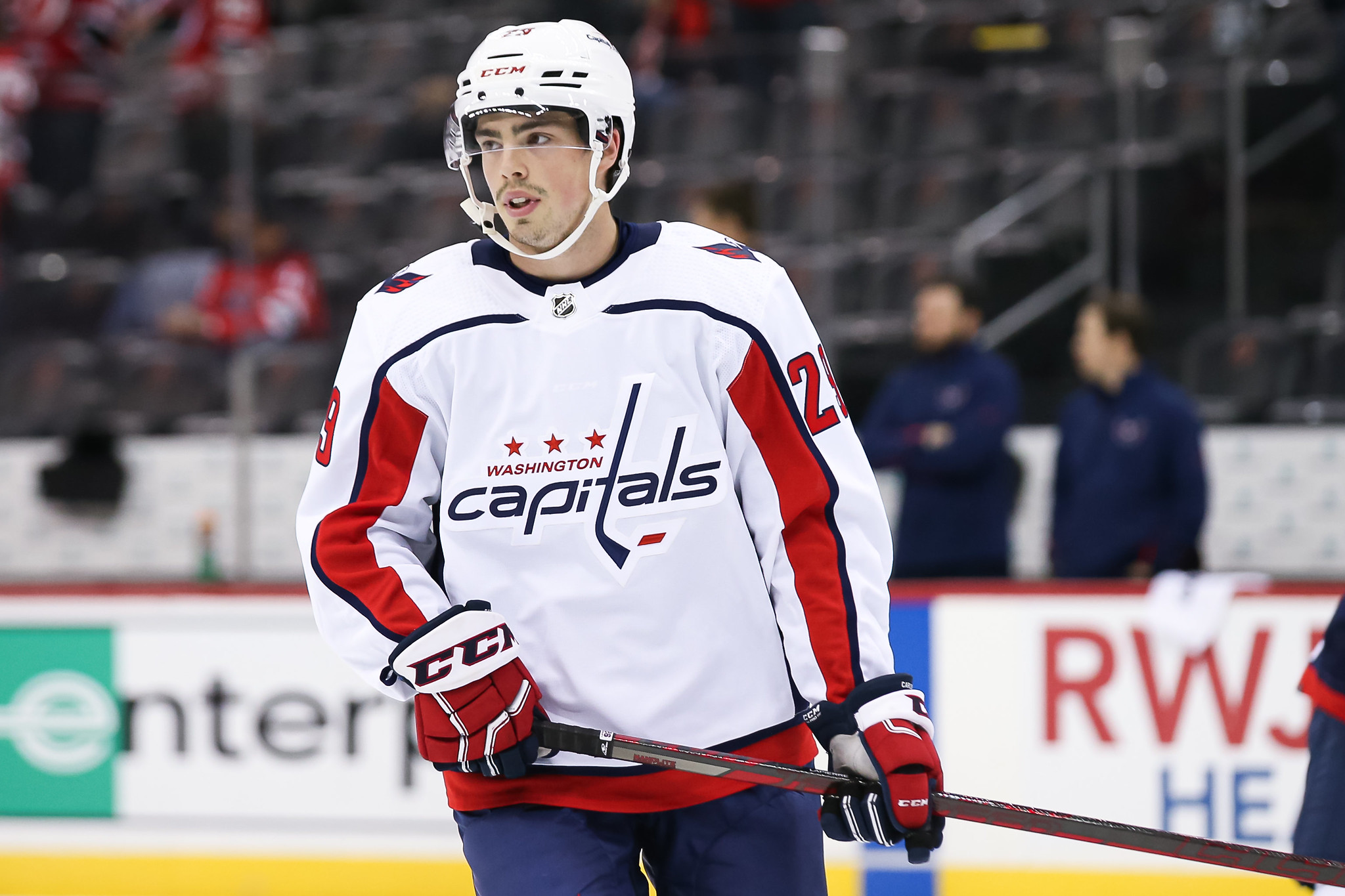
Pittsburgh extended Tommy Novak to a three-year deal through 2029-30 at $4.65 million per season, beginning after he completes his current contract in 2026-27. The move caps a steady 82-game season in which Novak posted 16 goals and 42 points while splitting time between center and wing alongside Evgeni Malkin and Egor Chinakhov. On the surface, it's a quiet extension for a quiet player—the kind of organizational housekeeping that doesn't generate headlines. But it reshapes the calculus for a franchise looking to compete in the next three years, and it immediately pressurizes one of their recent acquisitions.
Hendrix Lapierre arrived in Pittsburgh via trade from Washington this offseason, costing the Penguins a 2027 third-round pick and a 2028 fifth-rounder—meaningful draft capital for a 24-year-old center who managed only four goals in 74 games last season. The contract itself ($1.3M annually on a two-year deal) is cheap; the trade price was not. It telegraphed Kyle Dubas's conviction that Lapierre possesses untapped upside, particularly given his strong AHL production: 79 points in 113 regular-season games with Hershey and 31 points in 48 playoff contests. The gamble hinged on Lapierre finding a defined role and proving the Washington data—sparse NHL scoring in a crowded lineup—masked his true ability.
Novak's extension eliminates one potential path forward. The Penguins have now committed to Novak as their flexible, durable middle-six option—someone who can play center or wing, doesn't disrupt the top nine, and provides durability through the lineup. That leaves Lapierre competing against Ben Kindel (with longer-term upside), Blake Lizotte (with an established defensive/penalty-kill niche), and a veteran core still anchored by Crosby and Malkin. Lapierre doesn't win on recent production (Novak outpaced him last season), developmental arc (Kindel projects higher), or specialized role (Lizotte owns the PK minutes). He enters camp as the redundant piece—or the breakout candidate who finally gets healthy deployment.
From a betting angle, this extension tightens Pittsburgh's forward-group variance heading into 2026-27. If Lapierre sticks and produces, the Penguins gain a high-upside lottery ticket in the middle-six; the market will already have priced in disappointment given his trade cost, so over-performance produces outsized line movement. More likely, Lapierre finds himself competing for bottom-six spot time or waiver-eligible reps. Novak's extension signals that Pittsburgh's center depth no longer hinges on Lapierre's breakout—it's built around proven contributors. Watch preseason and early-season ice time allocation for Lapierre. If he's rotating below 12 minutes per night in September, his assists and points props should be faded aggressively; the role ceiling is clear, and the market may still be pricing in optimistic lineup integration based on the trade-deadline acquisition narrative. Conversely, if Lapierre earns consistent third-line minutes (14+), his assist upside tightens against Malkin and Chinakhov's available passes, but his volume ceiling rises—a scenario where his line totals outperform expectations only if Pittsburgh runs him with offensive talent, which Novak's role now makes less certain.