Robertson's Pittsburgh Gamble: Dubas Pays for Upside, Not Track Record
By Ty Whitney ·
Nick Robertson signs a $3.25M deal two weeks before arbitration, reuniting with the GM who drafted him—a bet on reclaimed potential that narrows the Penguins' margin for error.
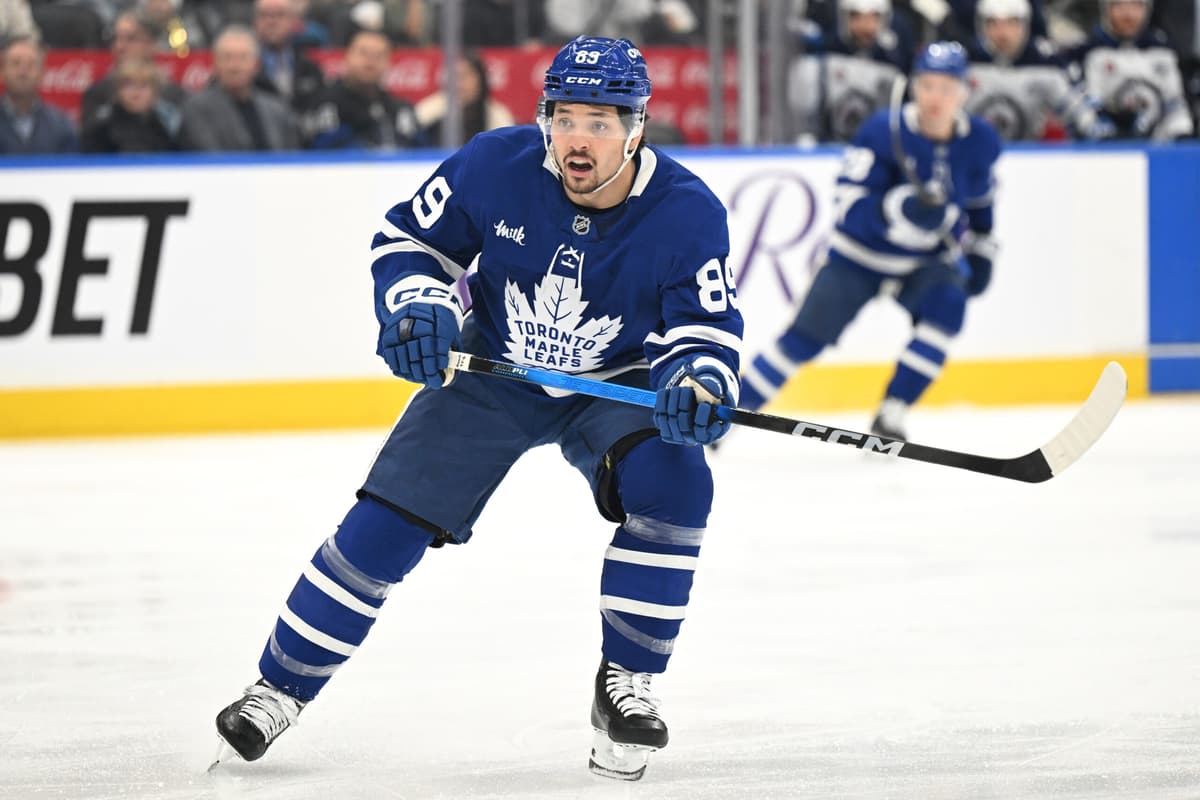
The Pittsburgh Penguins locked in Nick Robertson on a two-year, $3.25 million cap-hit deal, avoiding arbitration and committing to a reclamation project at a moment when their salary cap room is already tight. Robertson was acquired from Toronto on July 1st for a 2028 fourth-rounder—a low-cost entry that Kyle Dubas, Pittsburgh's general manager and the architect of Robertson's original draft class in 2019, clearly sees as unfinished business. The timing matters: both sides agreed to terms two weeks before the scheduled July 28th arbitration hearing, suggesting neither felt confident betting on a neutral ruling.
Robertson's 2025-26 season offered a narrow band of light. In 78 games with Toronto, he posted 16 goals and 16 assists—his career highs across all three mark categories—but the distribution tells the real story. His production clustered early, when Toronto deployed him in the top six forward group, before a slide into fourth-line obscurity. That inconsistency is the structural problem: Robertson has never sustained a full 82-game run as a first-line threat, and the Leafs essentially admitted that by moving him. The Penguins are betting his ceiling remains high enough to justify $3.25M against the risk that his current floor is his reality.
Dubas' offseason blueprint—Robertson, Kaedan Korczak, Andrei Kuzmenko, and depth signings—reads as managed risk rather than aggressive reset. Pittsburgh has $13.68M in cap space remaining after Robertson's signing and still needs to resolve arbitration cases for Alexander Alexeyev, Ville Koivunen, and Vasiliy Ponomarev. That's a tight window. The Penguins are not building for playoff contention in 2026-27; they're stocking the roster with optionality and hope. Robertson's deal reflects both: enough security to keep him, not enough money to suggest the front office believes he's the answer.
For prop bettors, the immediate angle centers on shot volume and role placement. Robertson's usage depends entirely on Pittsburgh's depth chart, which remains unsettled. If he lands in a consistent middle-six slot with powerplay minutes, his shots-on-goal floor sits around 2.2 per game based on his 3.0 average last season against top-four usage. If he's cycled in and out of lineup combinations—a real possibility given the Penguins' apparent flexibility—that number compresses. The arbitration avoidance and low acquisition cost both signal that Pittsburgh views him as a complementary piece with upside, not a cornerstone. That's the operative detail: he's priced as replacement-level talent with occasional flashes, not a locked-in contributor.
Shot-based props on Robertson should lean under season totals until the Penguins clarify role definition in training camp. The contract doesn't lock him into any particular lineup slot, and Dubas' track record suggests he'll shuffle personnel aggressively if early returns don't align with expectations. The $3.25M salary is safe; the usage is fluid. Any pre-season projections treating Robertson as a guaranteed top-nine forward will overcorrect on volume. Wait for October depth charts before committing to his prop windows.