Kettles' Shoulder Recovery Clears a Critical Threshold—Now the Penguins Face a Prospect-Development Wait Game
By Ty Whitney ·
A six-month rehab window compresses prospect development into the 2026-27 WHL season, forcing Pittsburgh to evaluate a high-floor defensive profile with minimal recent game evidence.
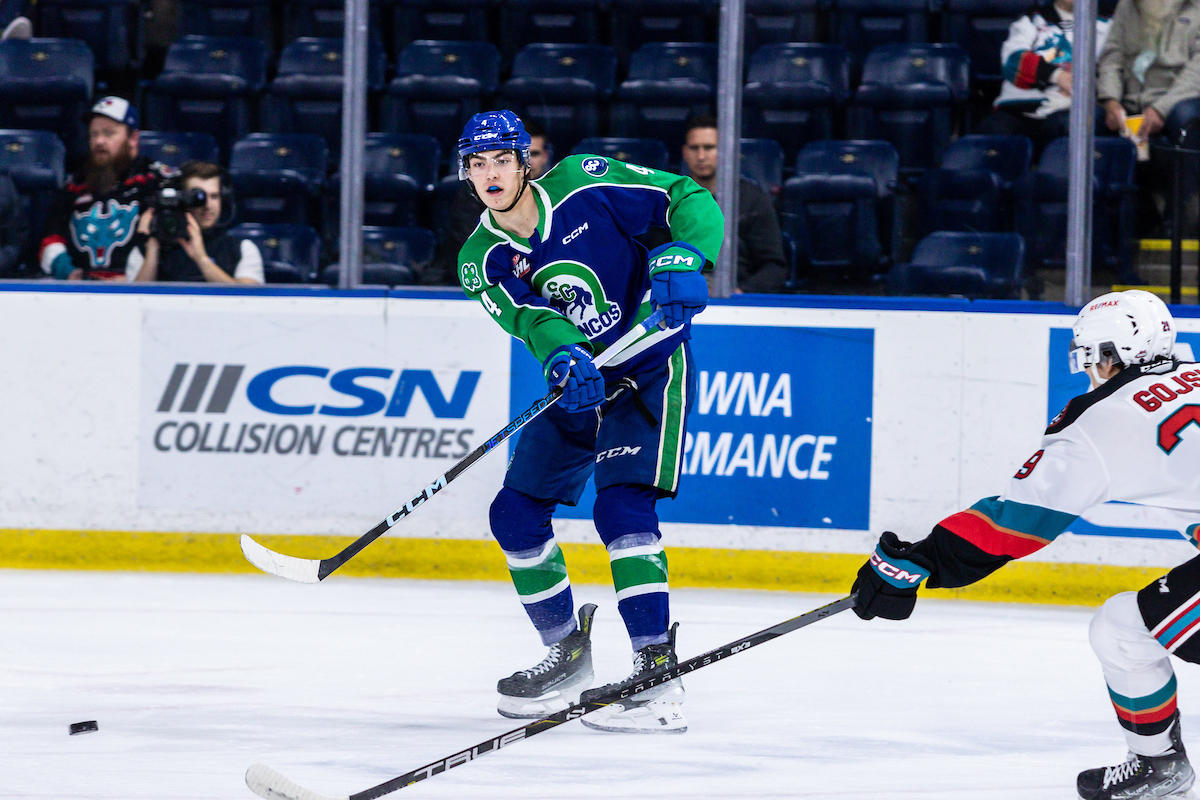
Peyton Kettles returned to game action at the Memorial Cup in late June after missing nearly all of 2025-26 to a recurring right shoulder injury. The Penguins' second-round pick from 2025 underwent surgery in Pittsburgh in November following an evaluation process coordinated between the organization and Kelowna, with team officials projecting a six-to-seven-month recovery window. That timeline aligned with his late-season return to Rockets' lineup—a meaningful first step, but one that also erased the most critical evaluation window in a young prospect's arc.
The lost season was not a referendum on Kettles' ability. He appeared in only five games before the injury derailed 2025-26, recording one goal and two assists with no chance to demonstrate whether he could step into a larger role or apply lessons from Pittsburgh's development program. What matters more is what the Penguins gave up by missing a full calendar year of observation: teams use the season immediately following the draft to measure whether prospects can produce at a higher rate, command additional responsibility, and translate coaching into on-ice habits. Kettles instead spent that window in rehabilitation, watching peers continue their development arc while his own paused.
The Penguins' internal evaluation did not shift materially. Their draft profile emphasized Kettles' physical tools—a 6-foot-6 frame, elite defensive stick work, gap control, and positional discipline rather than offensive ceiling. He was never projected as a high-scoring defenseman; his value derives from reach, entry prevention, and the ability to guide attackers toward lower-percentage areas through positioning rather than relentless physicality. That profile has not degraded. But the lack of game tape from a full season means Pittsburgh has nothing new to measure against the original assessment. His ranking drop reflects information scarcity, not a fundamental change in his developmental trajectory.
From a prospect-evaluation standpoint, the 2026-27 WHL season becomes the make-or-break proving ground. Kettles must demonstrate that the shoulder surgery has stabilized, that he can log a full regular season without recurrence, and that the defensive skills that impressed scouts are still present under game load. The Penguins have different types of defensemen developing in parallel—Harrison Brunicke offers more skating and offensive upside, while Owen Pickering represents a different size-and-mobility archetype—so Kettles occupies a specific role in the pipeline. If he stays healthy and plays 60+ games next season, the organization can finally assess whether his positioning and reach translate into a legitimate shutdown defender at the next level. If injury returns, his prospects dim considerably given the lost development time and competitive depth in Pittsburgh's blue-line pipeline.