Penguins Signal Multi-Year Goalie Patience, Not an Immediate Starter
By Erik Schwartz ·
Pittsburgh's re-signing of Joel Blomqvist on a two-way/one-way structure reveals a management philosophy built around optionality—and that uncertainty will ripple through backup and starter prop markets all season.
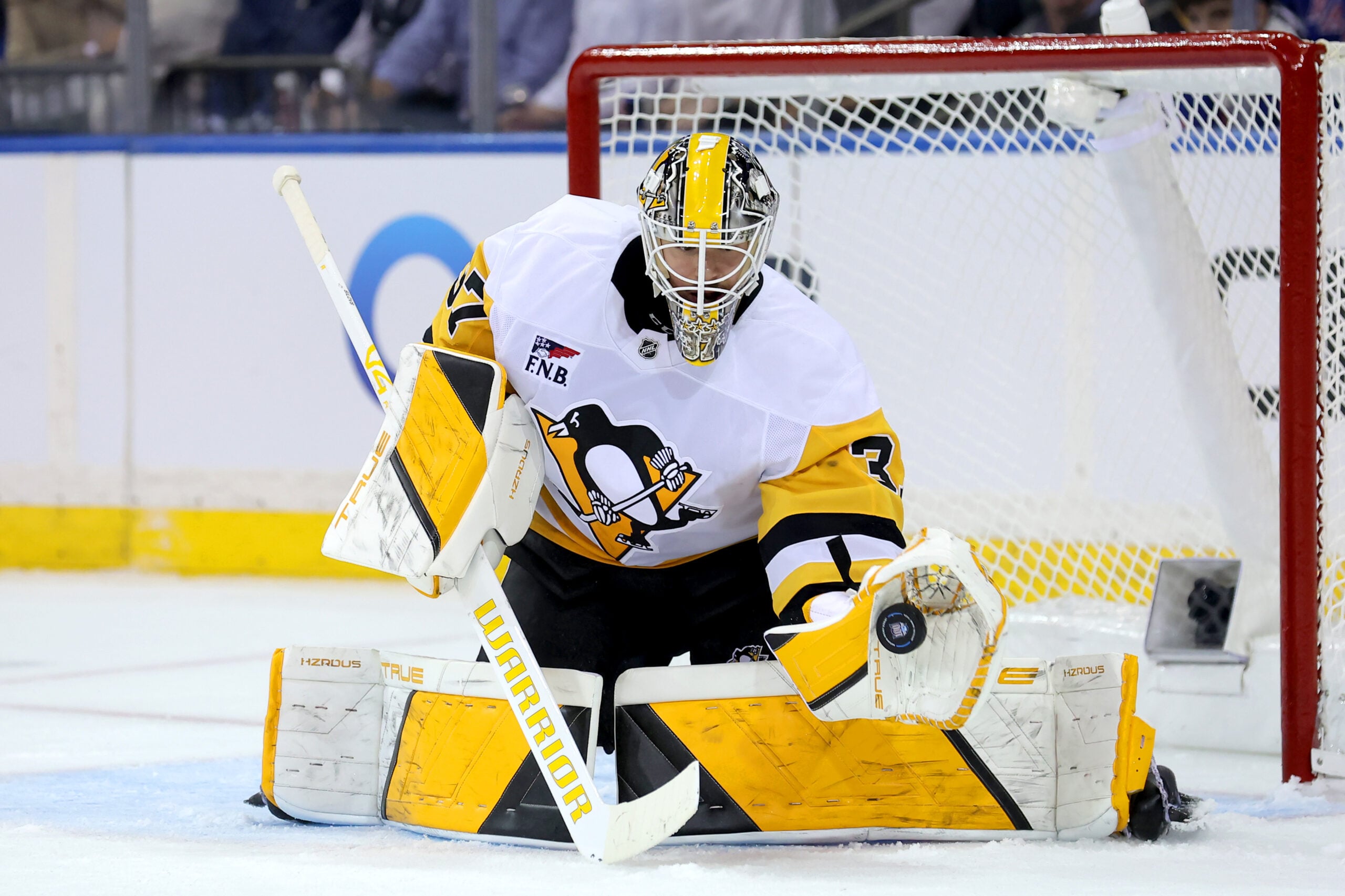
The Pittsburgh Penguins re-signed goaltender Joel Blomqvist on July 5 to a two-year deal with a $875,000 cap hit, a move that registers as organizational maintenance rather than roster drama. But the contract's architecture tells a more deliberate story: general manager Kyle Dubas is not betting on a single goaltending answer for 2026-27 and beyond. He is building a portfolio.
Blomqvist's deal splits cleanly—two-way in year one, one-way in year two—a structure that keeps salary-cap flexibility while signaling confidence that he belongs somewhere in the organization's future. His AHL numbers last season (16-5-4, 2.40 GAA, .913 SV%) are solid depth-starter material, not a revelation. But they were enough to justify retention rather than release. The real signal is that Pittsburgh views the goaltending position as unsettled. Artūrs Šilovs holds the inside track on an NHL role, but his one-year contract is an audition, not a coronation. Sergei Murashov, the organization's most exciting prospect, earned AHL Top Prospects recognition and is pushing the depth chart upward. In that environment, Blomqvist becomes insurance against volatility—a credible third option if Šilovs falters or Murashov needs another year of development.
For bettors, this contract structure matters less than what it implies about the Penguins' approach to goalie usage. Teams that lack a locked-in starter tend to rotate with more frequency, pull their goalies earlier on bad nights, and show less aggressive late-game behavior. Dubas is signaling that Pittsburgh will not ride a single goalie into the ground if results disappoint. That tends to suppress backup-goalie workload props (games started, shots faced) because the primary starter gets pulled faster and rotation occurs sooner. Conversely, it can elevate first-goal props and anytime-goal markets for opposing forwards, since less-settled goalies and rotating depth pieces tend to carry higher goal-per-shot rates in spot duty.
The Blomqvist signing is not a one-game narrative. It is a multi-season positioning move. Pittsburgh is explicitly avoiding a one-answer goaltending plan. That philosophical choice will influence Pittsburgh's goalie-usage patterns throughout 2026-27 and potentially 2027-28. Bettors should expect the Penguins to cycle starters more often than a team with a locked-in No. 1, especially if early-season performance is mixed. Starter workload will be lower, but backup penetration will be higher.