Marchand's Late-Season Surgery Clouds Panthers' Offensive Artillery Early
By Erik Schwartz ·
Brad Marchand underwent offseason surgery after missing 19 games in March, and Florida's cautious return timeline threatens to disrupt one of the league's hottest lineups to start 2026-27.
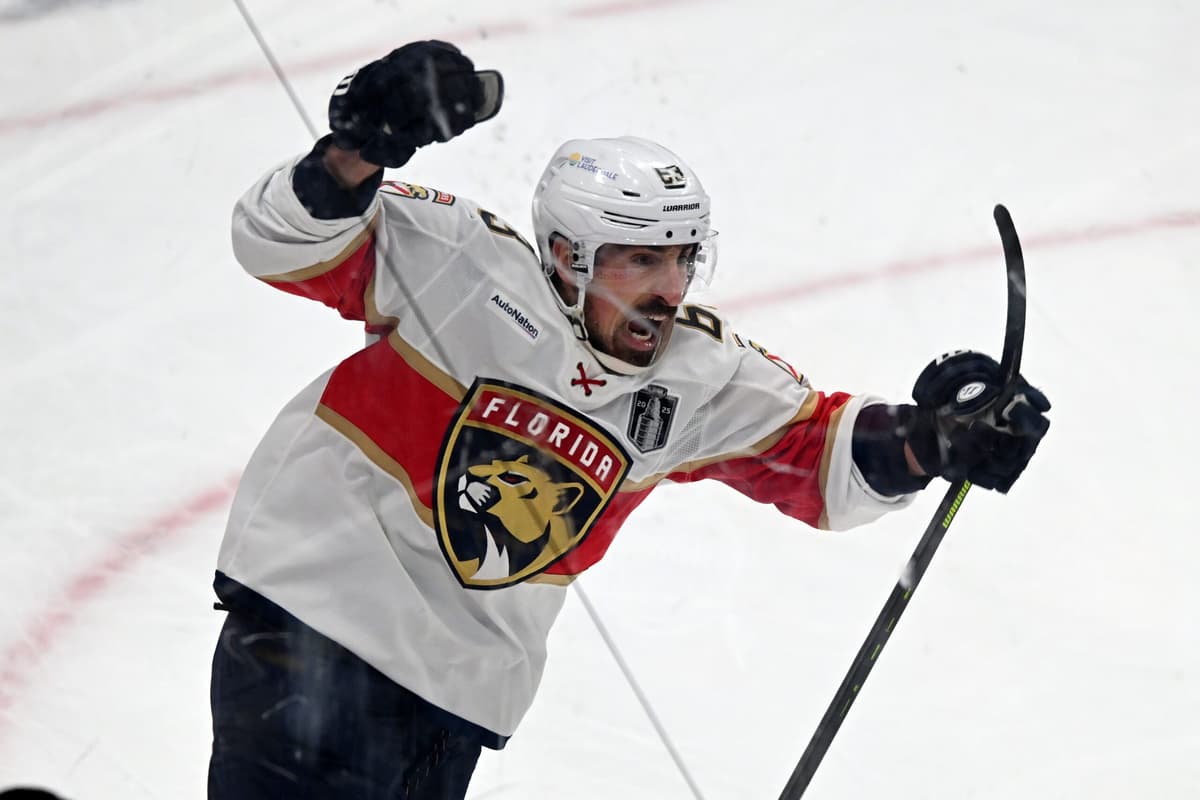
Brad Marchand will not be available when the Panthers open their 2026-27 season. The 38-year-old winger underwent surgery in August for an unspecified injury that forced him to miss Florida's final 19 games of last season, and general manager Bill Zito told reporters Wednesday that the team is treating his recovery conservatively, targeting an "early in the season" return without committing to a specific date. Marchand's last game came March 6 against Detroit—169 days before today—meaning he will have roughly four to six weeks of competitive rest before the Panthers' puck drops in October.
The timing is particularly costly for a team riding a Stanley Cup championship. Marchand posted 27 goals and 54 points in 52 games last season, a 1.04 points-per-game pace that anchored Florida's third-line production. When he exited mid-March, the Panthers were already without their full complement and had to piece together depth scoring for a playoff run. Now, entering the regular season, the team will once again manage offensive depth until their 38-year-old veteran is cleared for game action. The surgery's vague nature—Zito declined to specify the injury—adds fog to timeline projections; "recovering on his own pace" is code for month-to-month assessment.
The Panthers' -110 moneyline and 3.5-goal team total at season open already price in some offensive uncertainty, but the market may not have fully adjusted for Marchand's delayed start. Florida's scoring identity hinges on Aleksander Barkov, Jonathan Huberdeau, and secondary contributors like Evan Bouchard. With Marchand sidelined for Week 1 and Week 2, the team loses a 20-goal-per-82-game threat from the wing, forcing the top six to absorb additional offensive load. Expect increased shot volume from the Barkov line as Florida compensates, but expect also a higher variance in finish rate—the Panthers will generate looks but lack Marchand's 38-year-old precision in tight areas.
For bettors, the edge emerges in two forms: First, lean under on Panthers team totals for their first four games (through late October), when Marchand remains out and depth scoring is thinnest. A 3.5-goal team total with no Marchand is more exposed than books initially priced; Florida's power play and secondary scoring will carry heavier load, widening the margin for nights when execution falters. Second, monitor Barkov's assist line closely in early-season matchups. With Marchand absent and the team scrambling to find supplementary scoring, Barkov will handle more playmaking duties out of necessity. His assist line should move up slightly as books recognize this offensive restructuring, but early-week numbers may not yet reflect the full magnitude of Marchand's absence. Fade unders on Barkov's assists total for the first week.
The caveat: Zito's "early in the season" language could mean late October or mid-November. If Marchand returns by Halloween, the adjustment window is tight and bettors will have limited arbitrage. But if "early" stretches into November, the Panthers' early-season team totals and Barkov assist overs become substantive edges before market correction.