NHL · milestone
Panthers Bet on Schmid's Upside, Trade for Goaltender at Prime Arbitration Window
Florida moves a 2028 third-rounder for a 26-year-old net with upside and arbitration leverage—a low-cost gamble on rebound goaltending.
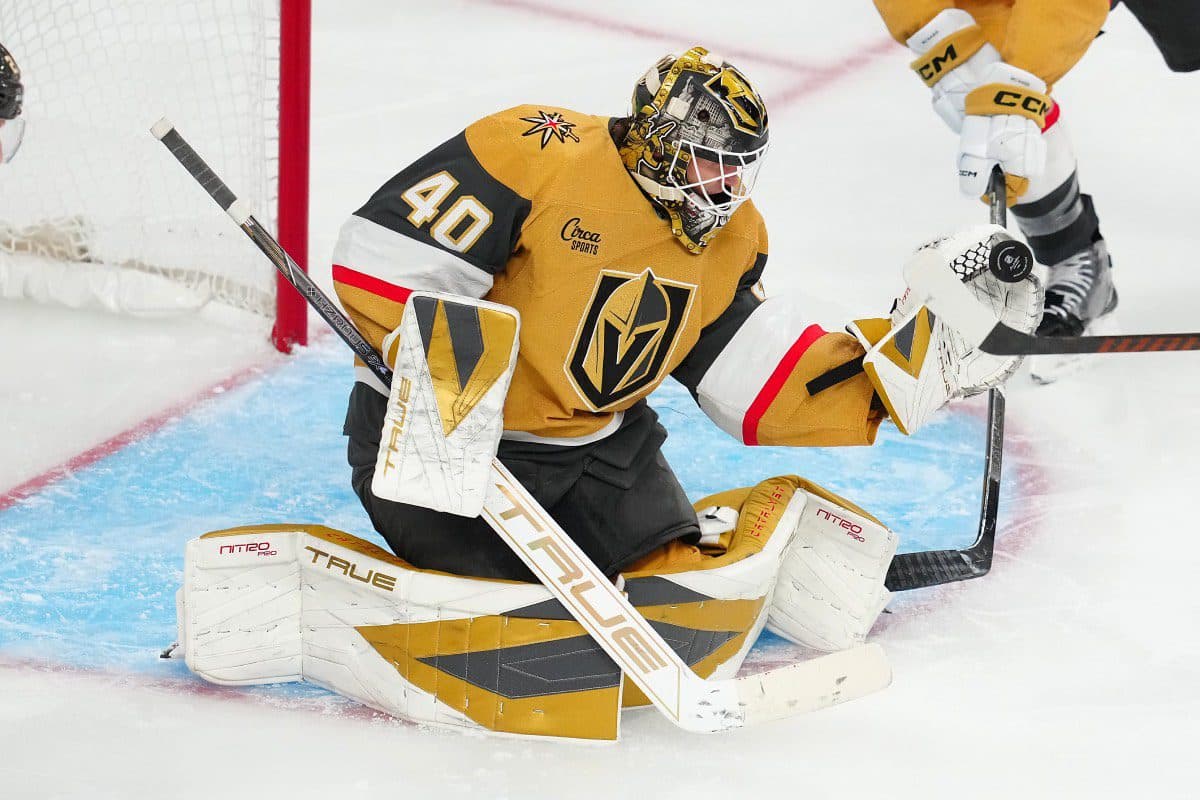
The Florida Panthers acquired goaltender Akira Schmid from Vegas on Monday night for a 2028 third-round pick, betting that the 26-year-old's .893 save percentage last season represents a floor, not a ceiling. Schmid played 34 games for the Golden Knights in 2025–26, posting a 16-10-6 record in a depth role that may not have showcased his full capacity. The arbitration-eligible status makes this a one-year audition: if Schmid rebounds, Florida locks in an affordable starter on a short-term deal before he hits unrestricted free agency next summer. If he doesn't, the Panthers eat a third-rounder and move on.
Vegas was willing to move him cheaply—a third-rounder is the cost of shedding salary and clearing depth chart real estate. The Golden Knights have invested heavily in their goaltending market already and likely viewed Schmid's upside as lower-priority than roster flexibility heading into their own offseason. For Florida, the calculus shifts. The Panthers have goaltending uncertainty and a playoff window that demands reinforcement. Adding a young arm with starting experience, even at a modest save percentage, addresses a tangible weakness without a long-term contract commitment.
The betting impact hinges on two factors: whether the Panthers' system and coaching produce a measurable spike in Schmid's numbers, and whether Vegas's depth-chart log revealed environmental factors suppressing his performance. A .893 SV% is pedestrian for a starter, but arbitration-eligible goalies often carry inflated variance depending on team context. If Schmid inherited a weak Vegas defensive structure, Florida's coaching could unlock a 5–7 percentage-point improvement. If his underlying metrics (goals saved above expected, high-danger chance conversion) suggest structural issues, the trade becomes a sunk cost.
For wagering purposes, track Schmid's early-season peripherals closely. Bettors should avoid overweighting his Vegas record as predictive until he has logged 10–15 games in a Panthers uniform. His save percentage line for 2026–27 will likely open around .895–.900, reflecting his recent floor. Any opening number under .890 deserves examination—the market may be pricing in continuation of Vegas's defensive burden. Conversely, if Florida's defense permits him a sub-.900 SV% in his first month, it suggests the environmental factors were real, and his line gains credibility as a rebound play into the latter half of the season. Schmid's arbitration hearing, looming after this season, will hinge on his numbers as a Panther, making early efficiency especially material to his compensation.
The trade itself signals Florida's front office confidence in their defensive structure and coaching staff's ability to elevate netminder performance. That confidence is a tell: when a team bets organizational capital on a goaltender's bounce-back, they believe the infrastructure supports it. Monitor whether that faith translates to actual save-percentage improvement in the first 20 games.