Shea's Defensive Turnaround Lands $4M Deal With Edmonton—But the Pairing Risk Is Real
By PropBetEdge Editorial Team ·
Ryan Shea's leap from fringe AHL player to plus-30 defenseman triggered a five-year Oilers commitment, but his elite metrics came exclusively on the third pair.
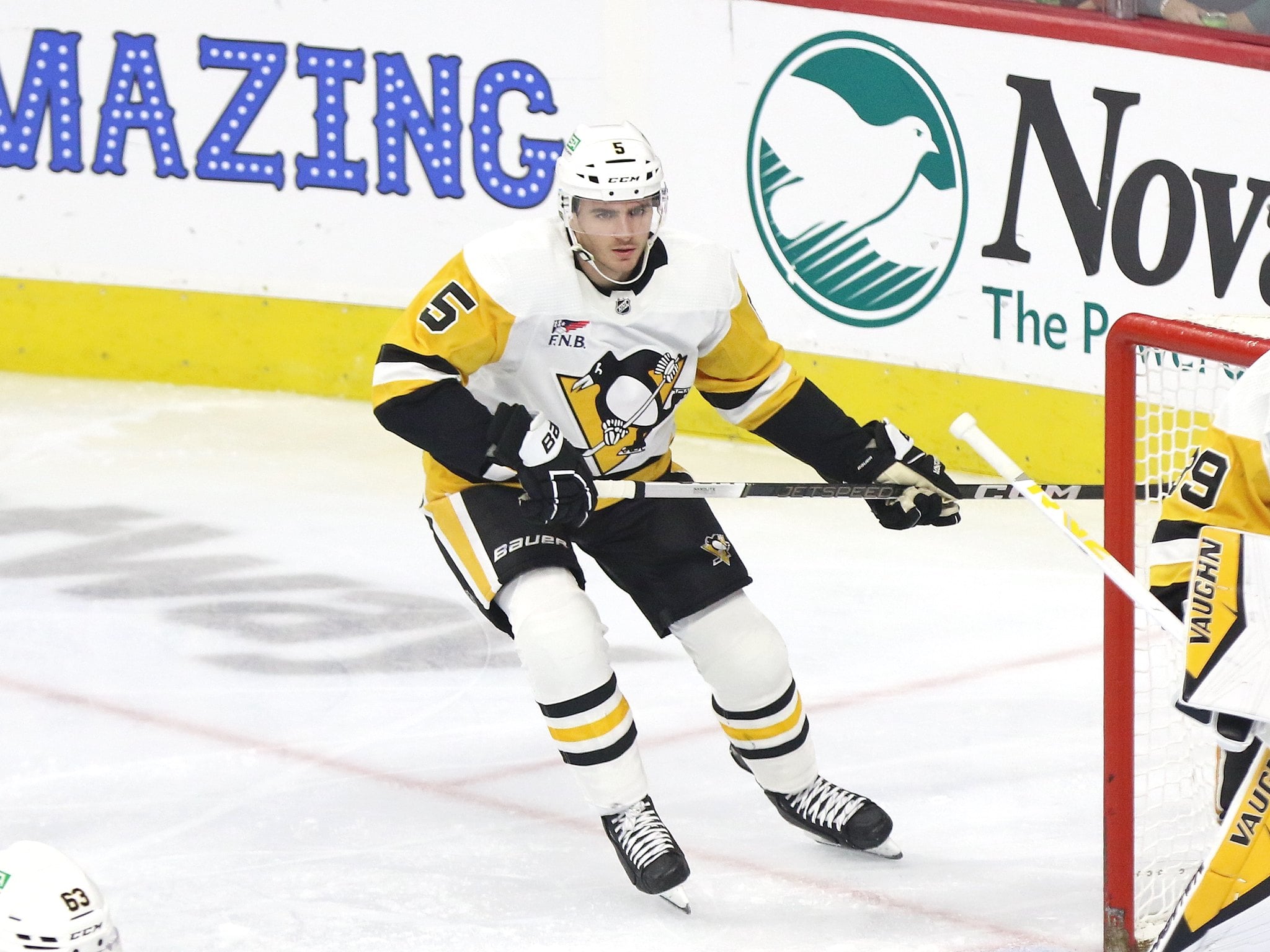
The Edmonton Oilers signed Ryan Shea to a five-year, $20 million contract on July 1, betting that last season's statistical breakout with Pittsburgh translates to a sustained role in their playoff window. Per Elliotte Friedman's announcement, the deal carries an average annual value of $4 million—a significant raise for a 29-year-old who spent most of his first six NHL seasons as organizational depth.
Shea's 2025-26 campaign with the Penguins was genuinely surprising. In 80 games, he posted six goals and 29 assists while finishing at plus-30, the best on-ice rating on a rebuilding Pittsburgh roster. His 35 points ranked second among Penguins defensemen, trailing only Erik Karlsson. The underlying metrics looked sharp: when paired with Connor Clifton on the third pair, Shea and Clifton generated a 61.7% expected goals percentage. That number is the kind of possession mark that typically fuels mid-season trade interest. What made the breakout even more compelling was that Shea did it on modest ice time—18:53 per night—and with nearly zero power-play opportunity (16 seconds per game). He was instead deployed as a penalty-kill anchor, averaging 2:16 shorthanded, behind only Parker Wotherspoon on the team. This role specialization is critical context.
The Oilers' concern, and the market's likely hesitation, centers on pairing flexibility. Shea's elite metrics—the 61.7% xGoals% at even strength—belonged almost entirely to his third-pair deployment. When the Penguins tried him alongside Karlsson, the pairing registered a 47.9% expected goals percentage, a significant drop that signals Shea may lack the offensive instigation or defensive positioning to shoulder middle-pair responsibilities. Edmonton is paying $4 million annually to a player whose calling card is depth-pair defense, and the risk is real: if GM Stan Bowman needs Shea in a top-four role due to injury or underperformance from a higher-paid blueliner, the contract will immediately feel bad. Pittsburgh's Kyle Dubas could afford Shea's inconsistency because he had Karlsson and Letang absorbing minutes. Edmonton does not have that luxury.
For prop purposes, Shea's contract signals one clear operational read: the Oilers are pricing him as a penalty-kill specialist and third-pair stabilizer. That frame is important if you're tracking team defensive metrics heading into 2026-27. Shea's arrival doesn't immediately change Edmonton's bottom-six defense, but it does suggest Bowman views his current third pair as moveable or expendable, which could prompt trades or lineup shuffles in camp. Any projection of Edmonton's team defense (shots against per game, blocked shots) should account for the possibility that Shea enters the lineup ready to contribute on the kill but with a hard ceiling on even-strength impact. His $4 million AAV is reasonable for a specialist, but it's expensive if Edmonton tries to retrofit him as a secondary defense driver.