Edmonton's Penalty Kill Overhaul Could Reshape 2026-27 Goalie Workload—and Save Totals
By PropBetEdge Editorial Team ·
The Oilers' quiet reconstruction of their shorthanded unit removes pressure from their defense and opens a path to lower goals-against volume than Vegas currently prices.
Edmonton's penalty kill collapse during last spring's first-round exit against Anaheim was the cost of organizational complacency. The Oilers surrendered six power-play goals on 12 shorthanded opportunities through five games—a 50 percent conversion rate that no goalie can overcome—and the damage exposed a roster stretched too thin to handle depth assignments. Now, with free-agent additions Ryan Shea and Shakir Mukhamadullin, retained defenseman Connor Murphy, and forward Jason Dickinson available for penalty minutes, the team has constructed a legitimate rotation where none existed before.
The mechanics of the problem were concrete. Evan Bouchard finished last season with 140 minutes and 40 seconds of shorthanded ice time despite commanding top offensive workload and power-play minutes—a strain that compromised his positioning and decision-making when the team needed defensive discipline most. Mattias Ekholm logged 134-plus minutes. The unit lacked alternatives, forcing Edmonton to burn its best skaters on a role where fatigue compounds inefficiency. Shea arrived in Edmonton as a free agent off a 171:24 shorthanded season with Pittsburgh, where he ranked third on the team in penalty-kill minutes and earned explicit praise from GM Stan Bowman for his positioning and ability to close passing lanes. Mukhamadullin brings size and reach—tools that matter when killing plays at the perimeter before they develop into high-danger chances. This is not organizational window dressing; it is direct remediation of a singular playoff weakness.
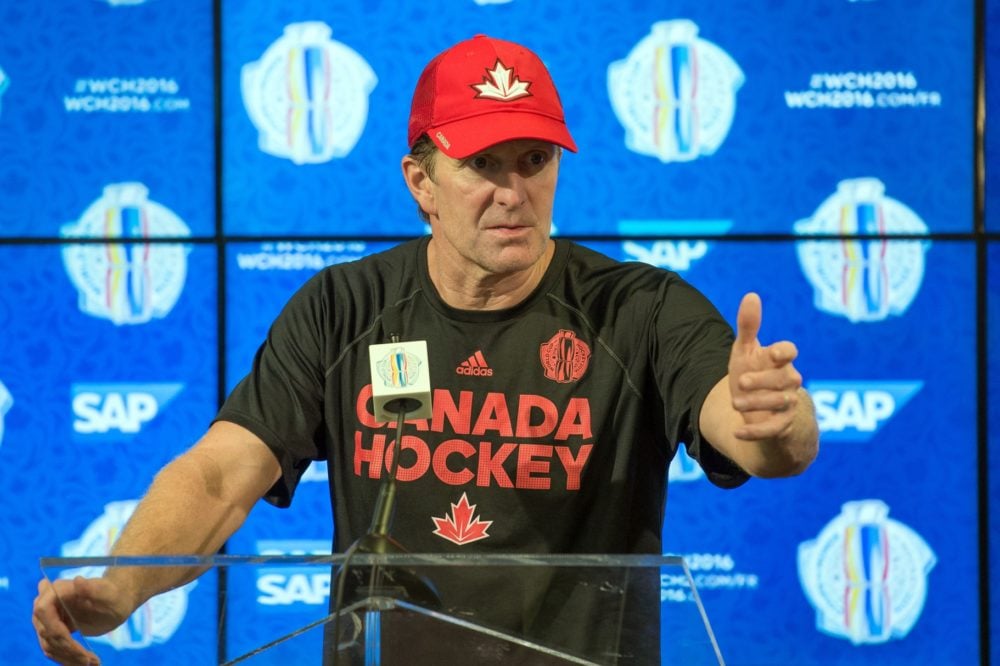
The coaching change to Mike Babcock and associate coach D.J. Smith matters as much as the personnel. D.J. Smith spent years building disciplined shorthanded structures in Ottawa. The Oilers' coverage broke down repeatedly in the first round in areas—traffic control, rebound recovery, complete clearances—where scheme cohesion and positional continuity prevent second chances. A deeper rotation enables clearer assignments and reduces the cognitive load on any single defenseman. When you are not asking Bouchard to shoulder 140 shorthanded minutes, he executes his actual role—top-pair defense and power-play generation—with sharper intent.
For betting purposes, this reshaping operates at the goalie level. A penalty kill that kills 83-85 percent instead of 77.8 percent reduces expected goals-against in a way that directly compresses save totals and goals-against lines. If Edmonton's shorthanded rate improves from league-worst territory into the middle tier (roughly 81-82 percent), that translates to roughly 8-12 fewer power-play goals conceded over 82 games. For a goalie like Stuart Skinner, who will see elevated workload regardless, the reduction in high-danger chances from shorthanded situations matters more than total shot volume. Markets will price Skinner's save total based on 77-78 percent penalty-kill performance because that is his most recent sample. If Edmonton's actual kill rate lands 4-6 percentage points higher, his expected saves per game drops—a margin worth playing against short-term inflated numbers.
The timing cuts against Edmonton slightly. The Oilers cannot demonstrate their reconstruction in live competition until October, leaving books to price 2026-27 goalie props on incomplete information. Early-season lines will likely anchor to last season's negative environment. Once the unit logs 10-15 games of actual shorthanded performance, the market will recalibrate sharply upward if the penalty kill stabilizes. That means the edge is most durable in the first 2-3 weeks of the season, before sample sizes grow large enough to force adjustment. After that window closes, the advantage fades—the market will have seen what Edmonton's penalty kill actually produces.