Celebrini's Discount Play Changes San Jose's Cap Math—And What It Means for Depth Scoring
By Erik Schwartz ·
A 19-year-old generational talent considering a hometown discount opens the door for the Sharks to build around him—and reshapes how we should value their supporting cast.
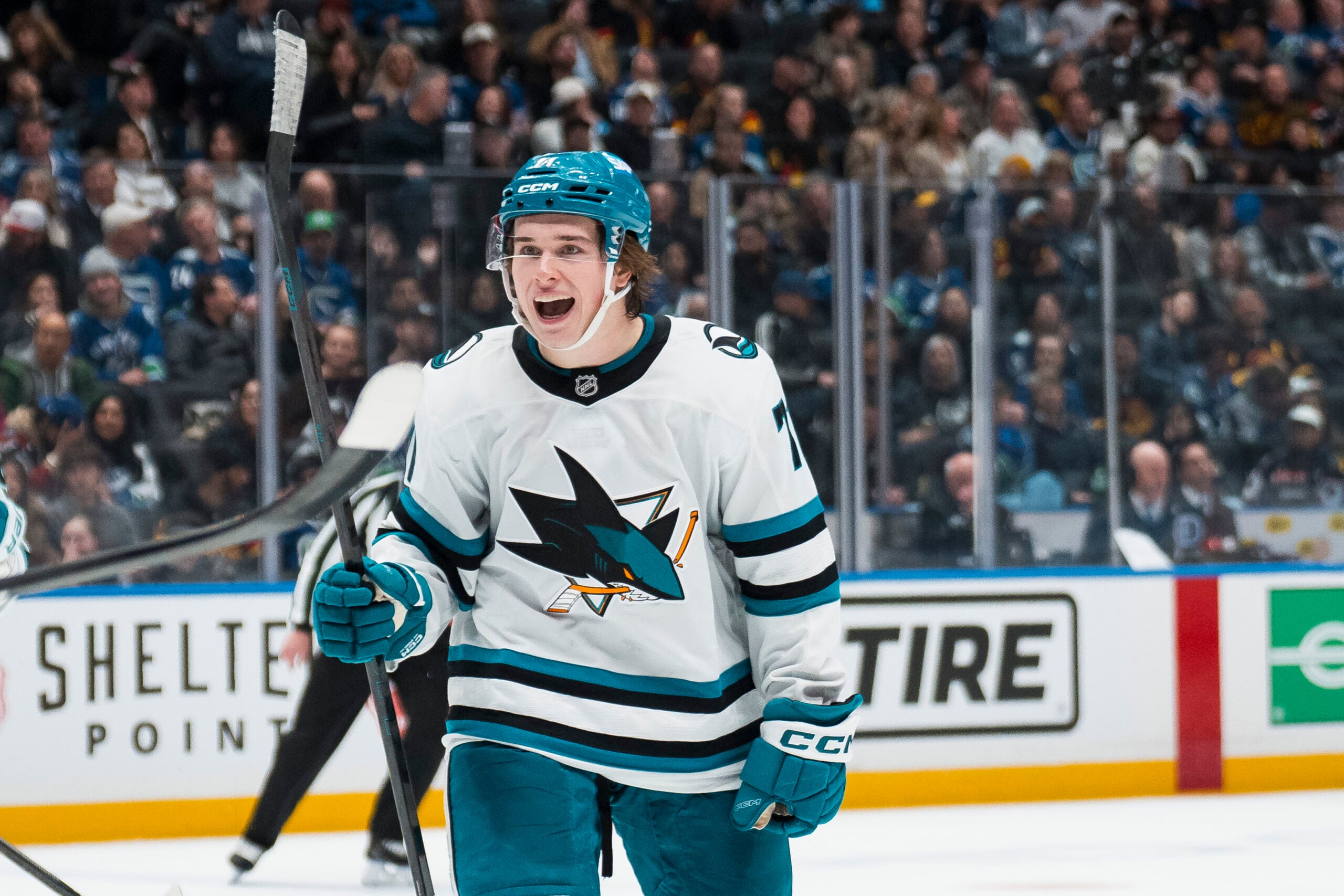
Macklin Celebrini, fresh off a 115-point season at age 19, has signaled openness to taking less than market value on his next extension with the San Jose Sharks. Per ESPN reporting, Celebrini cited Nathan MacKinnon and Sidney Crosby as models—elite players who accepted terms below their ceiling to preserve organizational flexibility. This isn't posturing. Celebrini and the Sharks front office have publicly aligned on priorities, and the organization has shown it will reward loyalty. The real story: a nine-figure discount on a generational center fundamentally alters San Jose's spending envelope.
The Sharks have watched peers crater under inflexible payrolls. Kirill Kaprizov ($10.5M), Leo Carlsson ($8.8M), and Bowen Byram ($9.25M) all signed near the ceiling this offseason—necessary deals for their respective teams, but structurally limiting. If Celebrini signs at a 10-12% discount from market rate (say, $14M instead of $15.5-16M), San Jose reclaims $1.5-2M in annual cap space. That money compounds over a multi-year window. The Sharks finished 2025-26 with depth scoring problems, and Celebrini's restraint is an implicit statement: he wants linemates who can complement him, not a roster built around his contract alone.
What makes this unusual is the timing and tenor. Celebrini could command a blank check—he's a Hart-caliber talent three years out of the draft. Instead, he's voluntarily constraining his own earnings to create room for the franchise to add secondary scoring or depth defensemen. This is rare leverage handed to management on a silver platter. If executed cleanly, the Sharks can build a top-six that doesn't crater the rest of the roster. If they mismanage it, they'll squander the gift and end up in salary-cap hell anyway.
For prop bettors, Celebrini's extension trajectory matters in two ways. First: his assist volume becomes more predictable once he has reliable linemates. The Sharks' play-driver touched 71 assists last season in a dysfunctional offense. If the team uses the cap savings to acquire a 60+ point winger or a net-positive depth pivot, Celebrini's assist floor ticks upward because he'll be cycling pucks to better finishers rather than below-replacement-level wings. Second, his goal total may tick down fractionally—not because he's worse, but because he'll be setting up higher-quality chances instead of forcing plays. A 115-point season as a teenager already prices in elite efficiency; sustainability depends on the humans around him.
The market has not yet fully repriced Celebrini's prop lines to account for the team's increased spending flexibility. Sportsbooks treat his assists, points, and shots as individual skill plays divorced from roster construction. That's a mistake. A $1.5M cap savings deployed on a complementary 40-50 point forward is worth 3-5 points to Celebrini's total, conservatively. Watch how aggressively the Sharks upgrade the roster by trade deadline and in free agency over the next 18 months. If they move efficiently, Celebrini's point-total overs will carry value against lines set on 2025-26 baseline efficiency.