Kane's Free Agency Creates Chicago Leverage Play; Robertson's One-Year Gamble Reshapes Dallas Cap
By Erik Schwartz ·
Three separate roster moves signal contract strategy shifts across the league—and one opens a short-term prop window on Dallas scoring depth.
The Chicago Blackhawks have stopped negotiating in private. GM Kyle Davidson released a statement this week leaving the door explicitly open for Patrick Kane's return, signaling organizational unity around a potential reunion as Kane weighs offers from Chicago and Buffalo in unrestricted free agency. The move is straightforward positioning: public deference to Kane's decision-making authority, coupled with a clear message that no bridge has burned and no deadline exists for his choice. For a 35-year-old forward still capable of 40-point seasons, that kind of patience and respect carries weight—especially against a Buffalo organization actively building around youth.
Meanwhile, the Dallas Stars took the opposite tack with Jason Robertson, locking him into a one-year, $12 million deal that functions less as a long-term commitment and more as a controlled delay. Robertson bet on himself by accepting immediate elite money with zero trade protection, leaving both sides the option to revisit the relationship in January or explore deals before the trade deadline if extension talks stall. The contract structure acknowledges a salary-cap reality: Dallas is already over the cap and needs roster flexibility. By kicking the Robertson question to next offseason—when he hits unrestricted free agency if no deal materializes—the Stars bought breathing room without surrendering control. Robertson's move is a power play dressed as a compromise.
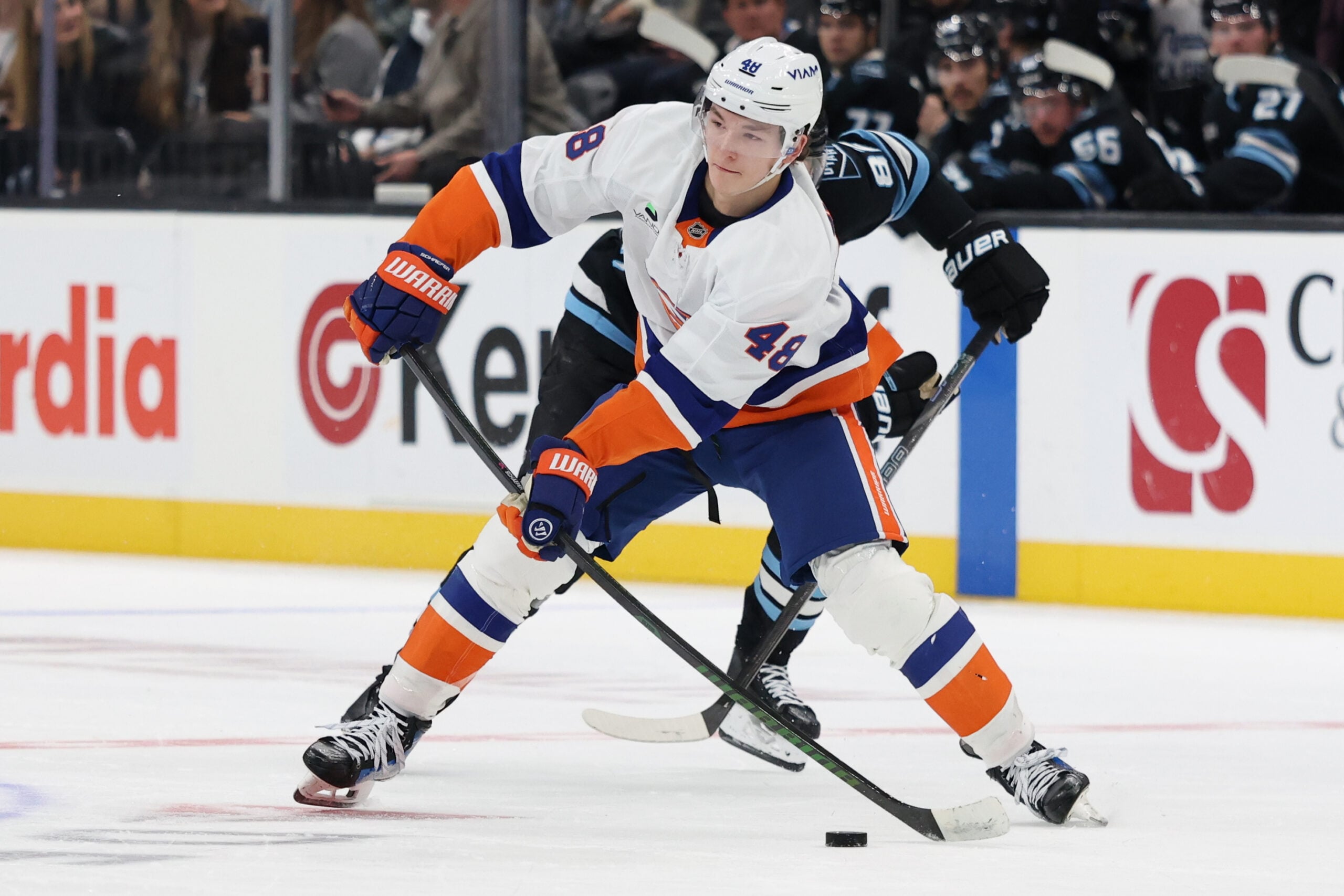
The third thread is quieter but reveals philosophy. Matthew Schaefer, the Islanders prospect, explicitly downplayed the salary-chase narrative when discussing his future deal, citing his youth and distance from negotiations. That tone—focus on development over payday—stands in stark contrast to the recent blockbuster deals for Bedard and Carlsson, both of whom landed eight-figure AAV packages before turning 21. Schaefer's comments suggest either genuine indifference to max money or a calculated effort to signal team-first credibility. Either way, it's a narrative choice that affects his leverage when talks eventually begin.
For bettors tracking team composition volatility, the Robertson situation matters most. Dallas now operates with a ticking clock on scoring depth. If Robertson and the Stars can't build extension momentum over the next 12 months—a non-trivial risk given their cap squeeze and the forward's statistical trajectory—a mid-season trade becomes inevitable. That uncertainty depresses Dallas's overall offensive floor. Team totals and individual Stars forwards' point props face elevated variance until clarity emerges. Robertson himself is a volatile leverage play: if he explodes early (which matters for his next contract), Dallas's scoring load remains concentrated on him, which could inflate his individual props but depress surrounding linemates. If he posts a merely solid season, the Stars' scoring spreads more evenly across secondary options, and his total dips. The one-year, no-trade structure removes the safety valve Dallas typically has.
Kane's decision, by contrast, is largely priced in already. The Hawks' public overture is more about narrative control—ensuring Kane doesn't feel rejected—than financial surprise. Buffalo and Chicago were always the two realistic destinations; this announcement doesn't shift that dynamic. What matters for props is whether Kane lands back in Chicago, which would restore a veteran finishing touch to a rebuild-phase offense, or goes to Buffalo, where he'd anchor a scoring committee with Thompson and Tage. Either way, Kane's 40-point pace is durable. The real edge lies in the Stars' short-term uncertainty and Dallas team totals becoming a fade in early-season matchups until Robertson extension clarity emerges.