Vegas' Road-Game Blueprint Faces Carolina's Early-Strike Pattern in Stanley Cup Final Game 2
By Erik Schwartz ·
The Golden Knights have won seven straight playoff games and 3-for-3 in road Game 1s; the Hurricanes have scored first in 12 of 14 postseason contests—but Game 1's comeback loss exposed a defensive vulnerability Vegas can exploit.
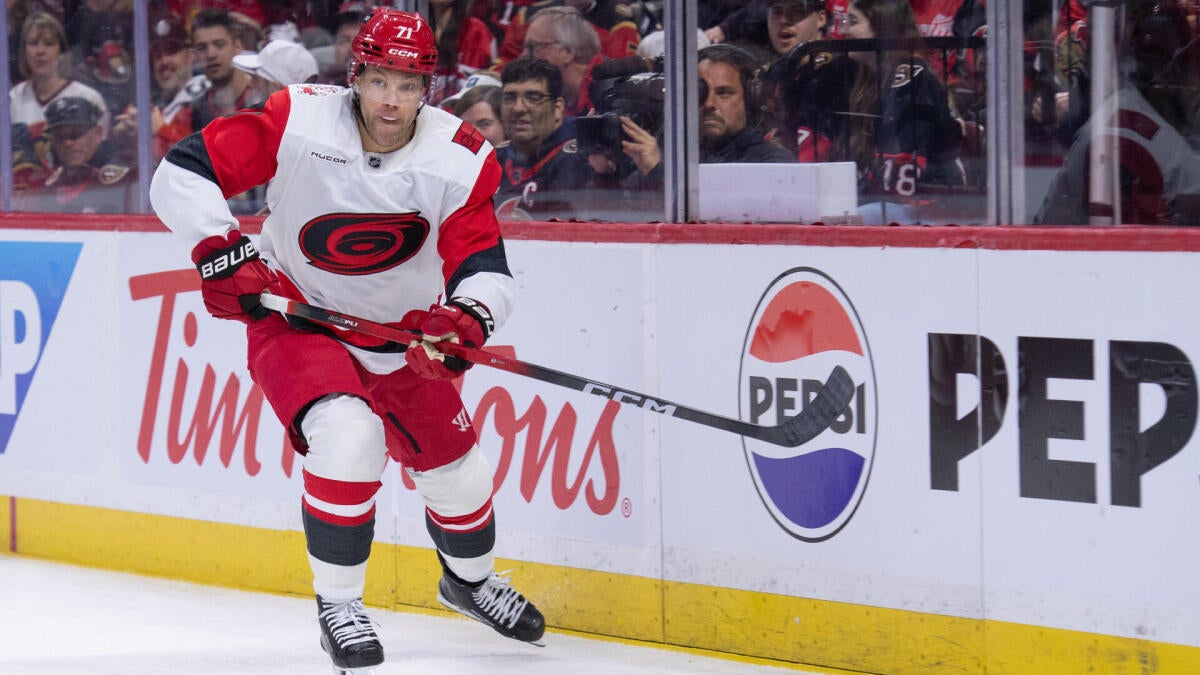
Vegas arrived in Raleigh having won Game 1 of the Stanley Cup Final 5-4 in comeback fashion, erasing an early two-goal deficit to extend its franchise playoff win streak to seven games. Per SportsLine's breakdown, the Golden Knights have now won Game 2 in both of their last two road series openers (2024 first round vs. Dallas, 2026 conference final vs. Colorado), a pattern that carries behavioral weight: teams that survive Game 1 adversity on the road tend to impose their systems more decisively in Game 2, when fatigue and emotion settle and structure reasserts itself.
Carolina scored fewer than 60 seconds into Game 1 and still lost 5-4—a result that tracks with the Hurricanes' broader postseason identity. They have scored first in 12 of 14 games this spring, including all six of their most recent contests, yet that early-strike pattern masks a third-period vulnerability. Against Ottawa and Philadelphia, Carolina locked down the back half of games and won in sweeps. Against Montreal in the Eastern Conference Final, they lost Game 1 despite scoring first, then won four straight. The opening goal has become their security blanket rather than their pathway; when opponents match their intensity and absorb the opening salvo, the Hurricanes' defensive structure frays.
Vegas' roster composition under John Tortorella—20-4-1 since his November arrival—prizes possession cycling and late-game poise. Brett Howden (11 playoff goals) and defenseman Shea Theodore (1 goal, 2 assists in Game 1) operate in high-leverage minutes; Brayden McNabb's three assists signal a scheme built around blue-line distribution into transition. The Golden Knights ranked among the league's top five in shot suppression during the regular season and have maintained that discipline through the playoffs. If Carolina scores in the first 90 seconds again, Vegas' structure gives them seven minutes to reset before the first media timeout.
The shot-volume angle centers on Pavel Dorofeyev, Vegas' 25-year-old right wing who entered the Final as a co-leader in playoff goals but has been overtaken by Howden. Dorofeyev fired three shots on goal in Game 1—tied for team lead—and carries 45 shots across the remaining postseason field (second only to Jack Eichel among Vegas players). His last eight games show at least three shots in six of them. Carolina's penalty kill was tested 19 times across their first two series (Ottawa and Philadelphia combined) and allowed only three goals, an elite rate that compounds when you consider the Hurricanes play tight-gap, high-pressure defense in the neutral zone. However, that aggression creates rebound opportunities and second-chance chances for shooters like Dorofeyev, who has learned to position for follow-ups rather than pure first-shot attempts. The over on his shots (currently 2.5 at +108 on FanDuel) reflects the market's lingering doubt about his scoring pace post-Howden surge, not a mechanical decline in his shooting volume. Vegas' coaching staff will weaponize Dorofeyev's persistence in Game 2 precisely because Carolina will be hyper-focused on shutdown assignments for Howden and Eichel.