Babcock as Oilers Fallback Plan: Why Coaching Uncertainty Matters Less to the Betting Market Than You'd Think
By Erik Schwartz ·
Edmonton's search for a new coach has widened beyond Bruce Cassidy, but regime change alone won't fix the team's core structural problem—and that's what matters for next season's props.
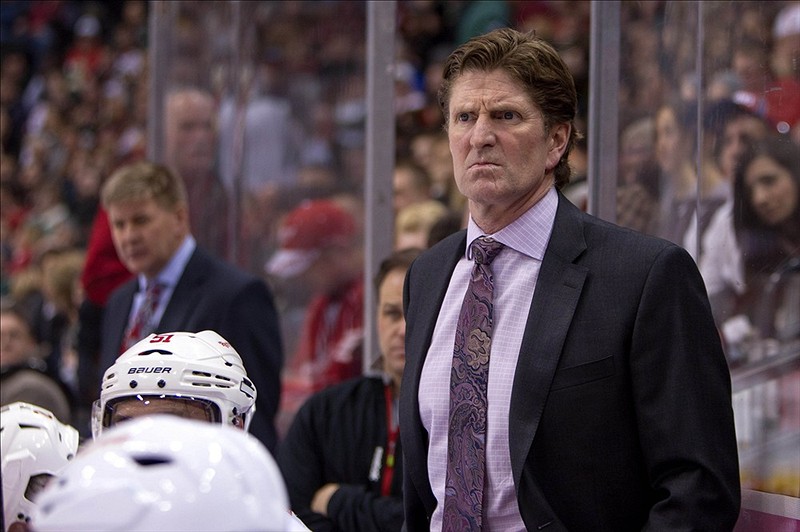
The Edmonton Oilers' coaching vacancy is now a three-ring circus. Bruce Cassidy remains the primary target, but Vegas has made clear it's not releasing him mid-playoffs, forcing Edmonton to kick the tires on alternatives. Mike Babcock has entered the conversation as a fallback option, floated publicly on Oilers radio by former executive Brian Lawton alongside Craig Berube and Peter Laviolette. The fact that a Hall of Famer with a contentious recent history—Babcock was fired by Toronto and hasn't held a coaching job since 2019—is even being discussed signals how much uncertainty surrounds the job.
The Cassidy path makes competitive sense. Vegas is protecting their Cup window and won't budge until the playoffs end; if Edmonton waits it out, they get a proven recent playoff coach. But here's what's being underweighted: coaching hire or not, the Oilers' underlying problem isn't system or lineup composition. It's shot volume and goalie inconsistency. Last season, Edmonton allowed 30.2 shots per game—league average sits around 28.5—and their powerplay finishing deteriorated despite elite possession metrics. Kris Knoblauch's system wasn't the bottleneck; execution and variance were. A new coach can tighten defensive structure (Cassidy's Vegas squads ranked top-10 in GAA), but he can't make Stuart Skinner or Jack Campbell suddenly league-average in high-leverage moments.
Babcock, should he get the job, comes with a specific tactical fingerprint: defense-first, structured breakouts, heavy emphasis on player accountability. His Red Wings teams ranked consistently in the top-12 in shots against per game. That framework could theoretically reduce Edmonton's defensive workload and stabilize the backend. But the market is already pricing in that defensive tightening. Vegas opened Edmonton's next-season team total at 3.72 goals per game (roughly 305 goals over 82 games), a tick down from their 3.81 last season—a modest 2.3% adjustment that assumes incremental improvement from coaching alone.
Where the angle emerges: if Babcock lands the job (a 15-20% probability given Cassidy remains the favorite), the market will initially overshoot on the defensive narrative. Investors and casual bettors fixate on "new coach, better defense." But Babcock has never coached in the post-2015 NHL environment—a league where perimeter scoring has exploded and shot quality matters as much as shot volume. His Detroit system, dominant from 2008-2015, leaned on elite goaltending (Hasek, then Legace in his early tenure) and a suffocating forecheck. Edmonton's forwards can't generate that forecheck intensity against modern-spread offenses. Unders on Edmonton team total in a Babcock regime would likely overvalue the defensive improvement in the first 20-30 games before the market reprices.
The more reliable edge sits with Cassidy and shot quality. His Vegas teams allowed 28.1 shots per game last season but ranked top-5 in expected goals against. That's the blueprint Edmonton needs: not fewer shots, but fewer high-danger chances. If Cassidy arrives, expect the market to misprice shots-on-goal totals for Edmonton's opponents upward, while simultaneously underpricing goal volume downward. The Oilers' offensive ceiling—built on Connor McDavid and Leon Draisaitl's elite xG production—doesn't change with coaching. Their defensive ceiling does. A Cassidy hire suggests tighter structures in the defensive zone and more efficient penalty killing. Look for unders on Vegas team totals when Vegas visits Edmonton next season; the gap between Vegas's expected goals against (3.89 last year, second-worst in the league) and actual goals scored against a Cassidy-coached defense could widen significantly.