Treliving's Buy-In Indictment and the Leafs' Defensive Exodus Signal Structural Breakdown
By PropBetEdge Editorial Team ·
The former GM's offseason comments reveal a team that masked talent deficiency through star power, while Liljegren and Sandin thrive in Washington—a pattern that should reshape how bettors view Toronto's defensive liability.
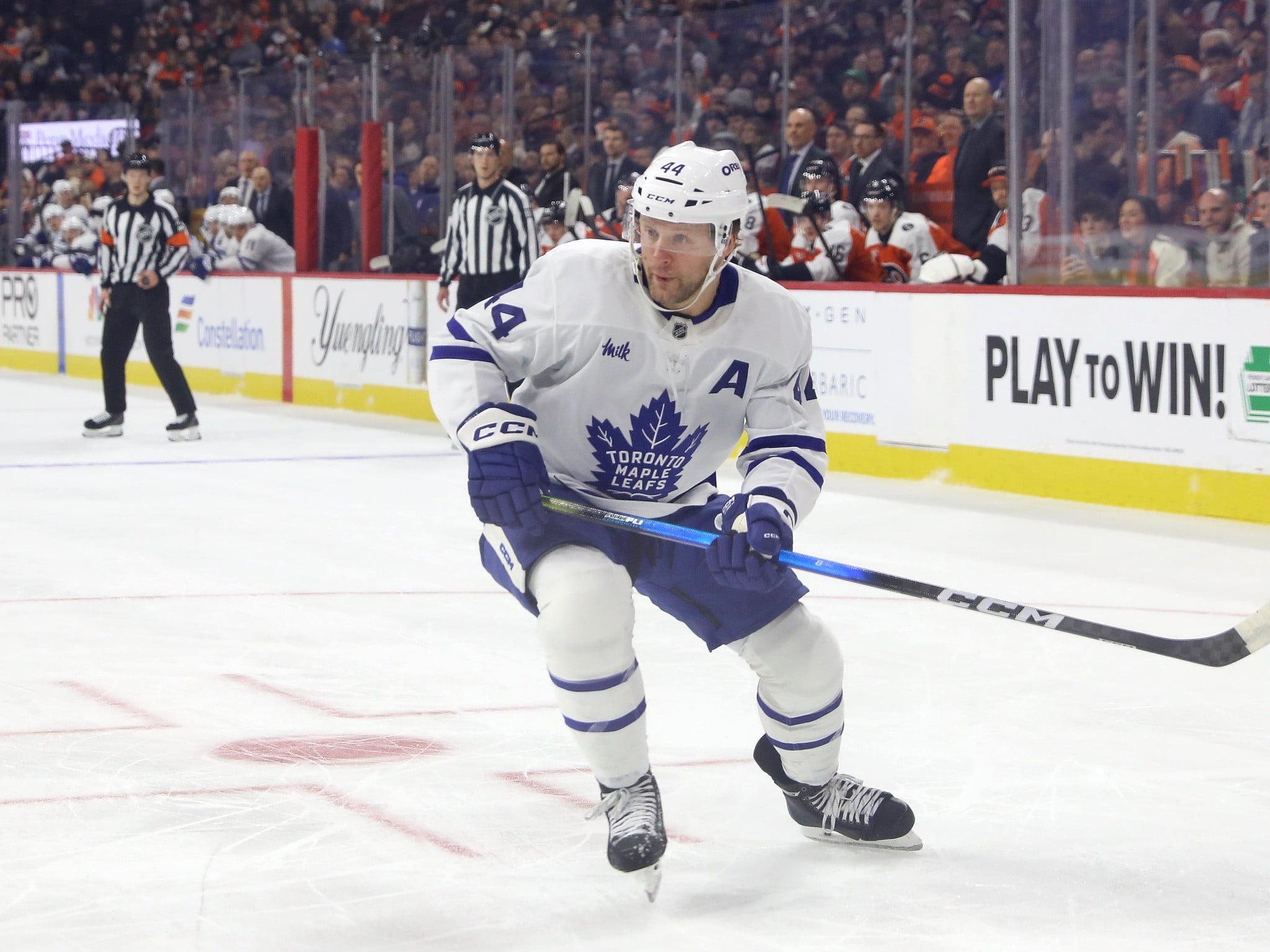
Brad Treliving's exit interview with the Toronto Star landed a grenade in the Maple Leafs' offseason narrative: the team lacked buy-in, even in wins. Per the former GM, Toronto was generating results despite consistently failing to control play, maintain positive shot share, or execute the systems being asked of them. That's not a coaching complaint or a roster-construction critique—it's a direct indictment of player commitment and structure. When a front-office architect says a team won games it shouldn't have won, given the underlying metrics, he's signaling that the roster's individual talent masked a deeper organizational problem that surfaces the moment execution tightens.
The irony is immediate and measurable. Timothy Liljegren and Rasmus Sandin—two Leafs defensemen once locked in an internal development race—have landed in Washington and are now thriving together. Liljegren signed a two-year, $6.5 million extension with the Capitals after arriving at the deadline, playing heavy minutes and demonstrating the steady two-way game Toronto was never able to unlock. Sandin, acquired earlier, is thriving in the same system. The throughline is clear: both players had the talent all along. What they lacked was a structure capable of channeling it. In Toronto, they were casualties of organizational dysfunction. In Washington, they're foundational pieces.
This matters for how the Leafs defense will perform going forward. Treliving's comments suggest the problem wasn't talent acquisition but talent deployment and accountability. A team that wins games it shouldn't, based on underlying play, isn't a team that's unlucky—it's a team riding star power until the margin evaporates. That margin tends to evaporate in playoff hockey, where structure and discipline compound. If the new management doesn't solve the buy-in problem, roster changes alone won't matter. The Leafs remain stocked with offensive firepower that will generate points in bunches, but their defense—already weakened by the Liljegren and Sandin departures—will continue to leak chances at a rate that should concern anyone laying money on their playoff viability.
For prop bettors, the Leafs' defensive metrics are now priced with an implicit assumption of stability. But Treliving's diagnosis suggests that stability was always a mirage. The team's shot-share struggles weren't systemic bad luck; they were behavioral. With Liljegren and Sandin gone and the structural issues unresolved, expect Toronto's goals-against per game to drift upward, and their ability to keep games tight—critical for spread and total management—to deteriorate. Bettors fading Toronto defenseman props (blocked shots, assists, ice time stability) and leaning toward higher team totals for opponents have a mechanism: the Leafs' defense is about to look worse than last season because the foundation that was holding it together just walked out the door.
What makes this pattern sustainable—not a single-game spike—is that it's anchored in organizational behavior, not variance. Liljegren and Sandin's success in Washington proves the talent wasn't the bottleneck. The Leafs' inability to unlock it was. That problem doesn't resolve with one offseason unless management demonstrates measurable structural change. Until it does, Toronto's defensive permeability is a multi-season angle, not a regression bet masquerading as insight.