Matthews Returns from MCL Tear as Leafs Seek Redemption; His Health Status Reshapes Toronto's Ceiling
By Erik Schwartz ·
After missing the final 22 games of a disastrous 2025-26 season due to a knee-on-knee collision, Auston Matthews enters camp fully recovered and signaling immediate intent—a shift that reframes the Leafs' 2026-27 props from basement variance to contention potential.
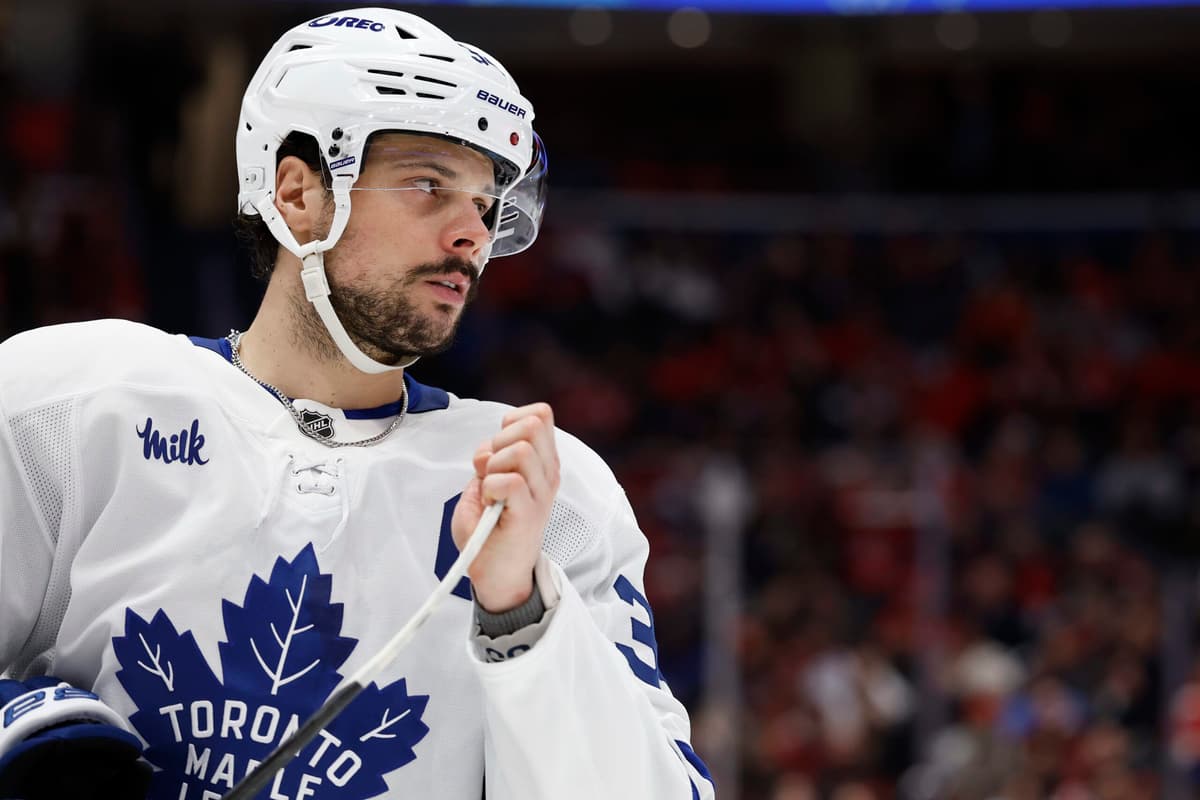
Auston Matthews sat down with Leafs broadcast this week to discuss his offseason recovery, and the headline carries real weight: the Maple Leafs captain says he feels better than he has in years. That's not routine athlete camp speak. Matthews tore his MCL in a knee-on-knee collision with Anaheim's Radko Gudas on March 17, 2026—roughly six months before training camp—and underwent surgery followed by a three-month rehab window. He's now cleared and full-go for the 2026-27 season.
Context matters here. Toronto collapsed to a 32-36-14 record last season, 78 points, last place in the Atlantic and second-worst in the Eastern Conference. They missed the playoffs for the first time since 2015-16. Part of that disaster was Matthews' injury; he played in only 60 games and posted 27 goals and 26 assists for 53 points—his first sub-30-goal season in his NHL career and first time failing to reach 60 points. The team had no plan B when their captain went down. Now, with Matthews healthy and positioned to play a full 82-game slate, that variable flips from liability to asset.
At 28 (turning 29 this Thursday), Matthews remains a Hart-winner with three Maurice Richard Trophies in his back pocket. His 2021-22 season—60 goals, 106 points—remains the Leafs' high-water mark this decade. Even accounting for age and the specificity of that outlier year, a healthy Matthews at 55+ games gives Toronto offense a foundation it lacked for half of last season. The question isn't whether he'll play; it's whether the supporting cast around him has been retooled enough to prevent another 78-point collapse.
From a prop standpoint, this injury recovery opens two distinct betting lanes. First: Matthews' individual shot volume and goal totals face downward pressure from public perception of "rust" coming off a long layoff—a perception that usually lasts 3-5 games before the market reprices. His shot-on-goal totals in games 1-10 of the season will likely sit lower than his career average, despite six months of full rehab and his own declaration of peak fitness. That's a variance play with a short shelf life; if you can grab his SOG at 3.5 or lower in the first two weeks, the line will drift higher within 10 days once he logs assists and goals at his historical pace.
Second, and more durable: Toronto's team totals and spread lines were built around last season's 78-point disaster. If Matthews plays 82 games and posts his 2024-25 rate (52 points in 67 games played, prorated to 63.4 points over 82), the Leafs' ceiling shifts from lottery-adjacent to wildcard contention. That's a 15-20 point swing on the season-long win total, which cascades into undervalued team totals early in the campaign. The market will eventually account for Matthews' return as a full-season factor, but books opened their 2026-27 lines after a losing season and a captain coming off major surgery. Early-season Leafs unders carry embedded pessimism. That edge persists through October, fading into November as the market digests actual results.