Toronto Adds Nick Paul: Division Familiarity Meets Depth Concerns
By Erik Schwartz ·
The Leafs trade proven depth for a forward they know well, but the goaltending cost signals caution about roster flexibility heading into next season.
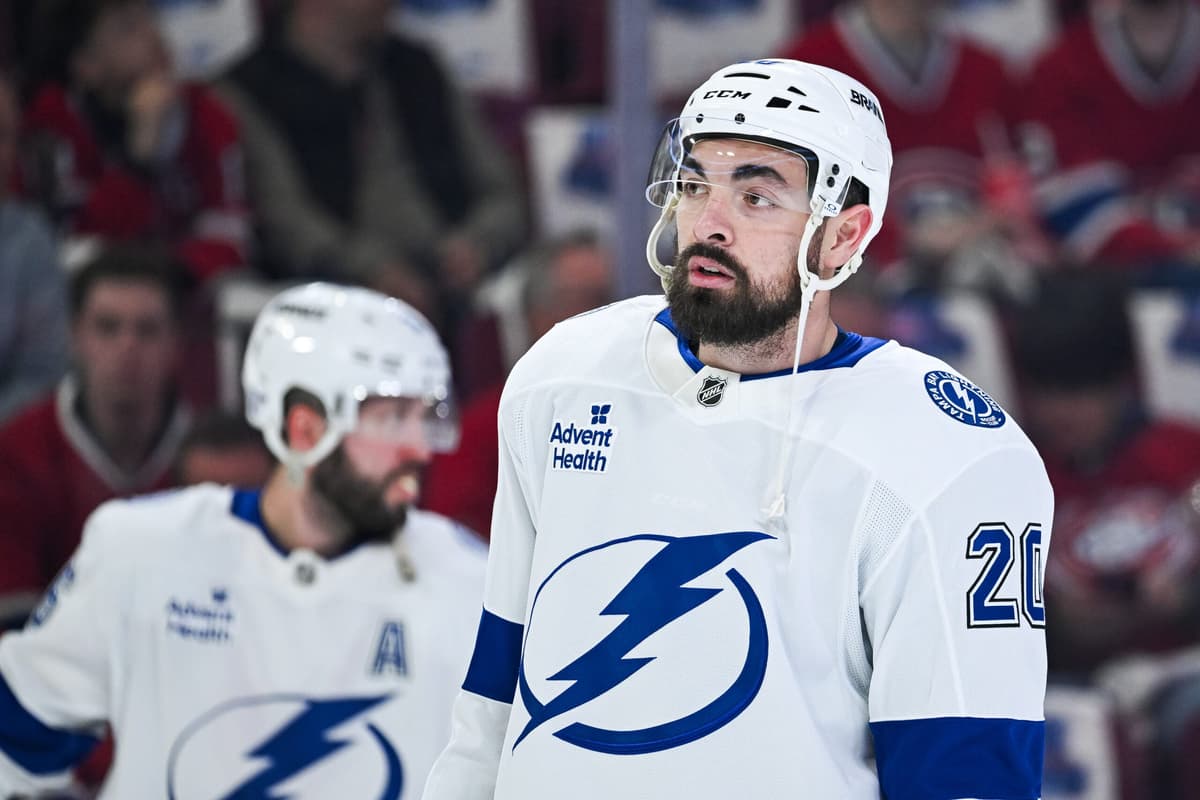
The Toronto Maple Leafs acquired forward Nick Paul from Tampa Bay on the opening day of free agency, sending back goaltender Dennis Hildeby plus a fourth-round pick (2027) and a third-round pick (2028). The move reunites the Leafs with a player who has spent his entire career in the Atlantic Division—a familiarity that carries both strategic and psychological value, though the price tag reveals organizational constraints.
Paul, 31, spent the last three seasons with Tampa Bay as a depth forward capable of playing both wings and center. He averaged roughly 10-12 minutes per game in the Lightning system and contributed secondary scoring without being a primary offensive weapon. His value lies in positional flexibility and proven playoff experience; he's a fourth-line anchor who can handle defensive assignments and penalty kill work. For a Leafs roster that has been criticized for top-heavy construction, Paul represents a low-risk, low-ceiling addition to the forward group.
The real story is what Toronto gave up. Hildeby, a 25-year-old goaltender in the Leafs' pipeline, represented future cap flexibility and emergency depth behind their starter. Shipping him to Tampa—along with two draft picks spanning consecutive seasons—signals that management views the 2026-27 window as a now-or-never moment for contention. The goaltending market was thin heading into free agency; the Leafs essentially paid to subtract a prospect while adding a veteran wing. That's organizational triage, not a championship-caliber move.
For prop bettors, the angle centers on Leafs forward usage rates and depth-line consistency. Paul's involvement will smooth out mid-ice matchups in regular-season play, likely reducing the variance in Toronto's fourth-line scoring production. Rather than a No. 12 or 13 forward struggling to find minutes, the Leafs now have someone with defined depth-line expectations. This makes anytime goal props on Leafs role players (fourth-liners and outside-the-top-six contributors) more predictable but lower-ceiling; Paul will eat 9-11 minutes nightly but won't be in high-leverage moments. His shot volume in the 1.5-2.0 per-game range is unlikely to move totals. Where the edge materializes is in fading outlier performances from secondary Leafs forwards—the market will price in stability that may not exist if usage shuffles due to matchups or injury, and Paul's arrival locks in a portion of that minutes pie.
The broader takeaway: this trade adds defensive depth and reduces offensive variance at the cost of goaltending optionality. For season-long Leafs props, expect slightly tighter clustering around projected lineup totals, with less volatility from reserve-forward contributions. Single-game angles should focus on whether Paul's deployment (matched against third-line opposition) aligns with game script; in blowouts or tight defensive contests, his shot and assist volume will follow predictable patterns that the market may overprice early in the season when the Leafs roster is still in the public's imagination.