Kraken Trade for Samoskevich Signals Offensive Urgency After Fourth Playoff Miss
By Erik Schwartz ·
Seattle sells draft capital to acquire a Stanley Cup-winning forward, betting a mid-20s prospect infusion can arrest a franchise in freefall.
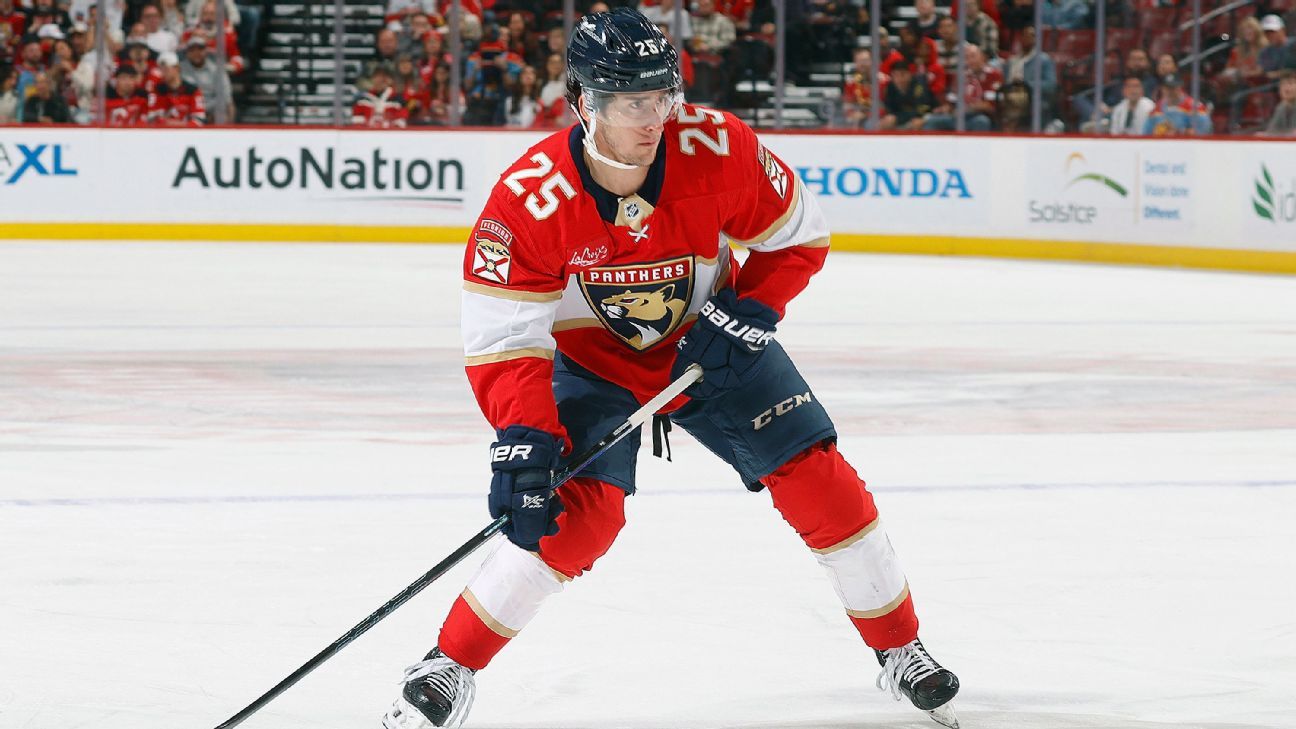
The Kraken acquired 23-year-old forward Mackie Samoskevich from Florida on Sunday, surrendering the No. 25 overall pick in Friday's draft plus a conditional second-rounder to land a player who won back-to-back Stanley Cups with the Panthers in 2024 and 2025. Samoskevich carries 64 points across 160 regular-season and playoff contests—modest production for a player of his pedigree—but arrives in Seattle as a restricted free agent needing a new deal and, more critically, as a tangible roster upgrade for a franchise that has now missed the playoffs four times in five seasons.
The Panthers' willingness to trade Samoskevich reflects their post-Cup hangover and injury-plagued 2025-26 season. Florida is pivoting toward youth and cap flexibility; moving a young forward with playoff experience for late-first-round and conditional-second-round assets makes organizational sense. For Seattle, the calculus is inverted: general manager Jason Botterill is gambling that a proven winner with hands and speed can catalyze a stalled offense. The Kraken ranked 24th in goals per game last season at 2.78—a figure that penalizes both their goaltending depth (save percentage issues in key stretches) and their inability to generate consistent scoring chances.
Samoskevich's integration matters immensely because Seattle's playoff drought has created urgency without depth. Matty Beniers, a Michigan teammate of Samoskevich's, anchors the forward group, but the Kraken lack the secondary scoring punch that carries teams into contention. Adding a 23-year-old with championship experience and above-average skating—especially in transition—should modestly improve their expected goals generation, particularly at even strength. The Panthers won Cups by deploying secondary scoring weapons in high-leverage moments; Samoskevich's role there was complementary, not primary, but it signals reliability under pressure.
From a betting perspective, the timing of this acquisition shapes near-term prop exposure. Samoskevich's contract negotiations will unfold over the next 2-3 weeks; his salary cap hit remains unresolved, which constrains Seattle's remaining cap space and may force further roster trimming before training camp. This uncertainty blunts the immediate upside of his goal and assist lines. More directly, Seattle's overall offensive profile improves at the margin—their goals-per-game total for 2026-27 should tick modestly higher once his deal is finalized and he's integrated into the forward pecking order. Early season overs on the Kraken team total (projected 3.0–3.2 goals per game, reflecting marginal gains from adding Samoskevich) carry modest value if oddsmakers haven't yet adjusted for the ceiling bump.
That said, one trade doesn't repair a franchise's scoring depth. Seattle still needs a first-line winger and stronger goaltending consistency. Samoskevich is a complimentary piece in a retooling effort, not a singular solution. His point totals in 2026-27 will depend heavily on line assignment and power-play usage—two variables that remain unconfirmed. Fade individual Samoskevich goal and assist props in his first month as a Kraken; the variance on line deployment is too high and the negotiating period adds roster uncertainty. The broader organizational bet—Seattle's team total overs—carries modest merit only if the market hasn't yet priced in the incremental offensive gain.