Kings Sidestep Doughty Extension: Why a Year-Long Pause Signals Deeper Roster Uncertainty
By PropBetEdge Editorial Team ·
Ken Holland's decision to table Drew Doughty's contract talks until 2027 leaves Los Angeles in limbo on its franchise defenseman—and opens a window of ambiguity that could reshape the team's defensive identity heading into next season.
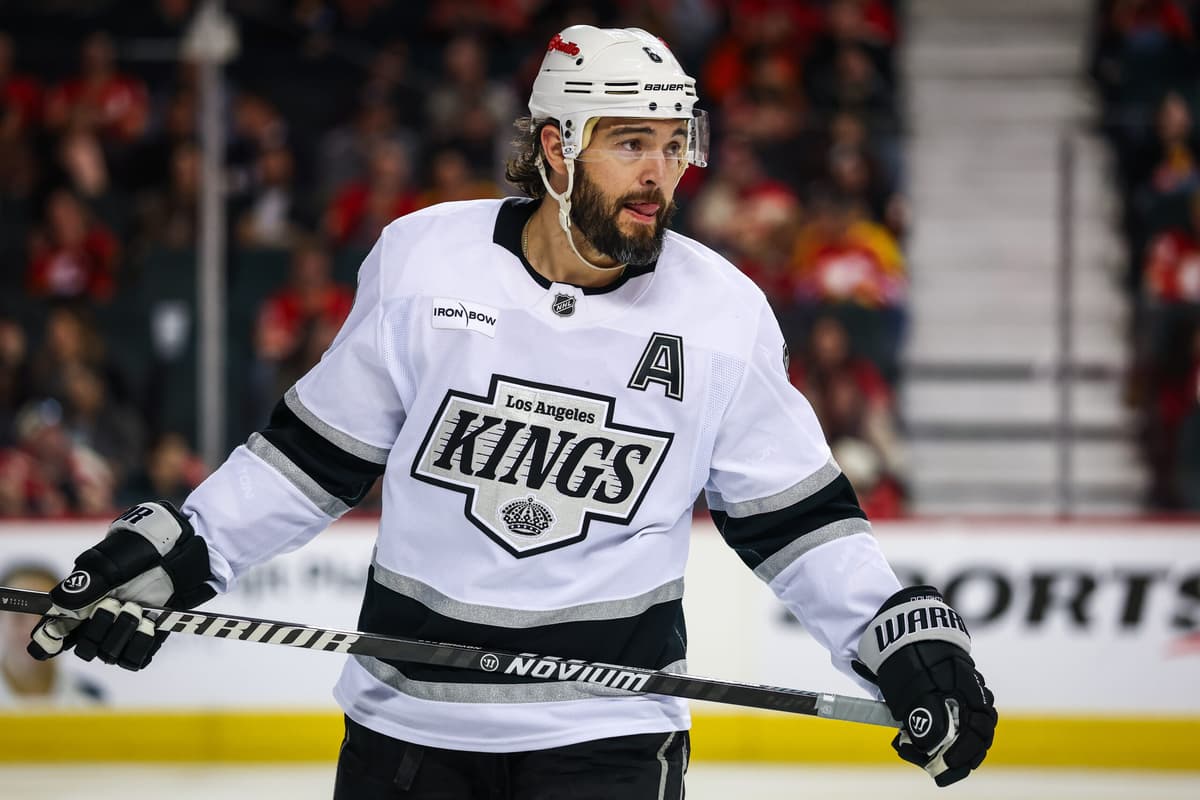
Drew Doughty will not get a contract extension this summer. On Friday night, Kings general manager Ken Holland confirmed that despite meeting with the 36-year-old defenseman in recent weeks and Doughty's eligibility for a new deal as of July 1, Los Angeles has chosen to punt the decision. Both sides agreed to reassess in a year—after one final campaign on Doughty's current $11 million AAV deal. The message from Holland was measured: Doughty wants to finish his career in Los Angeles, and the organization respects that desire. But the team isn't committing to it just yet.
On its surface, the delay reads as simple roster management. Doughty is 36 years old. His production has declined from his Norris-winning 2015-16 peak. At $11 million, he's one of the higher-paid defensemen in the league, and teams rarely tie long-term money to players in their late thirties unless they're genuinely elite or integral to a current Cup window. But Holland's framing—"let's see where he's at, let's see where we're at"—contains a sharper admission: the Kings are uncertain about their own direction. A team confident in its trajectory signs its franchise legend to a deal that lets him retire there. A team hedging its bets keeps him month-to-month.
Doughty has been a cornerstone since 2008. He won two Cups, claimed the Norris, and ranks in the top three for games played as a King. His name is woven into the franchise's identity in a way few athletes ever are. But the team's failure to lock him in for what could be his final year suggests Los Angeles is either evaluating a rebuild or preparing for the possibility that Doughty's decline accelerates faster than expected. The modified no-trade clause and $11 million salary also complicate any midseason move if the Kings decide to pivot—Doughty has veto power, and few teams will absorb that cap hit for a 37-year-old blueliner in a trade. Holland is, in effect, buying information while keeping his options theoretically open.
For betting purposes, this creates a specific defensive volatility story. Doughty plays significant minutes for the Kings—and his performance metrics matter for team totals and game outcomes. If his ice time remains constant but his efficiency declines further over the next season, Los Angeles' penalty-kill efficiency and even-strength goal-against rate could deteriorate. The team's defenseman-pairing chemistry is also a hidden variable; if Doughty is playing with less confidence, knowing his future is unresolved, his partner's play can degrade in tandem. Conversely, if the Kings use this season as an audition year and lean harder on younger defensemen (or if Doughty plays more inspired knowing it could be his last rodeo), the team's defensive profile shifts upward. The point: Los Angeles' defensive output next season carries more noise than usual because the team's internal clarity is ambiguous. Games involving the Kings should be treated with added caution on -140 or better moneyline odds and team total overs at inflated numbers. The uncertainty is real.
Holland's patience likely extends beyond just Doughty. A team unwilling to commit to its marquee veteran is often a team running low on conviction across the board. Watch for similar hesitation on contract talks with other pending free agents this offseason. If the pattern holds, the Kings' roster next season will be built more on short-term prove-its than long-term certainty—a structural choice that usually correlates with higher variance in performance and, by extension, more volatile betting lines.