Chayka's Bobrovsky Gamble: Why Aging Goaltender Risk Reshapes Toronto's Win Totals
By PropBetEdge Editorial Team ·
Toronto's new GM has staked his tenure on a 37-year-old goalie whose last season was historically bad—and a defenseman no one else wanted until now.
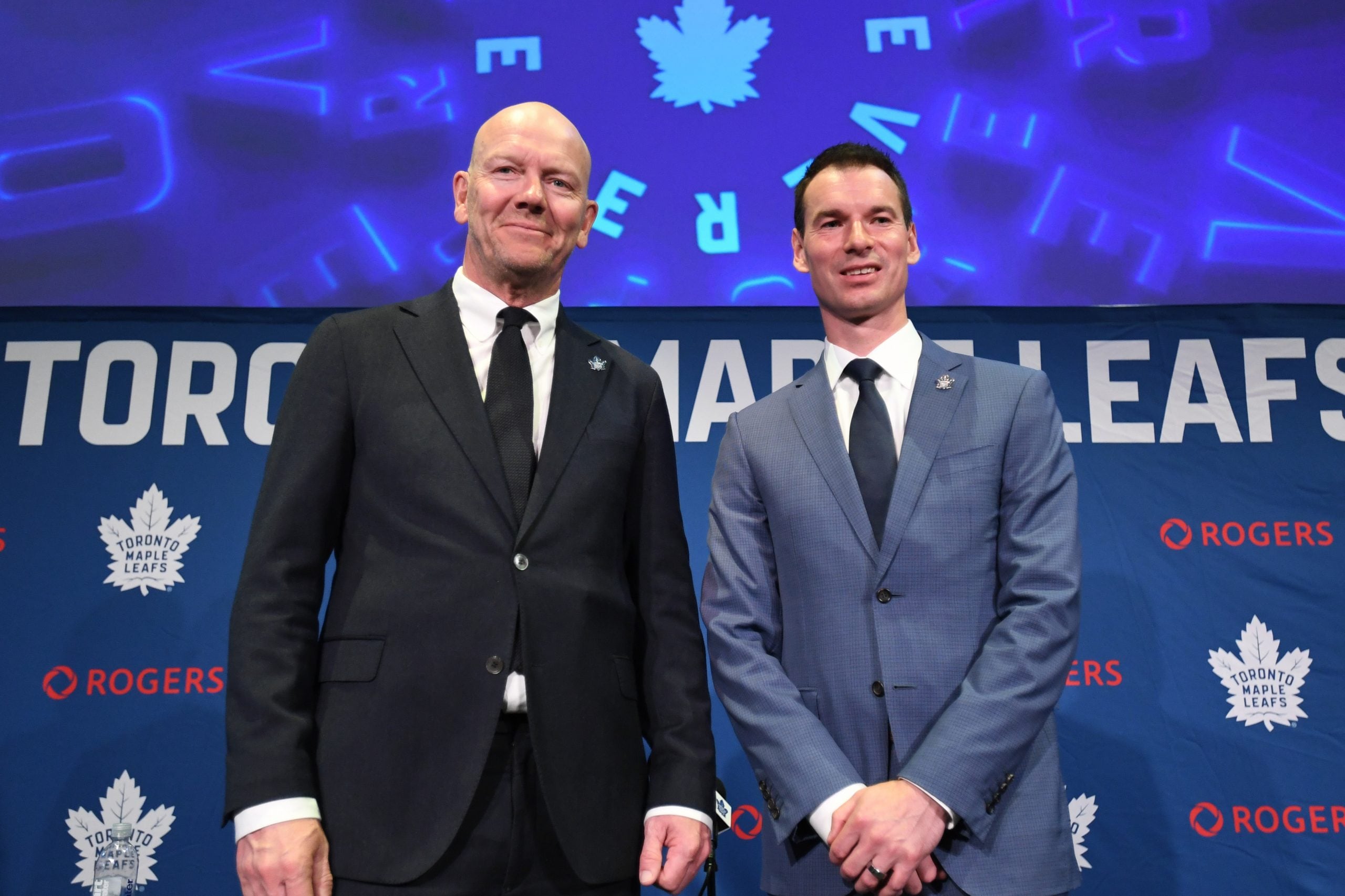
John Chayka arrived in Toronto six weeks ago and immediately signaled his philosophy: build by subtraction and high-leverage addition, not marginal tweaks. In roughly 50 days, he has already rewritten between one-third and one-half of the Maple Leafs' roster. Two moves tower above the rest—and both are structural bets that will either validate his vision or accelerate his departure.
The first is Sergei Bobrovsky. Toronto acquired the 37-year-old goaltender on the premise that a single catastrophic season doesn't erase a Hall of Fame track record. Last season Bobrovsky posted a .877 save percentage and 3.07 goals-against average—the worst numbers of his career. The context matters: he had just completed three consecutive Stanley Cup Finals runs, averaging 76 games per season across three years. Yet after the 2022-23 season, when similar metrics prompted identical doubts about his viability, Bobrovsky lost Florida's starting job to Alex Lyon in the playoffs, reclaimed it when Lyon faltered, and then led the Panthers to back-to-back championships. Chayka is betting that narrative repeats: that Bobrovsky's decline is cyclical, not terminal, and that when October arrives, a future Hall of Famer with proven playoff pedigree can anchor a deeper Toronto run than whoever else the market was offering at that position.
The second gamble is Darren Raddysh: an eight-year, $68 million commitment to a journeyman defenseman who spent nearly a decade earning league-minimum salaries before a breakout season finally caught the open market's attention. Unlike Bobrovsky—a proven commodity in decline—Raddysh is an unproven commodity in sudden ascent. The risk is that one strong season, rather than a durable skill plateau, drives the price tag. If he regresses to journeyman production, Toronto has locked $68 million into a defensive third-pairing performer. If he sustains his elevated level, Chayka looks prescient. There is no middle ground: these are not hedged bets.
For prop bettors, Bobrovsky's acquisition reshapes Toronto's goalie-adjacent markets. His save percentage will be the critical variable. If he rebounds toward .910+ (his pre-decline baseline), expect team-total overs at 115-118 wins to carry less risk; a high-volume, efficient goaltender compresses variance and eliminates low-possession games that would have blown leads under a struggling netminder. Conversely, if Bobrovsky's .877 season was predictive rather than aberrant, Toronto's goalie save percentage will remain a drag on win probability. The Raddysh contract has less immediate prop surface, but it signals Chayka's confidence in team defense as a systemic rebuild element. Lean overs on team total wins only if Bobrovsky's first 15 games show a rebound toward .905+; a single month of sub-.900 hockey validates the decay thesis and risks a significant line adjustment downward.