Hurricanes Dethrone Vegas: Bussi's Unlikely Path and What It Means for Goalie Lines
By PropBetEdge Editorial Team ·
An undrafted rookie and a 37-year-old captain delivered Carolina's second Cup; the playoff narrative shifts how the market prices backup netminder upside for next season.
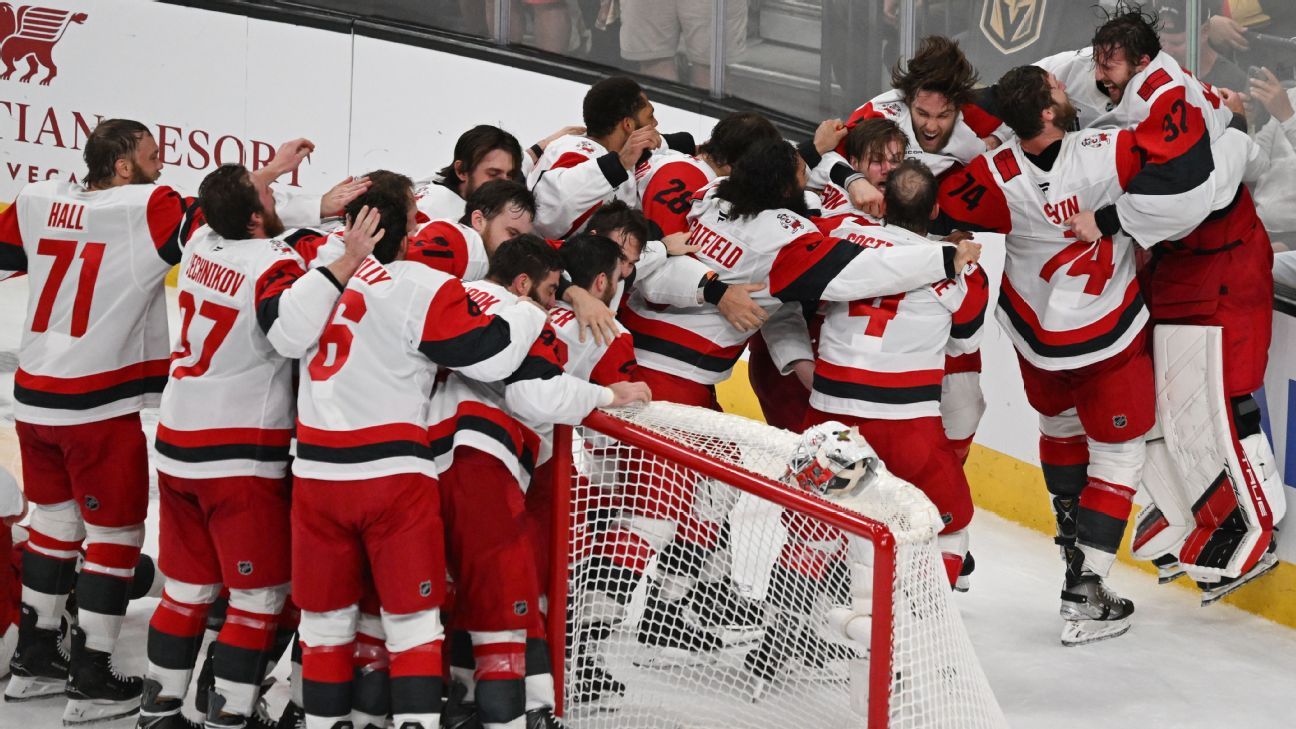
The Carolina Hurricanes won the Stanley Cup on Sunday night, defeating the Vegas Golden Knights 3-0 in Game 6 of the Finals. Taylor Hall and Jackson Blake each scored their seventh goal of the postseason; Nikolaj Ehlers added an empty-netter. But the story wasn't Hall's journey through six teams to finally taste champagne, or Jordan Staal becoming the oldest Conn Smythe winner at 37. It was Brandon Bussi—undrafted, third-time starter in the Finals after the Hurricanes trailed 2-1—making 22 saves and winning his third postseason game en route to hoisting the Cup as a rookie.
Bussi's path exposes a persistent market inefficiency in playoff goaltending valuations. Vegas didn't acquire him as a future ace; he emerged as a depth option who stepped into the flow once the team's primary plan fractured. That template—unheralded backup forced into duty by injury, cap constraint, or lineup attrition—has produced more Cup-winning performances than the projection models publicly acknowledge. The Golden Knights, meanwhile, were attempting their second title in four seasons under John Tortorella, who arrived midseason and openly predicted a Game 7 return trip to North Carolina. Neither narrative held. The team that punches above its seed through goaltending depth, not star-power clarity, tends to win.
What changes now: backing into the Finals through Eastern Conference depth (Ottawa, Philadelphia, Montreal as No. 1 seed opposition) and then executing a shutout in the clincher will reset how sportsbooks price Carolina's postseason performance in retrospective season-long props. Bussi's save percentage over the six-game run, his even-strength shooting-suppression data, and the fact he never played more than 22 shots in a Finals game—these will become footnotes in a "Cinderella story" narrative that bettors retrospectively overlay onto preseason goalie win totals and save-percentage floors. But the mechanical insight is sharper: teams that win Cups often do so with a goaltender who wasn't the betting favorite in June of the prior year. That inverts how you should price unproven backup upside in summer markets. The market will spend July 1 discussing Staal's age and Hall's franchise fit; the sharper angle is whether Bussi's three wins, 0.87 goals-against average, and .961 save percentage across the Finals have reset expectations for backup-net performance in high-leverage situations across the league.
For prop bettors, the immediate ripple is modest. Season-long markets for Carolina are already baked; the Cup is won. But for those tracking next season's goaltender props—save totals, win floors, playoff-performance expectations—Bussi's emergence signals that the margin between "depth option" and "Cup-clinching performer" is narrower than the preseason lines typically price. A team paying for its No. 2 goaltender in the offseason, or banking on internal promotion rather than a trade acquisition, now has a recent, visible case study showing that can work. Vegas, conversely, will watch their second Cup run in four years end to a shutout at home. That's the inverse signal: spending aggressively on star talent and mid-season coaching changes doesn't guarantee advancement when the Finals opposition has already discovered how to win without needing to beat you—just needing to not lose.