Hurricanes One Win From Cup: How Depth and Discipline Separated Vegas in Game 5
By Ty Whitney ·
Carolina's 4-2 win puts them 36 hours from a championship, but the injury to William Karlsson and Vegas's unforced penalties reveal something sharper about the Final's momentum heading into Game 6.
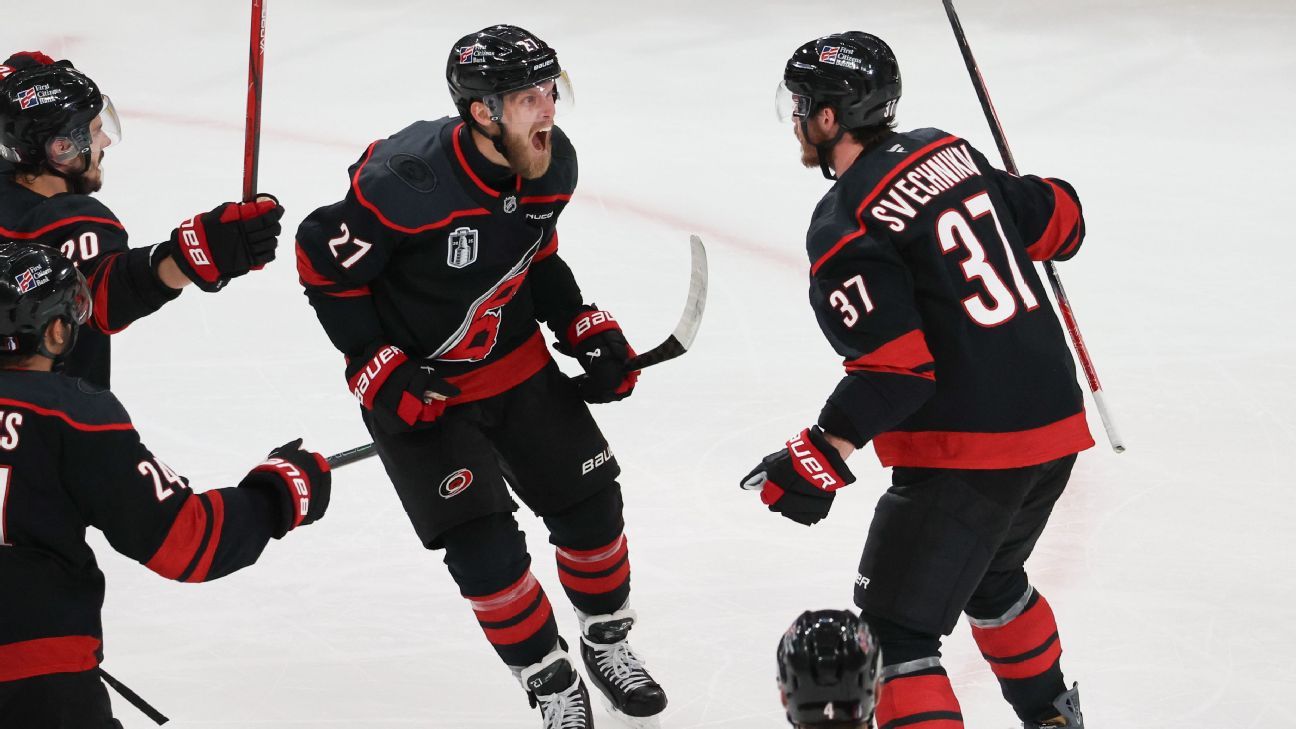
The Carolina Hurricanes are 60 minutes away from their first Stanley Cup since 2006 after dismantling Vegas 4-2 in Game 5 on Thursday night. What looked like a potential Vegas rally—the Golden Knights grabbed a power-play goal in the first six minutes—evaporated once the Hurricanes settled into their structure. Jordan Staal tied it immediately, and then the Hurricanes' offense became a assembly line: Andrei Svechnikov with two, Sebastian Aho with one more, all backed by a bench that has rotated contributors throughout this series. The difference wasn't flash. It was consistency and a refusal to surrender momentum once it shifted.
The Golden Knights' roster construction, which carried them to this final, suddenly looked thin in the middle periods. William Karlsson left Game 5 in the second period with an apparent left arm injury after a hit from Sean Walker and didn't return—a blow to Vegas's depth that compounds an already difficult task heading into Game 6 Sunday in their home building. But more immediately damaging was Vegas's own discipline. Back-to-back infractions from Jeremy Lauzon and Brayden McNabb gave Carolina consecutive power-play chances; they buried the second one. That's not a talent gap. That's execution under pressure, and it's precisely where championship teams separate from the rest. Carolina has now scored five power-play goals in the last five games of this series—matching what they'd managed across their prior eight postseason contests combined. The Hurricanes went from having scattered looks on the man advantage to weaponizing it as a primary offensive engine.
For bettors tracking Game 6, the injury status of Karlsson will reset Vegas's personnel mix and likely compress their top-six rotation into heavier usage. That shortens their effective bench depth and increases fatigue pressure on an already-worn roster that's been outshot in four of five games. Carolina's power-play conversion rate has become the series' clearest statistical advantage: 21.7% (5-for-23) over the last five games versus Vegas's 11.1% (1-for-9) in the same stretch. Even more telling, the Hurricanes' discipline—measured in minor infractions drawn per 60 minutes of play—has stabilized in the latter half of the series after Game 1's shaky start; Vegas, by contrast, has taken a rising number of self-inflicted penalties as desperation sets in.
The betting implication cuts both directions. Vegas moneyline odds will likely steepen Sunday, which creates risk for bettors expecting the Golden Knights to respond. Carolina's power-play line (currently ranging 1.5-2.0 goals in some markets for Game 6) is worth monitoring closely; if Vegas loses Karlsson for a meaningful stretch, the Hurricanes' ability to generate chances with the man advantage becomes even more lethal. Conversely, unders on Vegas team total are attractive—fewer reliable line combinations typically means fewer scoring opportunities, especially against a Hurricanes defense that has tightened substantially since Game 1. The Hurricanes are not perfect; they gave up the first goal and were outshot in the opening frame. But the margin between managing adversity and collapsing under it is visible in the data: Carolina's goals-per-game has increased each round, while Vegas's has declined.