Jarvis Absence Exposes Hurricanes' Conversion Deficit Ahead of Title Defense
By Erik Schwartz ·
Carolina's Stanley Cup triumph masked a persistent goal-scoring efficiency problem that will intensify when Seth Jarvis undergoes shoulder surgery to start the 2026-27 season.
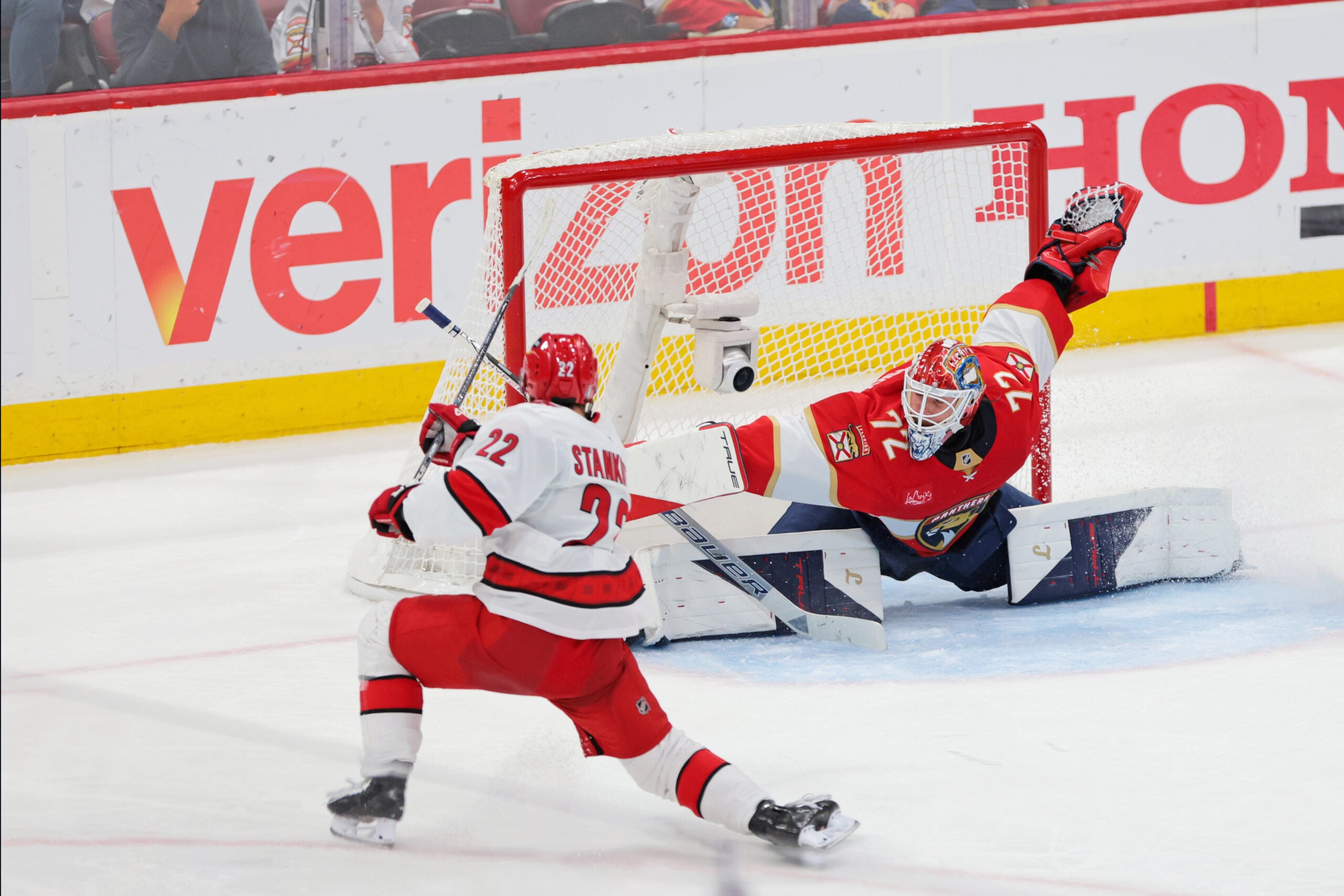
The Carolina Hurricanes won the Stanley Cup despite one of the NHL's most glaring scoring inefficiencies: a 25-goal underperformance against expected output across the entire 2025-26 regular season. While the championship erased the narrative pressure, it did not fix the underlying mechanism. The Hurricanes generated 3.15 expected goals per 60 minutes at 5-on-5—second in the league—but converted only 184 of the 209 goals that probability predicted, finishing tied 10th in actual goals per 60. Seth Jarvis, one of three Hurricanes to reach 30 goals last season, is now sidelined for the early stretch of 2026-27 following shoulder surgery. His absence doesn't merely subtract one scorer; it compounds an organizational flaw that has persisted regardless of playoff success.
The math of Jarvis's injury timing is unforgiving. Stankoven and Blake may absorb some offensive load—both are young enough to deliver incremental volume—but neither Jarvis's goal-scoring touch nor the veteran depth will offset the loss cleanly. Jordan Staal hit 20 goals in 2025-26 and figures to decline; aging wingers in the core roster rarely sustain production year-to-year. Even if the young guards each add 10 goals, the Hurricanes enter October with a structural hole in their most dangerous output, precisely when they can least afford inconsistency in a reloading Metropolitan Division.
The conversion tax becomes a prop hazard immediately. Hurricanes team total goals sit in the 2.85–3.05 range (normalized for early-season pace), and that pricing assumes incremental offensive recovery from a Cup-winning squad. But the team will face the first two months without Jarvis—likely 12-15 games. That window compresses the margin for error on a team whose 2025-26 efficiency already under-delivered by 25 goals over 82 games. Extrapolated: a 2.76 GF/60 baseline applied to a 15-game Jarvis absence yields roughly 0.69 goals shorted per game, or a 10–11 goal shortfall across that span.
Market pricing rarely discounts single-player absences with surgical precision, especially for a recent Cup winner where narrative momentum inflates early offensive totals. The Hurricanes' season total over/under on wins will anchor to their defensive and goaltending hold—both elite—but team total goals over anything 2.95+ per game in Jarvis's first month is vulnerable. The underlying issue isn't volatility or randomness; it's the organizational gap between shot quality (elite) and conversion rate (middle of the pack). Remove one of the three 30-goal finishers and that gap widens. Books may not have fully baked the compounding math of both losses into team-total pricing.