Hurricanes' Dominant Second-Period Blueprint Dismantles Flyers' Playoff Run
By PropBetEdge Editorial Team ·
Carolina's structural superiority—particularly in the middle frame—exposes why depth and puck possession separate contenders from pretenders in playoff hockey.
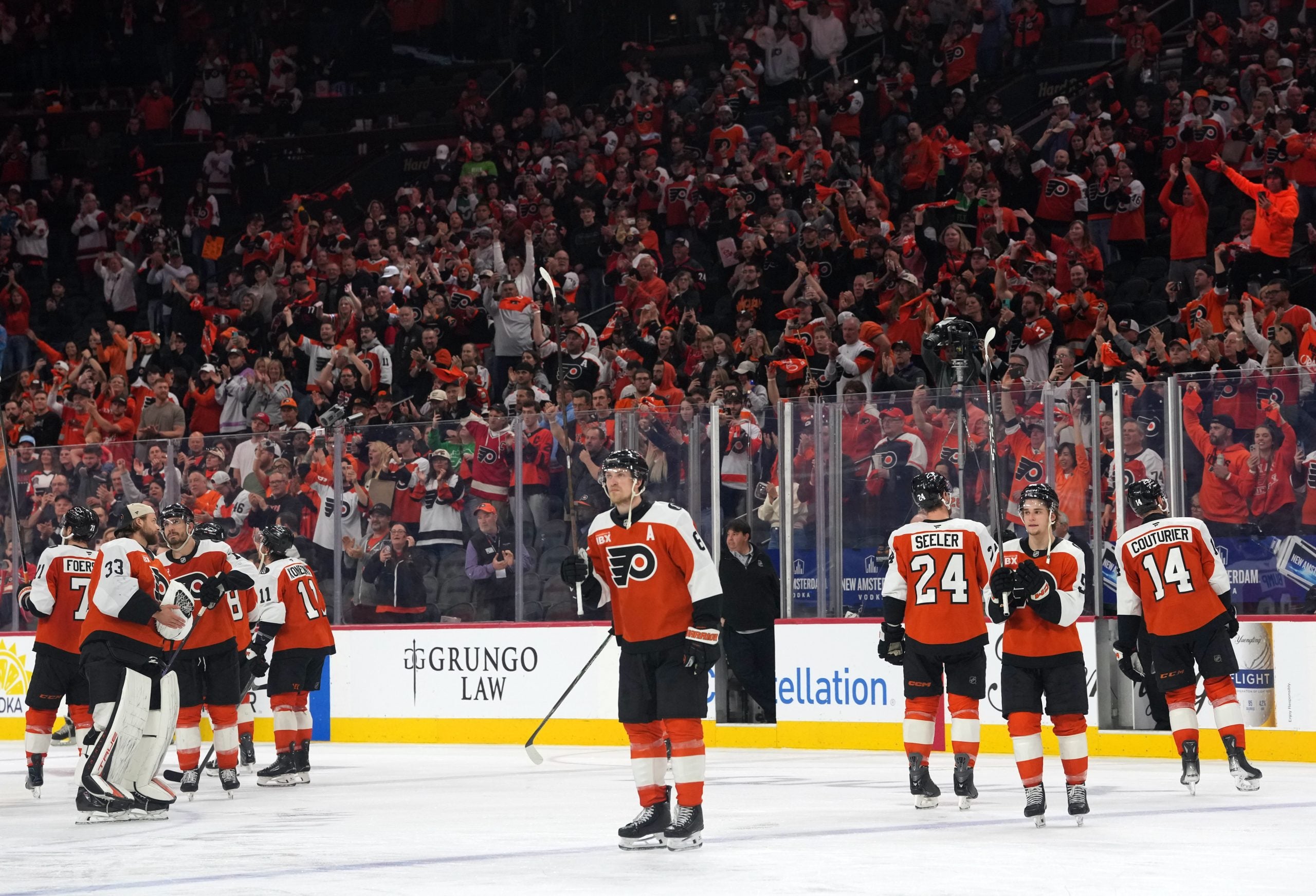
The Philadelphia Flyers' season ended the way too many have in recent years: at center ice, sticks raised, half-hearted applause echoing through the arena. But Saturday's 3-2 overtime loss to the Carolina Hurricanes in Game 4 of the second round carried a different weight. This wasn't another early exit by an overmatched roster. This was a team that had clawed back to playoff relevance—beating the odds to grab a wild-card spot, dispatching their first-round opponent, and taking a legitimate Stanley Cup contender to six games—only to hit the ceiling of what they could build. The Hurricanes, now 8-0 to start their playoff run, simply operated on a different plane. They finished the series with a 40-17 shots advantage in Game 4 alone and controlled 66.68% of expected goals at 5-on-5 across the night. More damaging than the raw volume was the structure with which Carolina imposed their will. The Hurricanes' forecheck tightened measurably in the second period, where they posted a 76.81% expected-goal share over the series and outscored Philadelphia 3-1 across those middle frames. It wasn't flashy hockey—it was systematic asphyxiation. Porter Martone and the Flyers' top line generated early pressure and staked Philadelphia to a first-period lead on Tyson Foerster's slot finish. But once the second period arrived, the long change became a liability. Carolina's relentless fore-check and sustained possession in the neutral zone forced the Flyers into reactive mode. Logan Stankoven's early third-period go-ahead goal felt less like momentum and more like inevitability; the Hurricanes had already spent 20 minutes suffocating the Flyers' rhythm. Travis Konecny and Alex Bump tied it moments later, but Philadelphia never found their way back into the driver's seat. Jackson Blake's overtime winner came from a prime scoring area—and Dan Vladař was close to denying it—but it reflected the larger narrative: Carolina dominated puck possession in sudden death, never allowing the Flyers a foothold to generate their own chances. For bettors tracking this series, the second-period pattern was the clearest tell. Carolina's ability to impose their system consistently in the middle 20 minutes meant that Flyers unders on shots-on-goal (they recorded just 17 Friday night) and moneyline exposure became increasingly vulnerable as the series progressed. The Hurricanes' 40-17 Game 4 advantage also underscores how lopsided puck-possession metrics translate to shooting volume: if you can't control play, you can't generate high-danger chances or accumulate shot totals. For anyone tracking the remaining Eastern Conference bracket, the Hurricanes' structural superiority in second periods—and their ability to dictate game flow in transition—marks them as legitimate Cup contenders. The Flyers showed growth but also revealed the gap between a scrappy playoff team and one built to sustain excellence over seven-game series.