Hurricanes' Slot Defense Adjustments Target Vegas High-Danger Looks in Game 2
By PropBetEdge Editorial Team ·
Carolina's puck-exit breakdowns cost them Game 1; their defensive rematch gameplan centers on collapsing Vegas's interior scoring lanes.
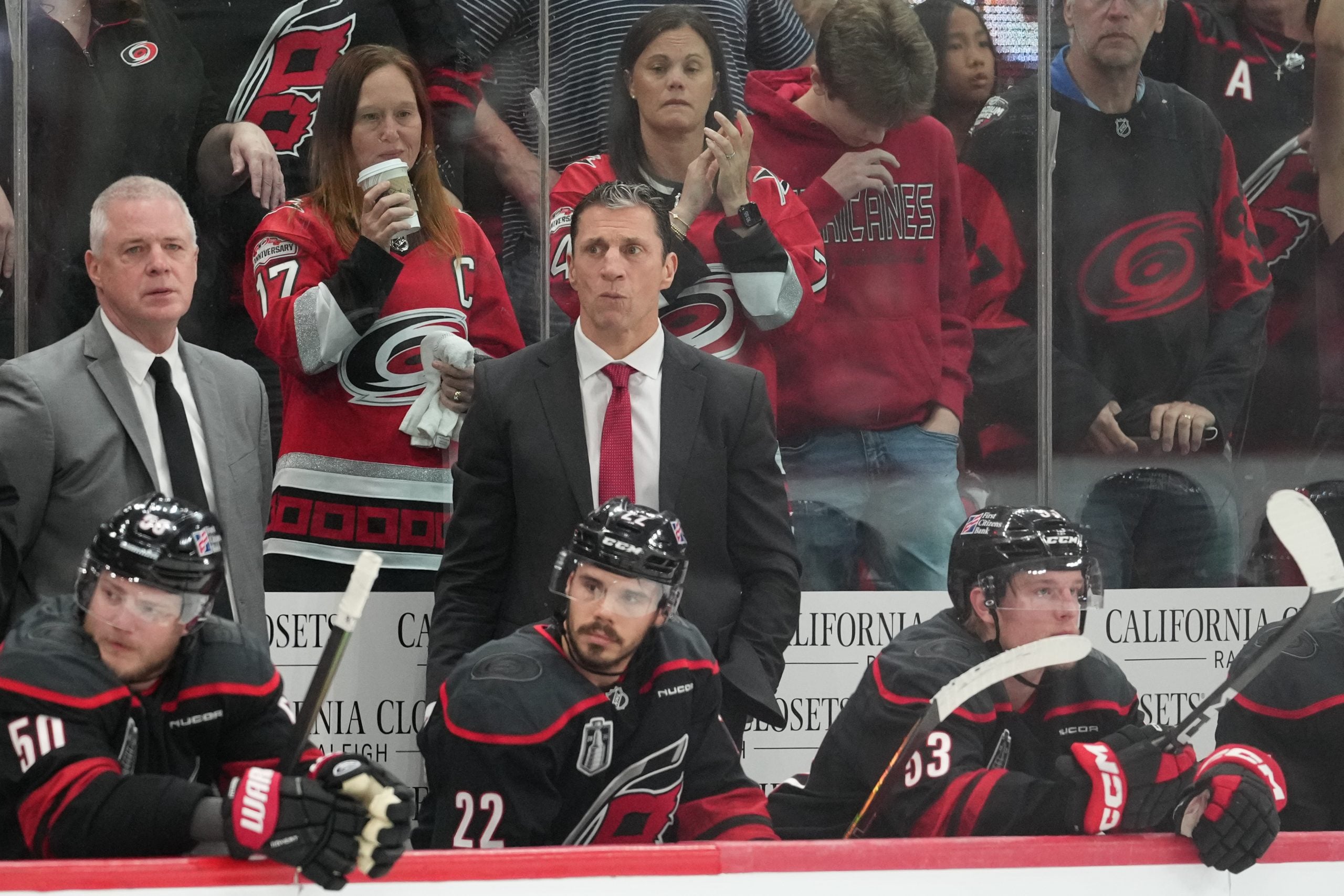
The Hurricanes face a 1-0 series deficit after surrendering a 5-4 loss in Game 1, but the margin of defeat (one goal) and their second-period defensive collapse offer a salvageable diagnostic. Vegas scored twice in the second period, both times exploiting Carolina's delayed puck-exit execution and high-danger slot positioning. During off-day media availability, defenseman Sean Walker isolated the correctable layers: breakout timing, puck movement pace, and coverage density in the inner slot. Vegas didn't win Game 1 through elite puck possession—they capitalized on transitional chaos. That's a coachable failure. Chatfield echoed the same frame, noting the team had already returned to video study to identify adjustment vectors. This isn't panic-mode rhetoric; it's the defensive protocol the Hurricanes deployed mid-series against Montreal in the Eastern Conference Final, a series they won. Their defensive structure under Tim Gleason has held up against elite offensive talent all season. The issue in Game 1 wasn't architectural. It was execution.
Breakout timing and exit pressure map to a specific advantage for Carolina in Game 2. Vegas's forecheck is lethal in transition, but it requires Carolina to mishandle the initial clearance. When the Hurricanes execute clean exits—three-pass breakouts, defensemen reading forecheckers and shifting the puck laterally before Vegas's second wave arrives—they neutralize Vegas's transition game substantially. Andersen's save percentage in Game 1 was functional but not dominating; the real leak was preventable high-danger chances. Vegas generated eight to ten prime scoring opportunities from the slot, a volume that reflects defensive positioning breakdown more than goaltending failure. Correcting those breakout sequences doesn't require personnel changes or tactical overhauls. It requires Carolina to return to their season-long default.
The slot-coverage emphasis matters because Vegas's top power-play unit and even-strength attack lean heavily on interior recycling. Vegas doesn't win games by out-possessing teams; they win by converting short-range looks at a brutal clip. If Carolina tightens their breakout execution and shifts their coverage load toward collapsing Vegas's inner-slot space, they'll force the Golden Knights into longer-range attempts and perimeter chance creation. That shift alone compresses Vegas's offensive efficiency. The Hurricanes' defense wasn't historically bad in Game 1—they were sloppy in the moments that mattered. One video day and a game-plan reset typically address that volatility.
For prop bettors, the adjustment signals a tightened defensive posture that will manifest in two ways: fewer goals allowed (moving the puck cleanly reduces Vegas's transition volume), and fewer high-danger chances overall. Vegas's offensive unit-total goals prop likely moved higher after Game 1's five-goal showing, but that line may be overweighting a game that featured correctable structural failure. If the Hurricanes lock in their exits and collapse slot coverage as advertised, Vegas's scoring pace regresses toward their season-long average. Carolina's goalie save percentage should tick upward in Game 2 simply because the quality of chances improves in their favor—not because Andersen becomes a better goalie, but because fewer Grade-A looks reach him. That's the mechanism: cleaner defense, fewer prime opportunities, fewer goals. The line movement will catch up, but early Game 2 pricing may still overweight Game 1's offensive burst.