Quinn Hughes Extension Opens a Minnesota Window—and a Betting Puzzle
By PropBetEdge Editorial Team ·
The Wild's star defenseman is open to staying, but the math on a three-year deal shapes how you should view Minnesota's offensive ceiling next season.
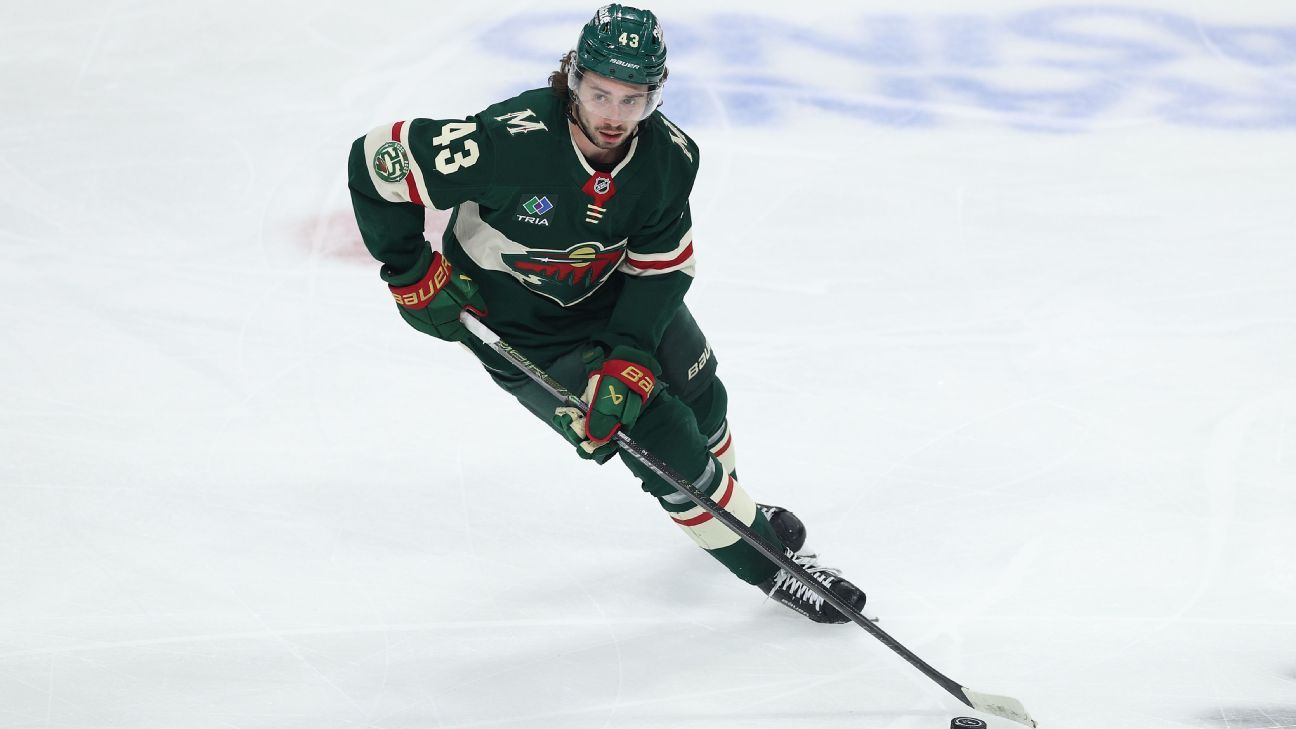
Quinn Hughes says he's willing to negotiate an extension with the Minnesota Wild, signaling he's comfortable with the organization after his December trade from Vancouver. The 26-year-old defenseman has become the team's cornerstone in six months, averaging 27:44 of ice time this season—highest in the NHL—while posting 53 points in 48 regular-season games and 15 playoff points in five postseason contests. General manager Bill Guerin made this acquisition the marquee deal of the offseason, and Hughes's willingness to discuss terms before July 1 suggests both sides see long-term mutual value.
The extension timing and structure matter enormously for Minnesota's competitive window. Speculation centers on a three-year deal that would align Hughes's next free agency (2030) with his brother Jack's unrestricted status as a New Jersey Devils center. That's no accident. Agent Pat Brisson hasn't engineered parallel free-agency timelines between brothers casually; it's a deliberate signal that the Hughes family is contemplating coordinated moves. For the Wild, a three-year commitment locks in their elite puck-moving defenseman through the prime window—precisely when Kirill Kaprizov enters his contract year (2027) and when the roster's youth reaches maximum productivity.
But here's where the betting lens sharpens. Hughes's massive ice-time investment and his offensive responsibility in Minnesota's top four forward group create a ceiling constraint. The Wild ran 26.2 shots per game this season, middle of the pack. Hughes alone cannot raise that offensive volume; it depends on forward depth, coaching philosophy, and how many secondary scoring chances convert. His assists (22 in 48 games, 0.458 per contest) benefited from an offensive system in Vancouver (where the Canucks ranked in the top 10 for team shooting percentage). Minnesota's offense has been more volatile—they ranked 18th in 5-on-5 shooting percentage last season at 8.1%. If the Wild re-sign Hughes on a three-year deal without materially upgrading their forward group, his individual assist line and team-total goals line become susceptible to underperformance relative to his usage.
The prop implications cut two ways. Hughes's elevated ice time virtually guarantees he'll touch 50+ points next season, making his season points line a durable over. But for team totals and goal volume, bettors should monitor Minnesota's free-agency activity over the next two months. A Hughes extension without corresponding forward acquisitions (a new top-six winger, a legit second-line center) suggests the Wild are betting on internal growth—a riskier thesis. In that scenario, lean unders on Minnesota team totals at preseason lines above 245 goals; the elite defenseman's presence masks the forward group's mediocrity at the aggregate level. Conversely, if Guerin lands a 30-goal scorer or a high-assist-rate center in free agency, the upgrade changes the equation entirely, and team totals regain value. The Hughes extension is a floor-raiser, not a ceiling-exploder.