McMichael's Conversion Gap, Not His Skill, Explains the St. Louis Trade
By Erik Schwartz ·
A 26-goal scorer who dropped to 14 last season is now a Blue, and the efficiency collapse tells a clearer story than the raw goal total.
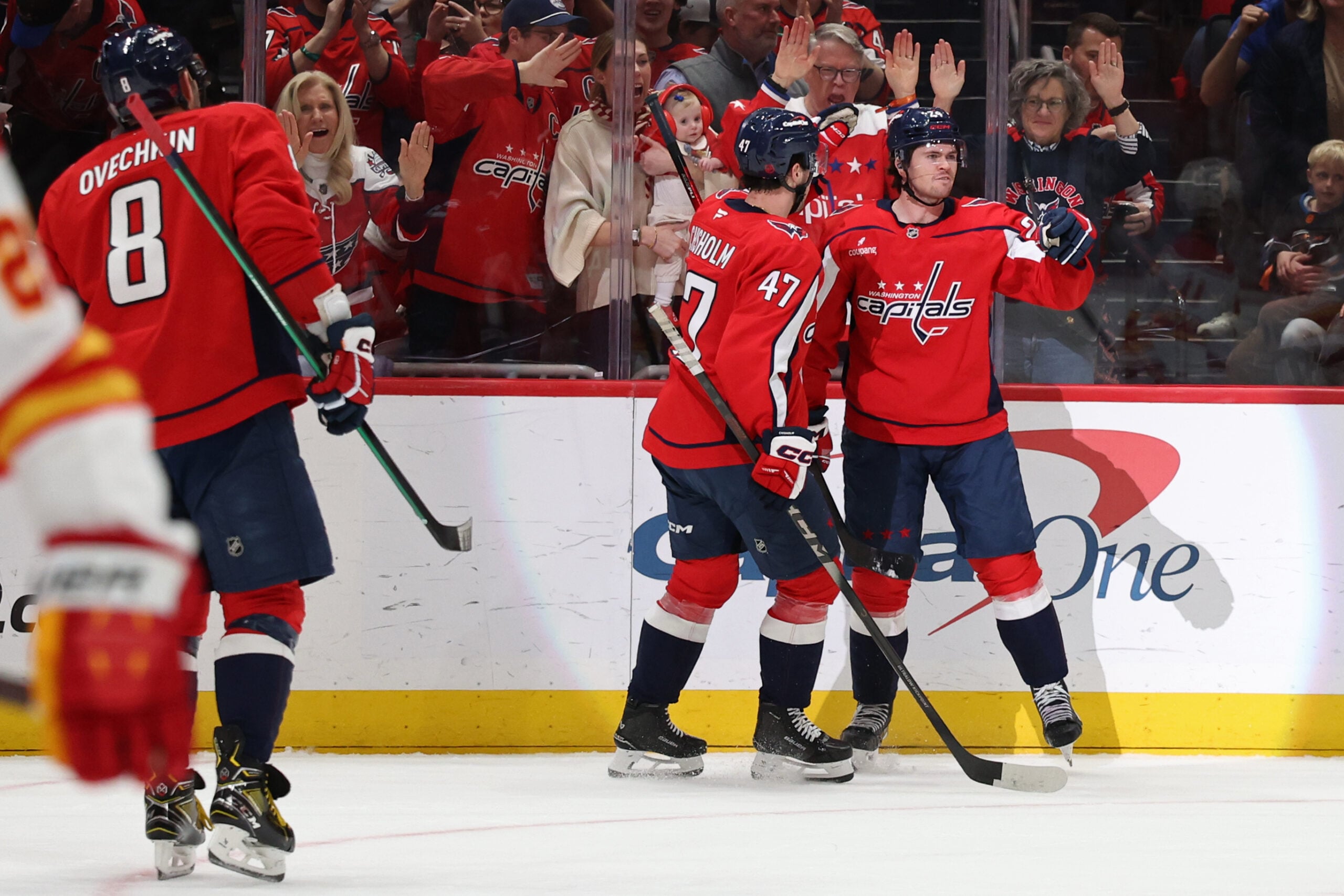
Connor McMichael arrived in St. Louis this offseason as part of the Jordan Kyrou swap, and the 25-year-old's statistical narrative reads like a cautionary tale about finishing rates masking sustainable skill. In 2024-25, McMichael posted 26 goals across 82 games with Washington—a breakout that landed him fifth on the Capitals' roster and cemented him as a top-six contributor on a Metropolitan Division champion. Last season, that vanished. He scored 14 goals in 78 games, a 46% decline that would ordinarily signal a player in freefall. The market has priced McMichael accordingly: a reclamation project on a reasonable contract, not a proven scorer.
But the composition of that decline matters more than the headline number. McMichael's shooting percentage compressed from 14.6% to 9.9%—a differential that accounts for nearly the entire production drop. He took 142 shots in 2025-26 versus 177 the prior year, so volume contributed, but the conversion collapse is the driver. Had he maintained his 14.6% clip on last season's shot volume, he would have finished at 21 goals—still a step back from 26, but evidence of a player generating legitimate scoring chances rather than a talent that evaporated.
The infrastructure for a bounce-back exists. McMichael produced 22 of his 26 goals at even strength in 2024-25, meaning he didn't depend on power-play volume or situation luck to hit that number. Last season, 12 of his 14 came at 5-on-5, reinforcing that his ability to generate offense through skill remains intact. Pairing him with Mason McTavish—another forward chasing a rebound season in St. Louis—creates a complementary wing-and-center dynamic that both teams hope will unlock the offensive chemistry neither player found elsewhere last year.
For prop bettors, McMichael's goal line carries asymmetric risk. The market has almost certainly anchored to his 14-goal finish and built his season total somewhere in the 16-19 range, potentially lower if the Blues opened the book cautiously. That pricing ignores the mechanics: a 4.7-point shooting-percentage gap is correctable within a single season, especially for a player entering his age-26 prime. If McMichael simply regresses his touch to 13% efficiency (still below his 2024-25 baseline), he lands at 18-19 goals on modest shot volume increases. The edge isn't in betting him to repeat his 26-goal campaign—that's a genuine variance spike. The edge is that a 20-21 goal outcome is materially underpriced relative to the probability implied by his underlying metrics.
Similarly, his assists floor has already proven durable. He recorded 31 assists in 2024-25 and 32 in 2025-26, demonstrating that his playmaking is independent of his finishing variance. That stability, combined with a legitimate top-six placement in a hungry St. Louis lineup, suggests his points total (57 and 46 the past two seasons) should regress toward the midpoint rather than compress further. A 50-55 point season is both plausible and likely undervalued by books still spooked by last year's goal collapse.