Celebrini's $18.8M Anchor: What a Discount Contract Means for Sharks' Win Total
By Erik Schwartz ·
San Jose just locked up its franchise engine at a below-market rate, freeing cap space to build around him—and that flexibility is a material edge for their playoff trajectory.
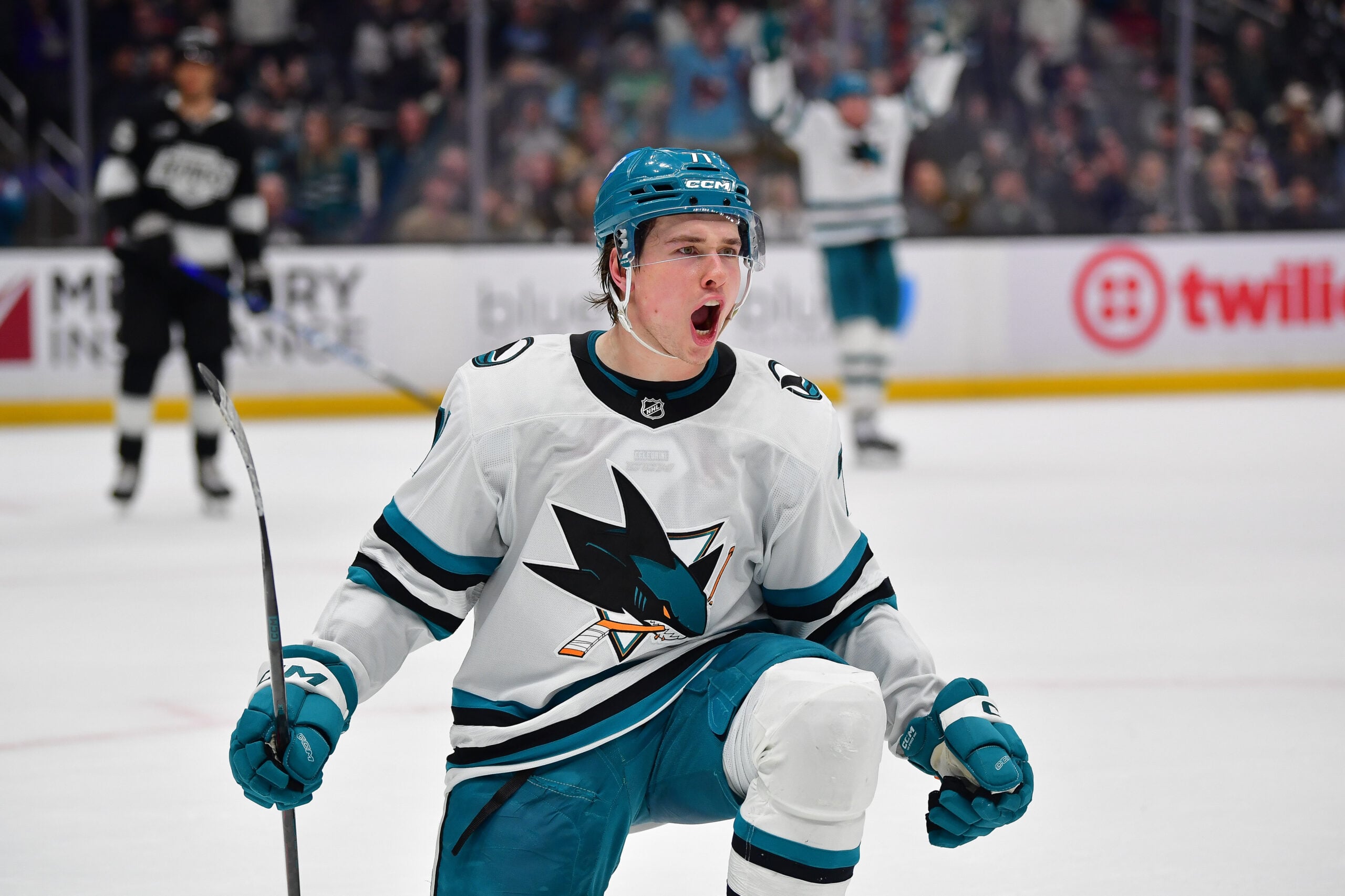
Macklin Celebrini signed a five-year extension with the San Jose Sharks on July 29, 2026, carrying an $18.8 million annual cap hit—the highest in NHL history. At 20 years old and coming off a 115-point season (1.40 PPG over 82 games), Celebrini had leverage to demand the $20.8 million maximum. He didn't. That restraint—leaving roughly $2 million annually on the table across five years—is the real story here, because it signals both player and organization alignment and creates material salary-cap runway for competitive roster construction.
The mechanics matter for futures pricing. Celebrini's 45 goals and 70 assists in 2025-26 place him in the 99th percentile of offensive volume for players under 21. His assist total, especially, suggests a playmaking dimension that transcends scoring; he's not a one-dimensional scorer relying on unsustainable conversion rates. A 115-point pace from a 20-year-old represents genuine franchise architecture, not a statistical outlier. The fact that Sharks GM Mike Grier implied ownership (Hasso Sabic) would have caved to a max-money demand underscores how disposable that $2 million per year actually was to the organization—Celebrini chose constraint.
That constraint creates a cascade. San Jose now has breathing room to extend Will Smith and add complementary depth without facing hard-cap handcuffs through 2031. The Sharks, in early 2025-26, were a lottery afterthought; with Celebrini locked and cap flexibility intact, they transform into a credible add-pieces-around-the-engine contender within two seasons. The source material grades this extension an A, centering the discount and the competitive runway it creates. That valuation is sound, but for prop bettors, the real edge is forward-looking: teams with franchise players on team-discounts, combined with ownership willingness to spend and a clear competitive window, tend to outperform their preseason win-total expectations by 2–4 games over a full season. Celebrini's willingness to take less doesn't just tell you the Sharks are better; it tells you they're more likely to exceed expectations because the front office now has the tools to upgrade.
The 2026-27 Sharks will enter the season with adjusted offensive expectations. Celebrini's presence and commitment signal that the team believes it can contend sooner than the market anticipated. Books will price San Jose's win total based on 2025-26 results (likely mid-to-low 80s in points), but the composition change—Celebrini's discount unlocking secondary scoring depth—could easily yield 3–5 additional wins compared to a linear projection of last year's roster. The extension doesn't alter Celebrini's individual prop priors (he'll still see the highest offensive volume in San Jose's system), but it does increase the Sharks' team-total expectation relative to their preseason odds.
When a 20-year-old franchise cornerstone voluntarily leaves money on the table and his owner confirms he would have paid more, the market hasn't yet fully priced the organizational momentum shift. Sharks team totals at 85–87 points should be considered vulnerable to the upside in early-season pricing, especially if San Jose addresses secondary scoring or blue-line depth in the offseason.