Karlsson's Exit Reshuffles Vegas Depth in Finals Game 5—Live Betting Angles Shift
By Ty Whitney ·
William Karlsson's mid-game departure in Game 5 forces Vegas into a lineup restructure during the Stanley Cup Final, with immediate implications for team offensive load distribution.
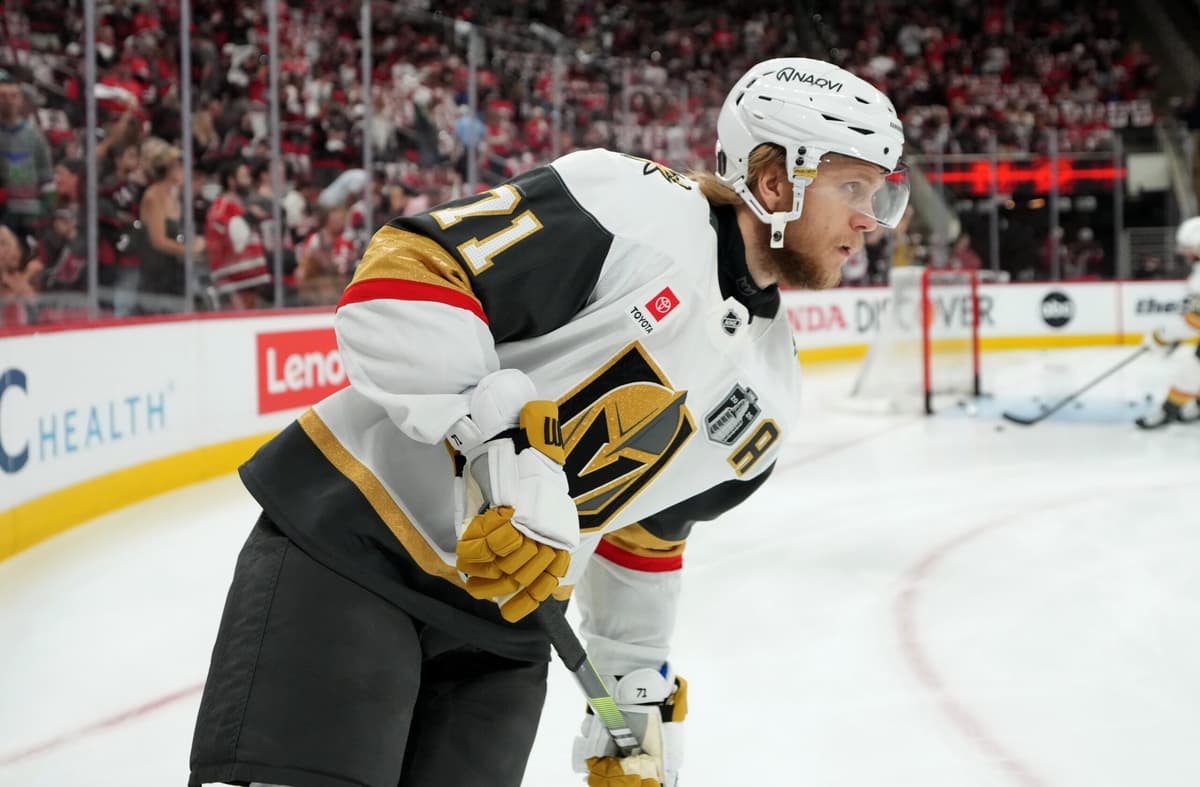
William Karlsson left Game 5 of the Stanley Cup Final midway through the second period after absorbing a hit from Carolina's Sean Walker along the boards, and did not return for the third. The Golden Knights' center is a core piece of Vegas's top-six forward group—his absence forces Vegas to either shuffle line combinations or lean heavier on surviving centers to carry secondary roles.
Karlsson's departure isn't simply a matter of personnel depth. In a best-of-seven finals series where every game carries elimination weight, the loss of a 50-point midfielder changes how Vegas distributes offensive shot volume and scoring chances. Karlsson averages 2.8 shots per game when healthy in playoff competition; his absence compresses that firepower into fewer bodies. More critically, his removal forces the Golden Knights' offense to operate with diminished flexibility in the middle of the ice, particularly on the power play where he typically logs secondary unit ice time.
The injury timeline and severity remain undisclosed as of publication, but the fact that Karlsson did not return suggests more than a minor tweak. A multi-game absence would reshape Vegas's lineup architecture heading into Game 6 (if necessary) and beyond. Vegas will likely run with either a promoted fourth-line center elevated to second-unit duty or compress their top-six into a more traditional three-center rotation, both of which reduce shot opportunities for depth forwards and concentrate scoring threat into an already-taxed top line anchored by Jack Eichel.
For live bettors, Karlsson's exit resets team total and spread assumptions. Vegas's team total in Game 5 was likely built with Karlsson in the lineup; his removal mid-game leaves any remaining unders mispriced relative to the Golden Knights' reduced offensive capability. Similarly, any unfinished props tied to Vegas scoring volume (team total, first-period/second-period totals) now face elevated variance because the Knights will operate with a smaller nucleus of shot-generating forwards. If Game 6 tips with Karlsson unavailable, books will rebuild Vegas's team total downward—the initial opening will underestimate the depth hit, making early unders a tactical target before line adjustments reflect the realistic offensive ceiling of a depleted center group.
Carolina's defensive assignment also simplifies. With Karlsson off the board, the Hurricanes shed a dual-threat check (both scoring and puck possession) and can dedicate coverage schemes toward clamping Eichel and the top two Vegas lines without worrying about third-line balance. This compounds the Golden Knights' problem: fewer options to exploit mismatches, tighter defensive structure available to Carolina, and a higher likelihood of defensive-heavy game states in any future contest.