Vegas Doubles Down on Olofsson at Bargain Rate as McCrimmon Navigates Cap Crunch
By Erik Schwartz ·
The Golden Knights re-sign their 2024-25 complementary winger on a $1.638M deal, signaling confidence in his depth role while the front office continues to exploit market inefficiencies against a tightening salary cap.
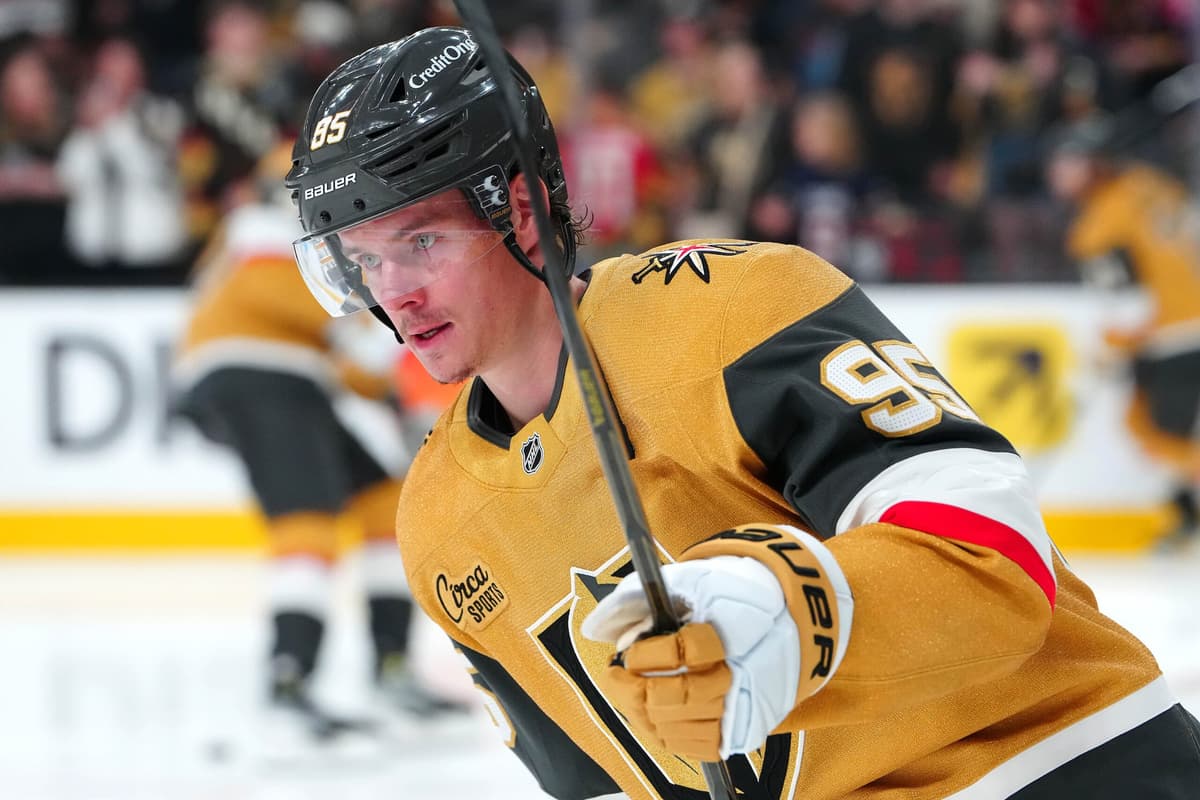
The Vegas Golden Knights have re-signed winger Victor Olofsson to a one-year contract carrying a $1.638 million cap hit, bringing the 30-year-old back for a second stint after he logged 29 points across 56 games in 2024-25. The move, announced today, represents another cost-effective retention by general manager Kelly McCrimmon, who continues threading the needle against the NHL's upper salary-cap boundary.
Olofsson's 2024-25 season with Vegas established him as a functional third- or fourth-line producer—a 0.52 points-per-game rate that doesn't scream star power but doesn't disappoint for a depth winger either. His return on this contract hinges on his role definition. If the Golden Knights deploy him as a complementary scorer in the bottom six, his 29-point pace over 56 games projects to roughly 42 points over a full 82-game season, a serviceable if unspectacular output. The $1.638M price tag suggests Vegas views him as replacement-level depth, not a core offensive engine.
What matters for Vegas is cap flexibility. McCrimmon has engineered this signing in an environment where the Knights sit near the salary-cap ceiling, meaning every dollar allocated to Olofsson is a dollar NOT available for a potential mid-season acquisition or unexpected injury fill. The sub-$1.7M annual commitment keeps the front office mobile—critical for a team that competes in the tightly bunched Pacific Division and will inevitably face roster turnover. Olofsson's familiarity with the Vegas system (he played there last season) also reduces onboarding risk, allowing the organization to slot him into existing schemes without line-chemistry ramp-up time.
For bettors, Olofsson's return introduces a modest but quantifiable change to Vegas's offensive depth chart. During his 56-game 2024-25 stint, he averaged roughly 2.1 shots on goal per game, a volume metric consistent with a winger who shoots but doesn't dominate possession. If the Golden Knights assign him similar ice time and role this season, his shots-on-goal totals should land in the 150–170 range over 82 games. More importantly, his presence stabilizes the bottom-six scoring, which reduces variance in team-total point projection. Vegas's total-points market will have priced in some baseline assumption about third- and fourth-line output; Olofsson's re-signing at a low cost removes downside risk on that assumption, meaning the team total should hold firm or tick modestly higher, not crater if a depth scorer walks away mid-season.
The real betting signal is structural, not statistical. McCrimmon's willingness to retain a 29-point producer on a sub-$1.7M deal in July tells you two things: (1) the market undervalues depth scoring relative to Vegas's internal modeling, and (2) the Golden Knights remain confident in their core enough to optimize the margins rather than chase star talent. That confidence should filter into team-total and moneyline pricing once the full offseason roster takes shape. For now, Olofsson's deal is a green flag on Vegas's depth, not a red flag on their ambition.