Vegas' Game 1 Blueprint Against Wedgewood Sets Prop Angle for Game 2
By Ty Whitney ·
The Golden Knights exposed Colorado's backup goalie in Game 1; understanding why matters for shots and team total projections in Game 2.
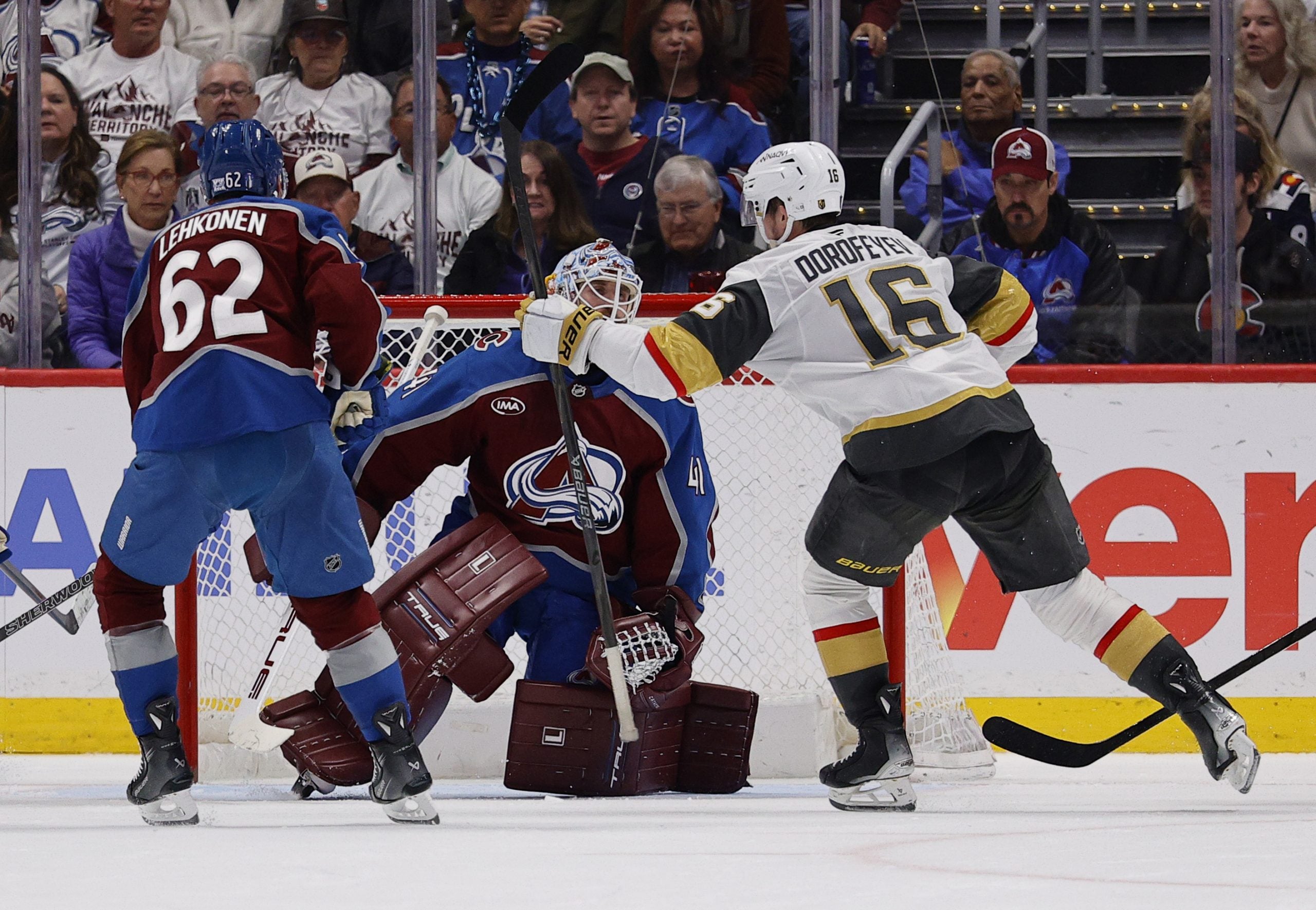
Vegas stole Game 1 at altitude, 3-1, behind a defensive template that fundamentally limits Colorado's offensive rhythm. The win didn't hinge on star power outmuscling star power—it hinged on systematic pressure in low-danger areas and goaltending performance that matters as much as the scoreline itself. Scott Wedgewood, thrust into the Series after a Game 5 relief appearance against Minnesota, allowed three goals on a manageable workload. Vegas's approach was surgical: tie up sticks, collapse lanes, force Wedgewood into perimeter saves rather than clean looks. The Avalanche's top line—MacKinnon, Necas, Landeskog—generated only one goal (a late power-play Landeskog marker). Vegas's depth contributed across the board: Dorofeyev, Howden, Coghlan, Dowd all scored. That's distribution, not variance.
The strategic pressure point heading into Game 2 is whether Colorado pivots to a different goaltender or whether Bednar backs Wedgewood for another start. If Wedgewood returns, Vegas's working thesis becomes repeatable: Wedgewood's limited playoff resume and spotty pedigree make him vulnerable to volume. His one prior playoff appearance—the Game 5 shutout finish against Minnesota—came in relief with the Avalanche already leading late. Game 1 was his first full start in a postseason setting against a team explicitly designed to test his decision-making. The Golden Knights' blocking and lane-clogging approach (Hart recorded 36 saves; the team blocked numerous high-danger chances) lowers total shot volume but increases the quality disparity between what Vegas attempts and what Wedgewood faces. Hart's .920 save percentage holds water because he's seeing cleaner looks.
Vegas's volume story is subtly different from typical "shoot more, win more" analysis. They're not flooding Colorado with 50 shots; they're engineering their 35-40 shots to come from higher-leverage areas while suffocating the Avalanche's best lines. This framework persists if Wedgewood plays Game 2. If Colorado inserts Philipp Grubauer or another alternative, the entire angle resets—a starter with higher playoff experience fundamentally changes the backpressure dynamic. The spread and moneyline already priced in Vegas's Game 1 upset; the prop adjustment lags.
For shots-on-goal modeling, the market may still be anchoring to Colorado's pre-series averages (the Avalanche generated 37.2 shots per game in Round 2 against Minnesota). Game 1 totaled 38 combined shots; Colorado fired 19. If Vegas's defensive framing holds—and Wedgewood stays in net—Colorado's shot total contracts further. The Avalanche don't need 40 shots to win; they need cleaner looks. Vegas's strategy says they won't get them. MacKinnon's six-game goal streak ended for a reason: he wasn't seeing transition opportunities or soft defensive coverage. Expect Game 2 to replicate that template if the personnel remains the same.
The Golden Knights' team total over/under is the natural prop leverage point. Vegas scored three in Game 1 on 35 shots; if they generate similar volume and efficiency in Game 2, their team total sits comfortably above a 3.0-3.5 line. The mechanism isn't that they "play well"—it's that depth scoring plus continued MacKinnon containment creates goal-scoring opportunities that a vulnerable backup can't swallow at higher rates. Hart's presence behind the blueprint (an elite playoff goalie executing a system) amplifies the edge. If Wedgewood returns and Vegas maintains their shot distribution and lane control, the over on Vegas team total carries structural support beyond recency.