Greer's Anaheim Role Sets Low-Volume Ceiling for Depth-Forward Props
By Ty Whitney ·
The Ducks traded for a depth grinder with a two-season spike in Florida; expect his scoring floor to matter more than his upside.
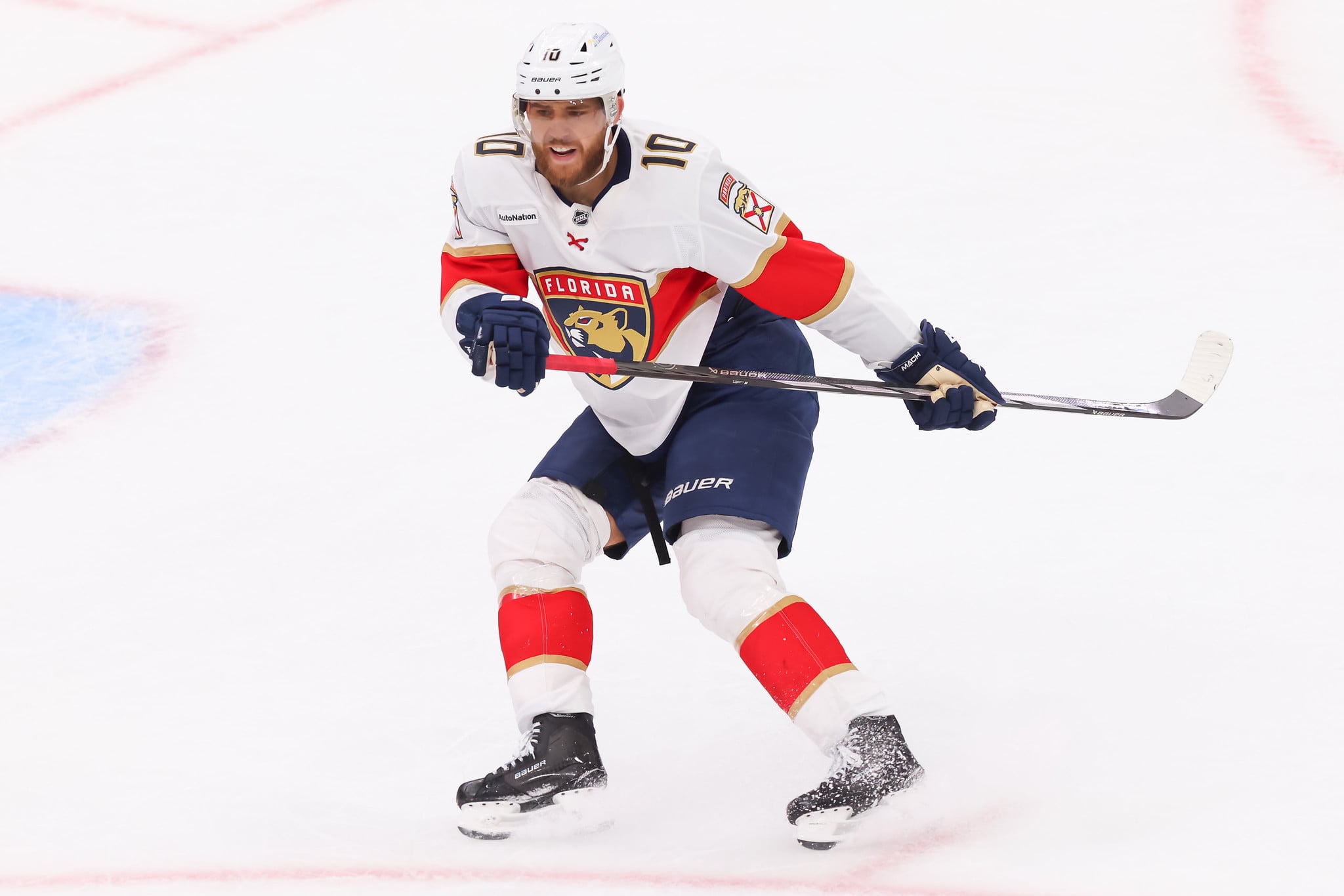
Anaheim signed AJ Greer to a four-year, $4.25 million AAV deal on July 9, 2026, acquiring his rights via trade with Florida in exchange for defenseman Radko Gudas. On paper, the timing looks smart: Greer posted back-to-back career highs with the Stanley Cup-champion Panthers in 2024-25 (17 goals, 15 assists) and 2025-26 (six goals, 11 assists in the regular season before adding three playoff points). That 32-point season in 2024-25 represents the ceiling of his offensive ceiling—nearly double any previous career high.
But context matters. Greer is 29 years old and spent most of his career as a marginal depth forward shuffled between the AHL and NHL fringe. From 2022-23 through 2023-24, he produced 12 points in 61 games with Boston and 12 points in an unspecified sample with Calgary after claiming waivers. His Florida surge coincides with playing depth minutes on a loaded roster where secondary scoring space opened up. The Ducks, rebuilding and significantly thinner on offense than the two-time defending Cup champions, will slot him in a different context: grinder role, limited power-play opportunity, fourth-line touches against teams not focused on shutting him down.
This is the key marker for prop traders. The Ducks' front office valued Greer at $4.25 million AAV—roughly league-average depth forward cost—which signals they expect him to perform at his role, not replicate a Florida-driven spike. His skating, positioning work, and physical tools are genuine, but the team's public resource allocation (a four-year deal, not a playoff rental or premium contract) telegraphs they see depth production, not secondary-scoring breakout. Over a full season with Anaheim, expect regression toward his 2022-24 profile (12-14 points per 61-game pace) rather than the 2024-25 anomaly.
For prop bettors, the angle is straightforward: Greer's goal and assist lines will likely be set assuming some carryover from his Florida totals, but the market may overshoot given the change in linemate quality and power-play exposure. His shots-on-goal rate should stabilize in the 1.8-2.2 per game range—serviceable but unspectacular. The team's commitment length (four years, not one) and the lack of premium positioning clues (no early-lineup leaks, no offseason narratives about unleashing his offense) suggest the organization expects floor performance. This is a fade-the-spike scenario: any preseason line assuming even 50% of his 2024-25 output should be vulnerable to unders as the sample grows and depth-line minutes reality sets in.