Jensen's Knee Recovery Shapes Ducks' Blue-Line Depth and Late-Season Defensive Leverage
By Erik Schwartz ·
A 35-year-old defensive anchor arrives in Anaheim mid-repair, forcing bettors to recalibrate team-total risk and goalie workload for a franchise in transition.
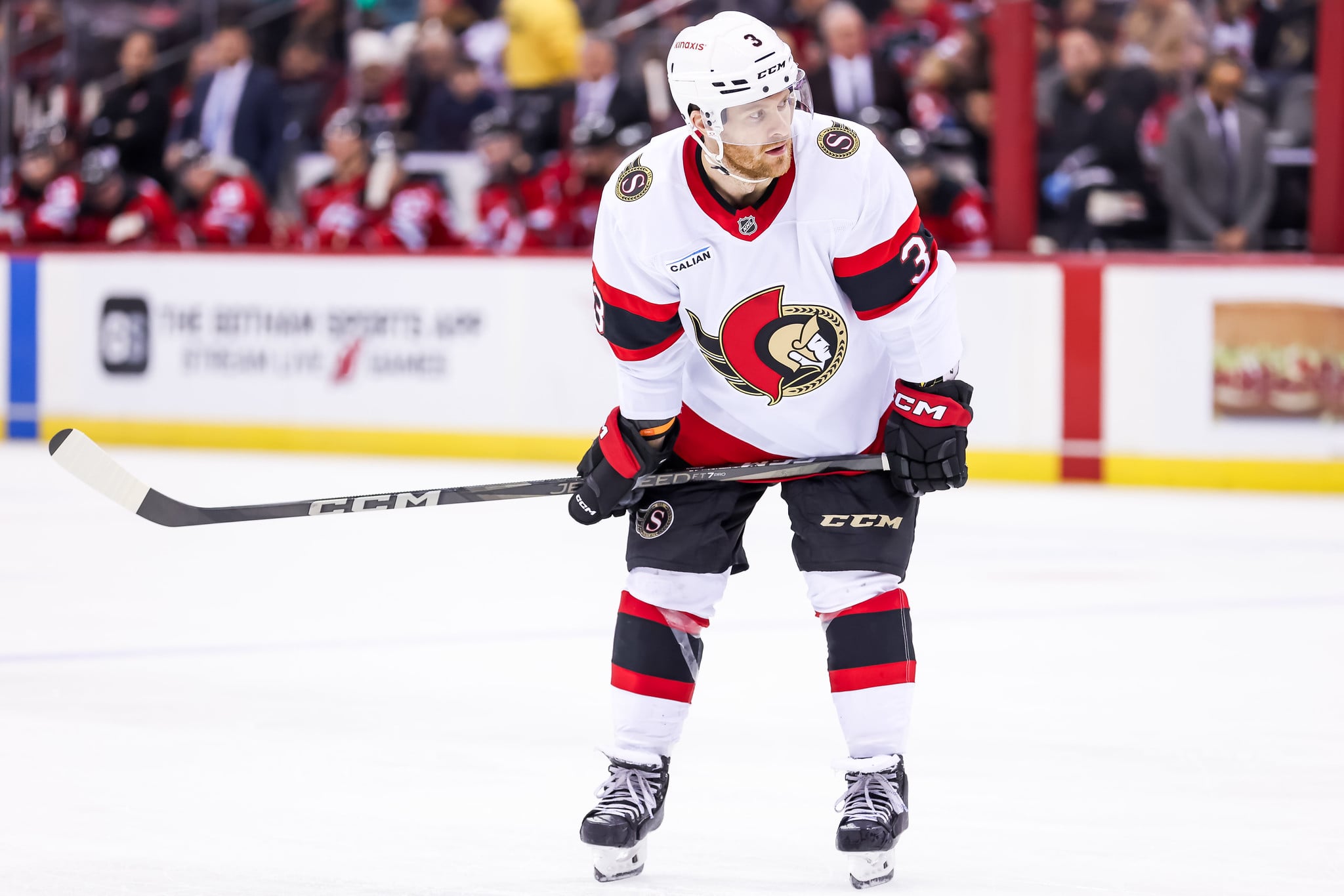
Nick Jensen signed with the Anaheim Ducks on a two-year, $2.25 million AAV deal as the free-agency window opened, landing a veteran defender whose immediate availability remains conditional. The 35-year-old underwent meniscus surgery during the 2025-26 season and appeared in only 61 games with Ottawa, posting 17 points—a significant dip from his 18-point pace in 2024-25. Per the source, Jensen is "set to join the Ducks at training camp in the fall," a qualifier that signals he will not be ready for opening night and likely will miss the first 4-8 weeks of the 2026-27 season pending final clearance.
Jensen's acquisition speaks to an acute need: the Ducks shed Radko Gudas and Jacob Trouba during the offseason, hollowing out their third-pairing depth and veteran defensive ballast at a moment when their roster skews young. In Ottawa, Jensen played 70% of his ice time alongside Thomas Chabot, and the Senators' defensive metrics notably deteriorated when he sat out games—a clear tell that his presence anchors transition defense and limits odd-man rushes. That role matters, especially for a Ducks squad that gave up 3.19 goals per game last season, well above league middle. His addition is less about adding points (he averaged 0.24 per game in 2025-26) and more about shrinking the offensive load on young defensemen who aren't ready for 23-minute nights against top lines.
The injury timeline is the actual betting variable. If Jensen returns by mid-October, the Ducks' goalie workload stabilizes faster and team defense becomes noticeably more structured; their team total and spread lines should tighten. If his return stretches into November, the team absorbs 8-12 games of elevated shot volume against their goalies and more offensive responsibility on fourth-line anchors. This is not a star-level impact—Jensen is a third-pairing, defense-first operator—but it is a measurable shift in team compositional risk. Early-season overs on Anaheim team goals should account for a defense that lacks Jensen's puck-protection discipline; once he clears medically and enters the lineup, those totals will tighten, and late-October/early-November numbers will price in a sharper unit. The market will not yet know his exact return date at season-open lineups, creating a window where early games carry inflated total expectations relative to mid-season reality.
Bettors should track Jensen's preseason participation closely. Full contact in scrimmages by late September signals an October return; limited work or DNP days suggest November. His absence from early lineups is not a story about missing one defenseman—it is a story about a team operating at reduced structural efficiency, which manifests in higher shot volumes against the goalie and tighter team-total floors.