Ducks Lock Farrell on Cheap Deal, Signal Depth Play Over Headline Talent
By Ty Whitney ·
Anaheim's swift one-year extension of Sean Farrell after acquiring him from Montreal reveals organizational patience with a sub-roster-size playmaker who may be cast as a depth scorer rather than a center-ice fixture.
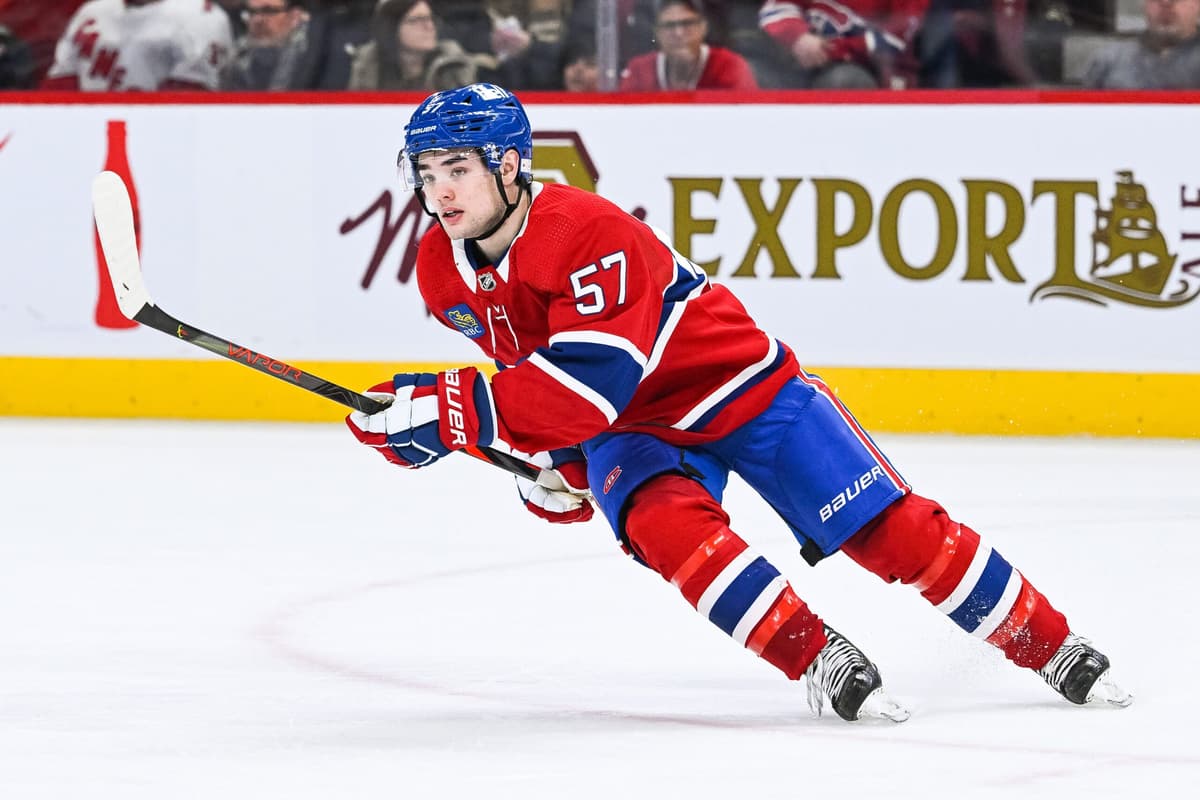
The Anaheim Ducks signed Sean Farrell to a one-year, two-way contract extension on Tuesday—one day after acquiring him from Montreal in exchange for forward Sasha Pastujov. The deal carries an $850,000 cap hit at the NHL level, a modest outlay that speaks volumes about how the organization views his immediate role. Farrell, 24, becomes a group 6 unrestricted free agent next offseason, meaning the Ducks are hedging their bets on his development rather than committing to him as part of a long-term core.
The speed of the extension—inked within 24 hours of the trade—suggests Anaheim moved fast to avoid any arbitration hassle, not because of a belief that Farrell is a foundational piece. Montreal's decision to deal him, paired with the Ducks' willingness to trade away Pastujov (a prospect with higher upside in terms of draft pedigree and size), indicates both organizations see Farrell as a solid complementary player, not a franchise cornerstone. His AHL production last season—17 goals and 36 assists in 72 games with Laval—is respectable depth-line work, but it doesn't scream elite prospect. His undersized frame (5'9", 175 pounds) limits his ceiling in a league that increasingly values size and physicality along the boards.
Farrell's pedigree includes a productive Harvard run (81 points in 58 games) and a stint at the 2022 Winter Olympics, but his 2022-23 through 2025-26 trajectory reveals a player still grinding in the minors without a legitimate NHL foothold. Six games with Montreal and two full seasons in Laval without a call-up signals the Canadiens didn't see the leap either. What Farrell does bring—crafty playmaking ability and a knack for assists (43 in 114 AHL games over two seasons)—is the kind of complementary skill set that fills fourth-line and depth-wing roles in the NHL. The Ducks are banking on him as a potential depth contributor for 2026-27, not as a guy who will log top-six minutes or drive offensive volume.
From a prop perspective, Farrell's acquisition does little to move the needle on Anaheim's team or individual player totals. He is unlikely to log enough minutes to carry meaningful assist or point props; even in a best-case scenario where he cracks the lineup regularly, his offensive floor in the NHL is likely in the 15–25 point range over a full season, assuming he gets the opportunity at all. His assists-per-game profile in the AHL (0.38 APG) doesn't translate to immediate value on Ducks team assist props. More relevantly, the trade signals that Anaheim is not investing in elite forward depth right now—they're patching roster holes with low-cost complementary talent. This should reinforce caution on Ducks team-total over bets, as the organization's forward group remains built around middle-tier production rather than high-end scorers.
The real takeaway for bettors is that Farrell is organizational noise, not a catalyst. Unless he emerges as an unexpected breakout—a small-sample variance event—his presence doesn't shift expected offensive output for Anaheim. Sharps should monitor his actual NHL icetime once the 2026-27 season begins; if he spends the year in the AHL again, the trade is purely cap-flexibility maneuvering. That's not a prop angle—it's just the market recognizing a depth move for what it is.