Sennecke's Rookie Season Rewrites Ducks History—And What It Means for Year Two Workload
By Erik Schwartz ·
Beckett Sennecke's All-Rookie Team selection caps a 60-point freshman campaign that shattered franchise records, but the leverage he's earned carries real implications for prop exposure in 2026-27.
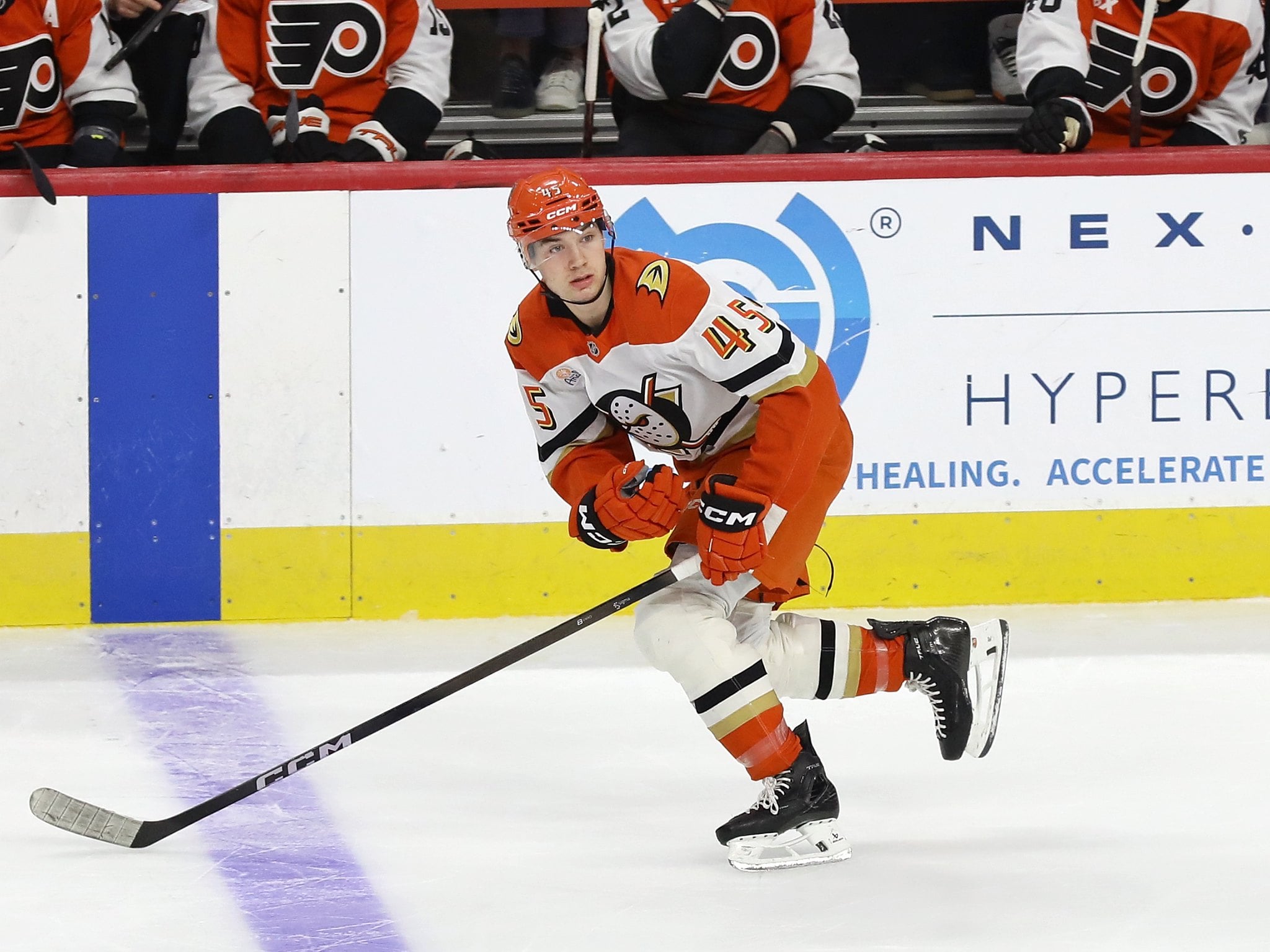
Beckett Sennecke has formally joined Anaheim's All-Rookie Team, capping a rookie season that demolished franchise benchmarks and announced him as a foundational piece. The third overall pick from the 2025 draft scored 23 goals and added 37 assists—60 points in his first professional campaign—to become the youngest Duck ever to reach that threshold in a debut or sophomore year. He did it at 19 years old, scoring 18 of those goals before turning 20. That's not incremental improvement; that's structural change to the organization's forward group.
The records underscore the velocity. Sennecke's 23 goals tied Trevor Zegras for third all-time among Ducks rookies, behind only Bobby Ryan (31) and Dustin Penner (29). His 60 points trailed Zegras' rookie record by a single point. He scored a hat trick on Jan. 25 against Calgary—the third teenager in NHL history to accomplish that feat with an overtime winner baked in. He also tied the shorthanded game-tying-goal record with a goal at 19:59 of the third, the first rookie ever to score a regulation tie-breaker in the final second. These aren't statistical flukes. They're evidence of composure, positioning, and finishing touch operating at a level the Ducks didn't anticipate arriving this fast.
The All-Rookie honor—voted by the Professional Hockey Writers Association—places Sennecke alongside Ivan Demidov (Montreal), Jimmy Snuggerud (St. Louis), Matthew Schaefer (New York Islanders, Calder winner), Alexander Nikishin (Carolina), and Jakub Dobes (Montreal) as the six standout first-year performers. He's the eighth Duck to earn the accolade, joining a lineage that includes Cutter Gauthier, Zegras, John Gibson, and Paul Kariya. That company alone signals organizational confidence in his durability and ceiling.
For prop bettors, Sennecke's trajectory carries a straightforward implication: he's now a leverage asset in Anaheim's 2026-27 season, which means his ice time, power-play deployment, and shot volume are likely to climb. Rookies who score 60 points at his age typically see increases in both usage and linemate quality in year two. His assists (37) outpaced his goals (23), suggesting he's functioning more as a facilitator than a pure finisher—a posture that favors assists-based props over goal-centric angles. Watch for Sennecke's per-game point rate to stabilize around 0.73 PPG (his rookie pace) rather than compress; teams don't pull back on players who perform at this level in their first year. That stability makes his seasonal point prop a contrarian lean if oddsmakers price it conservatively, anchored to broader rookie-year doubts that Sennecke has already dispelled.