Keefe Stays, But Devils' Coaching Shakeup Signals Reset on Goaltending Philosophy
By Erik Schwartz ·
New GM Sunny Mehta kept Sheldon Keefe behind the bench but fired the goaltending coach and reassigned a key assistant, suggesting the Devils' playoff drought stems from net management, not behind-the-bench tactics.
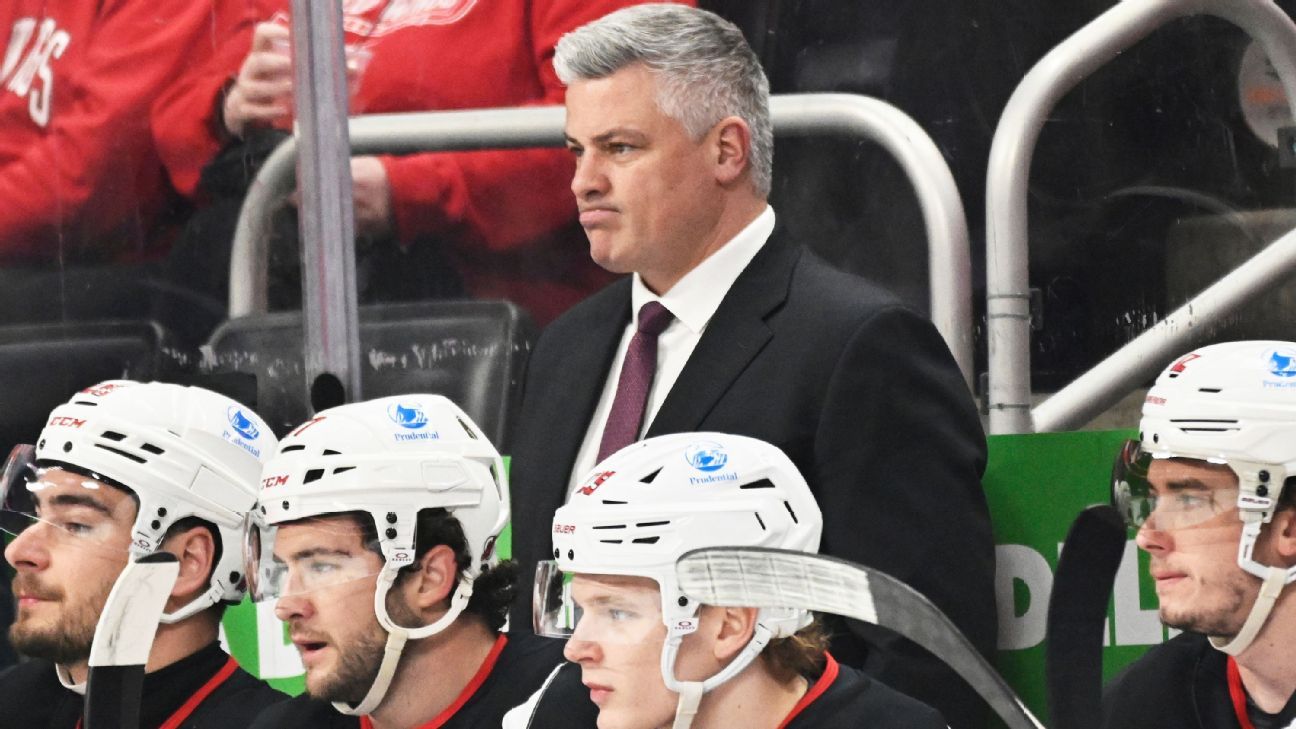
Sheldon Keefe will return as head coach of the New Jersey Devils after new general manager Sunny Mehta completed his organizational review, the team confirmed Tuesday. But Mehta's retention decision masks a surgical rebuild of the coaching infrastructure: goaltending coach Dave Rogalski was fired, and assistant Sergei Brylin was reassigned. Mehta also promoted Braden Birch, a Florida lieutenant who won back-to-back Stanley Cups with him, to assistant coach. The signal is unmistakable—this regime believes the Devils' collapse (two straight seasons out of the playoffs after a first-round exit in 2024) stems from goalie development and game-prep structure, not Keefe's systems.
Keefe's job security hinges on context that often gets overlooked in coaching carousel coverage. He inherited a roster stripped of Jack Hughes for much of last season due to shoulder surgery, a franchise centerpiece absence that would derail almost any team's playoff odds. The Devils missed the postseason by margin of games, not schemes. Mehta's decision to keep him suggests the new GM views Keefe as an upgrade over the previous regime's processes, not a liability. What matters for betting: front offices don't fire goaltending coaches and promote championship-level assistants unless they expect a meaningful swing in save percentage and goal-prevention metrics in the coming season.
Rogalski's exit is the real headline for Devils bettors. Over-the-net coaching directly influences how quickly young goalies like Jake Allen improve across leverage situations and whether the team stops bleeding goals-against in tight contests. The Devils ranked 22nd in goals against last season (3.18 per game) with inconsistent goaltending performances—exactly the diagnosis that gets a goalie coach fired after a front-office transition. Birch's arrival signals an intent to sharpen in-game adjustments and preparation depth. When a new regime makes this kind of specific, technical assistant hire—not a flashy hire of a retired veteran—it usually means they've already identified the mechanical issues and want proven fixes.
For prop purposes, this matters because team-level goaltending coaches influence individual goalie save-percentage floors and the team's total goals-against distribution. If Rogalski's replacement (Mehta hasn't announced a hire yet) brings measurable improvement to Allen's consistency or the organization's ability to manage high-danger chances, the Devils' team totals and spread exposure shifts upward through the preseason. Allen's season-long save percentage (.903 SV%) was below league average; even a 1.5-2 percentage-point improvement—entirely plausible with upgraded coaching infrastructure—moves the needle on team goals-against totals and playoff projection models by late October. The real edge appears after the new goalie coach is hired and the team begins practice; early-season lines won't price in the coaching upgrade until Devils goaltending metrics flash in preseason metrics or the first 5-10 games confirm the trend.
Mehta's broader organizational overhaul—firing longtime executives Chuck Fletcher and Dan MacKinnon alongside the coaching staff revamp—frames Keefe's retention as a vote of confidence in Keefe's adaptability, not a soft landing. Expect the Devils to operate with higher defensive structure and cleaner goaltending management from October onward. The margin of improvement is likely modest (one extra win per 10 games is the realistic ceiling for a mid-tier roster that missed by a few points), but the directional change in goal-prevention metrics should be visible in early-season samples.