Devils Trade Fourth-Rounder for Lombardi; AHL Scorer Arrives as Depth Play
By Erik Schwartz ·
New Jersey adds a productive minor-league center on the eve of the draft, signaling a roster shift toward ready-made depth over speculative upside.
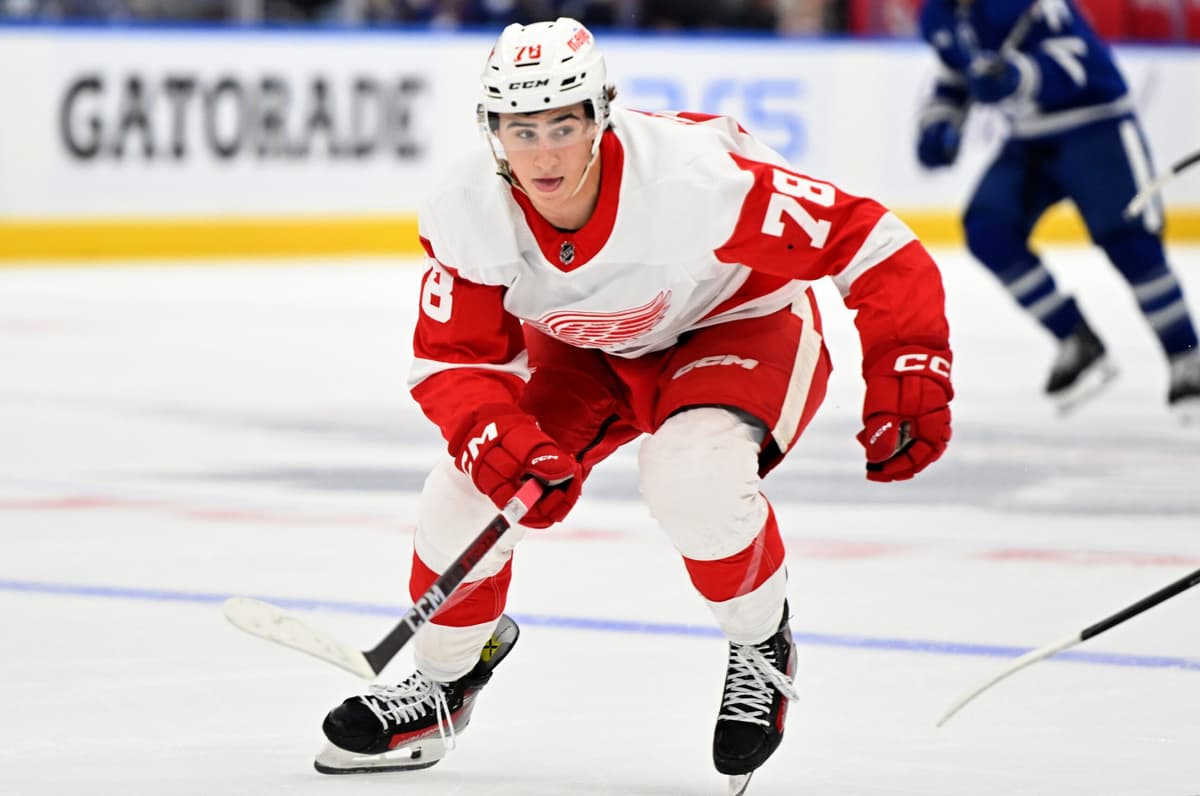
The New Jersey Devils acquired center Amadeus Lombardi from Detroit on Thursday in exchange for a fourth-round pick in this weekend's 2026 NHL Draft. Lombardi, 25, posted 42 points in 47 games with the Red Wings' Grand Rapids Griffins affiliate this season—a 73-point pace over a full minor-league slate that caught New Jersey's attention enough to trade immediate draft capital for his rights.
The trade mechanics are straightforward: Detroit gets a mid-round asset for a player who hasn't yet cracked an NHL roster on a permanent basis, while the Devils gain organizational depth in the form of a proven AHL producer. Lombardi's 0.89 points-per-game rate in Grand Rapids is respectable but not elite; this is a move designed to add organizational competency rather than secure a transformative talent. At 25, he's aging out of the typical prospect window, meaning he's being acquired as a depth fill with some chance of NHL contribution rather than as a future cornerstone.
From a roster construction standpoint, the Devils' willingness to spend a fourth-rounder signals confidence in their near-term contention window. A team rebuilding would hoard draft picks; one in immediate win-now mode trades them for controllable assets already on the professional roster. The Devils finished last season with a minus-18 goal differential and missed the playoffs, so this move suggests management sees room for marginal gains through depth additions rather than top-end star acquisition. Fourth-round picks historically produce NHL players at roughly a 35-40% conversion rate, and fewer than half of those become regulars, making the expected value of this trade dependent on Lombardi's ability to push into the NHL rotation.
From a betting perspective, Lombardi's arrival reshapes the Devils' center depth chart and carries modest implications for team-total props and goal-scoring volume. If Lombardi cracks the lineup as a third or fourth-line center—the most likely scenario—he'll lower the team's overall offensive talent but raise shot volume through increased minutes distribution. The Devils ranked 24th in goals per game last season at 2.79; adding a depth piece doesn't solve that deficit, but it may increase their shot volume modestly by spreading opportunities across a deeper roster. Prop bettors should monitor Lombardi's assignment: if he stays in the AHL to start 2026-27, the impact is near-zero. If he debuts as a regular, team totals may tick down slightly due to lower offensive firepower per player, but team shots-on-goal might tick up due to increased depth usage.
The broader angle: this is a visible signal that New Jersey views its playoff drought as fixable through depth accumulation rather than star acquisition. For team-total and spread bettors, that philosophy typically correlates with modest upside—incremental improvements rarely swing a lottery team into a playoff contender overnight. Until Lombardi demonstrates NHL-level consistency or the Devils make a more impactful acquisition at center or on the wing, the team remains a fade on over-aggressive season win totals and playoff probability props.