The Tandem Goalie Mispricing: Why Fantasy Drafters Are Paying 2013 Prices for 2026 Reality
By Ty Whitney ·
Elite crease-share splits have made the backup goalie as rosterable as the starter, but sportsbooks and fantasy drafters haven't caught up to the economics.
The ironman goaltender is extinct. Between 2009 and 2018, roughly one in four NHL netminders maintained a crease share above 75%. Today, the threshold is so rare that only one goalie cleared it last season. The modern split—a 1A on 45-50 games and a 1B on 30-plus—has become the structural default, not an exception. Teams discovered what sports science confirmed: a rested goalie in March outperforms an exhausted one in April.
This shift has created a valuation lag that matters for fantasy and, by extension, prop betting. Last season's top 12 fantasy goalies averaged just a 63.6% crease share—a number that sits squarely in the range of what would have been labeled a "strong backup" five years ago. Only 10 goalies crossed the 65% threshold; everyone else split time. The scarcity narrative that drives draft prices for "the starter" is now divorced from reality. A premium investment in a presumed workhorse nets you a 63% split, while the same capital spent on both halves of a good tandem—or the better half of two competing tandems—gives you two goalies with independent win probabilities and rest-adjusted save percentages.
The math is brutal for the traditional drafter. A top-24 fantasy goalie (12-team league) played just 56.55% of his team's crease last season. That remaining 43.45% landed on a second goaltender. On winning teams, that second option is fully rosterable. Take the Dallas-Dobes example: between Oettinger's 128.8 fantasy points and Dobes' 99.8 sits every top-tier goalie ranked 4 through 16. The gap isn't separation; it's noise. Flip two of Dobes' bad outings to quality wins and he's a top-five fantasy asset. The opposite scenario—Oettinger hits a injury wall—and Dobes becomes the collateral beneficiary of elevated volume. Both outcomes are live.
For prop bettors, this tandem reality reshapes goalie save and shutout projections. Markets still price individual goalies as though they're eating 60-65 games. They're not. A goalie drafted in the 60-80 range is likely to see 40-50 games and 50-60% of his team's shots, not 65-70%. That compressed volume depresses shutout and "anytime winner" pricing but potentially lifts save percentage line values, since rest-sharpened goalies face fewer high-danger situations per game. The angle isn't to target the starter; it's to identify the tandem where both halves are healthy and the team is playoff-bound. That's where you find pricing disconnects—market overvalues the 1A on name recognition while undervaluing the 1B's win equity.
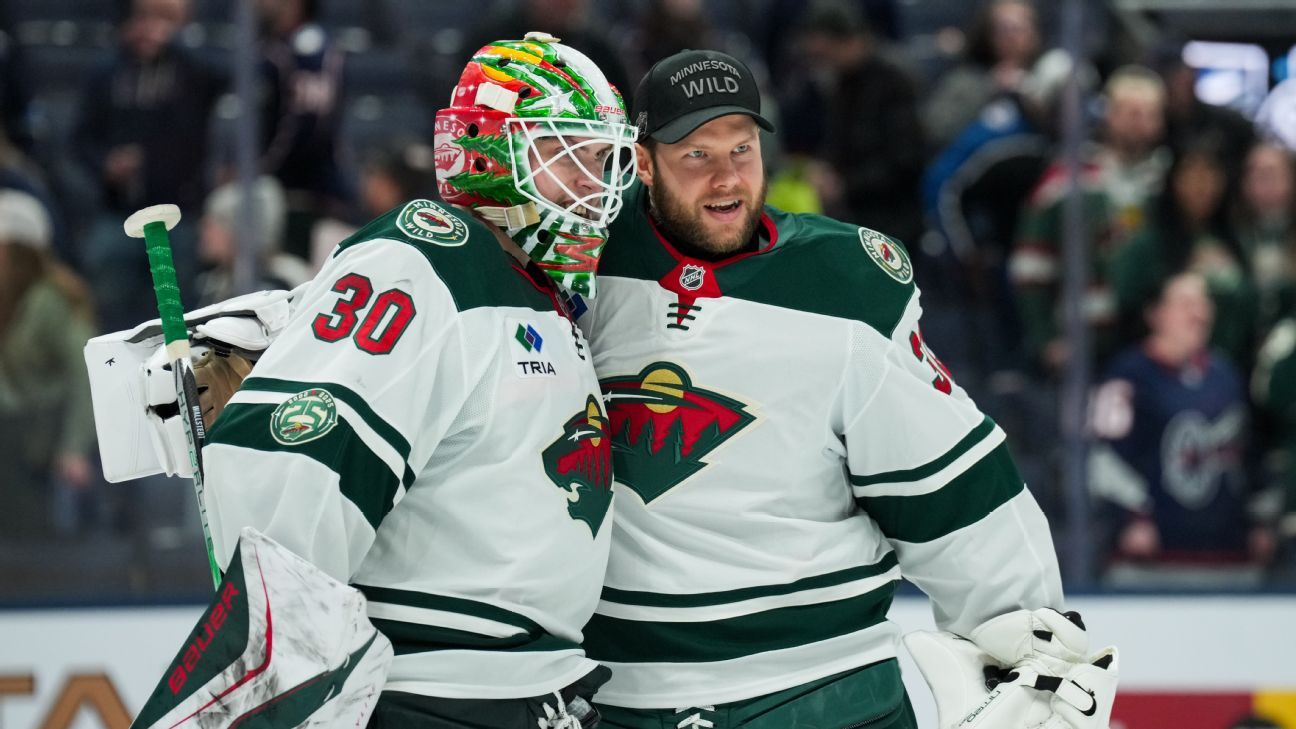
Minnesota's pairing of Jesper Wallstedt and Filip Gustavsson exemplifies the template. Both are underdrafted relative to their expected role and rest pattern. Neither is a "reach for the starter" candidate, yet together they represent more draft-value density than paying up for a single 65-game workhorse. That's the PropBetEdge bet: don't take the crease-share leader; take the tandem from a good team where both goalies project healthy and the market still prices one of them as lottery-ticket depth.