Canucks Retain Thompson on Bridge Deal, Signaling Stability on the Blue Line
By PropBetEdge Editorial Team ·
Vancouver's new GM keeps a mid-season acquisition around, betting that internal continuity matters more than a full roster reset.
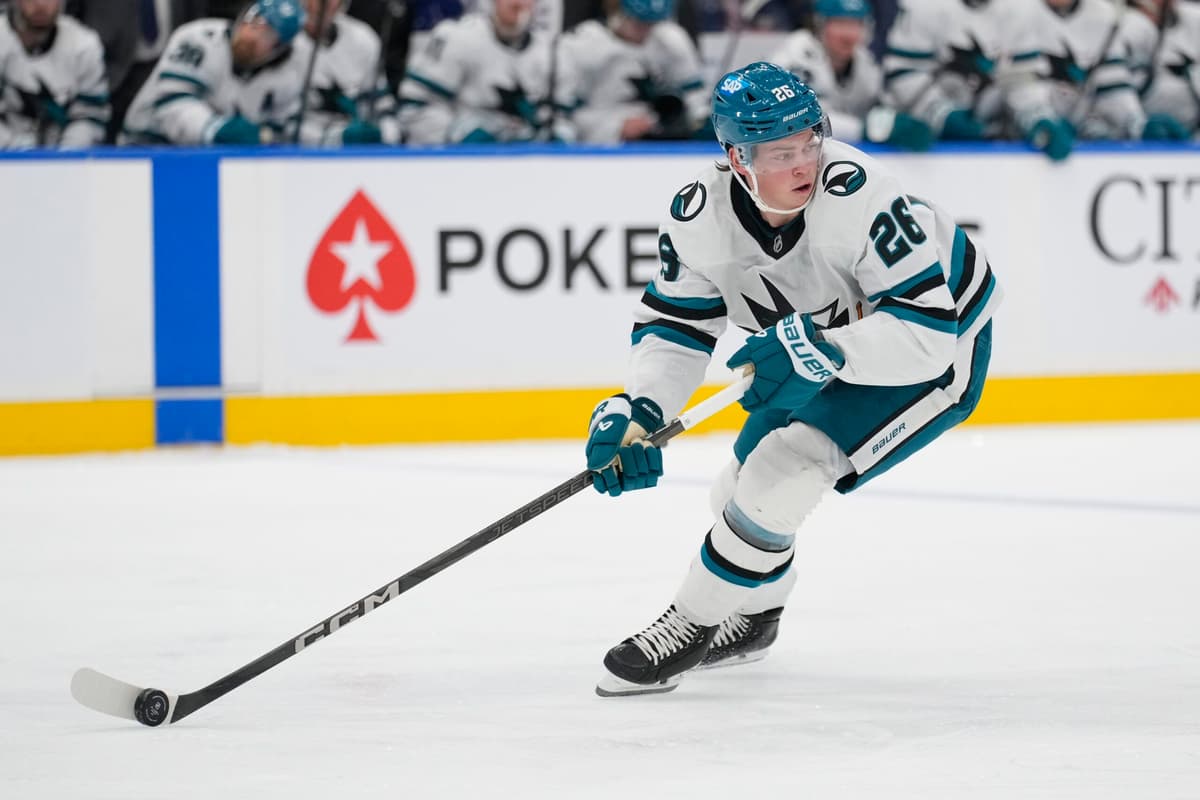
The Vancouver Canucks signed defenseman Jack Thompson to a one-year, two-way contract on Friday, retaining the blueliner they acquired at last season's trade deadline under the previous regime. The move comes as new general manager Ryan Johnson begins his tenure, a signal that despite organizational turnover, the club isn't dismantling proven roster pieces wholesale.
Thompson, 26, arrived in Vancouver in March 2025 as a depth defenseman acquired in a relatively modest trade with San Jose. He slots into the lower-pairing mix, a depth piece rather than a cornerstone, but the fact that Johnson chose to re-sign him over letting him hit restricted free agency speaks to a philosophy: continuity on defense can stabilize everything else. The two-way contract nature also gives Vancouver flexibility—if the salary-cap math tightens or if Thompson struggles early, the team can shuttle him to the AHL without losing him entirely.
The broader context matters here. New regimes often feel pressure to cleanse the roster, but Johnson's decision to retain Thompson suggests he's evaluating talent on merit rather than authorship. Thompson logged roughly 15 minutes of ice time per game during his stretch with Vancouver last season, a reliable third-pairing contributor who doesn't require top-six matchups. That floor-level stability is often overlooked in betting markets, which fixate on star power and dramatic trades.
For Canucks prop bettors, this changes the calculus on team defensive metrics. A consistent third-pairing presence—even a modest one—reduces variance in expected goals against and shots conceded. If Thompson holds that role and doesn't compete for additional minutes, Vancouver's team total shot-against projections should narrow. The market may initially misprice this as "just a depth signing," but teams with stable third-pair defenders allow fewer high-danger chances than rosters with rotating plug-and-play options. Shots against and team totals involving the Canucks should gravitate toward unders early in the 2026-27 season, assuming Thompson maintains that consistent deployment.
The one-year term also tells you Vancouver isn't committing long-term assets to him—if he underperforms or the team trades him mid-season, no anchoring contract penalty follows. That flexibility keeps the door open for further moves without sunk cost bias clouding judgment. In terms of betting implications, that means the Canucks retain optionality on their blue line, which favors defensive stability and lower-variance shot totals over a season of uncertainty.