Pettersson's No-Move Clause Locks Vancouver Into a Standstill
By PropBetEdge Editorial Team ·
The Canucks' trade chatter around Elias Pettersson and Brock Boeser masks a hard contractual reality: neither player has to leave, which means the franchise can't rebuild on command.
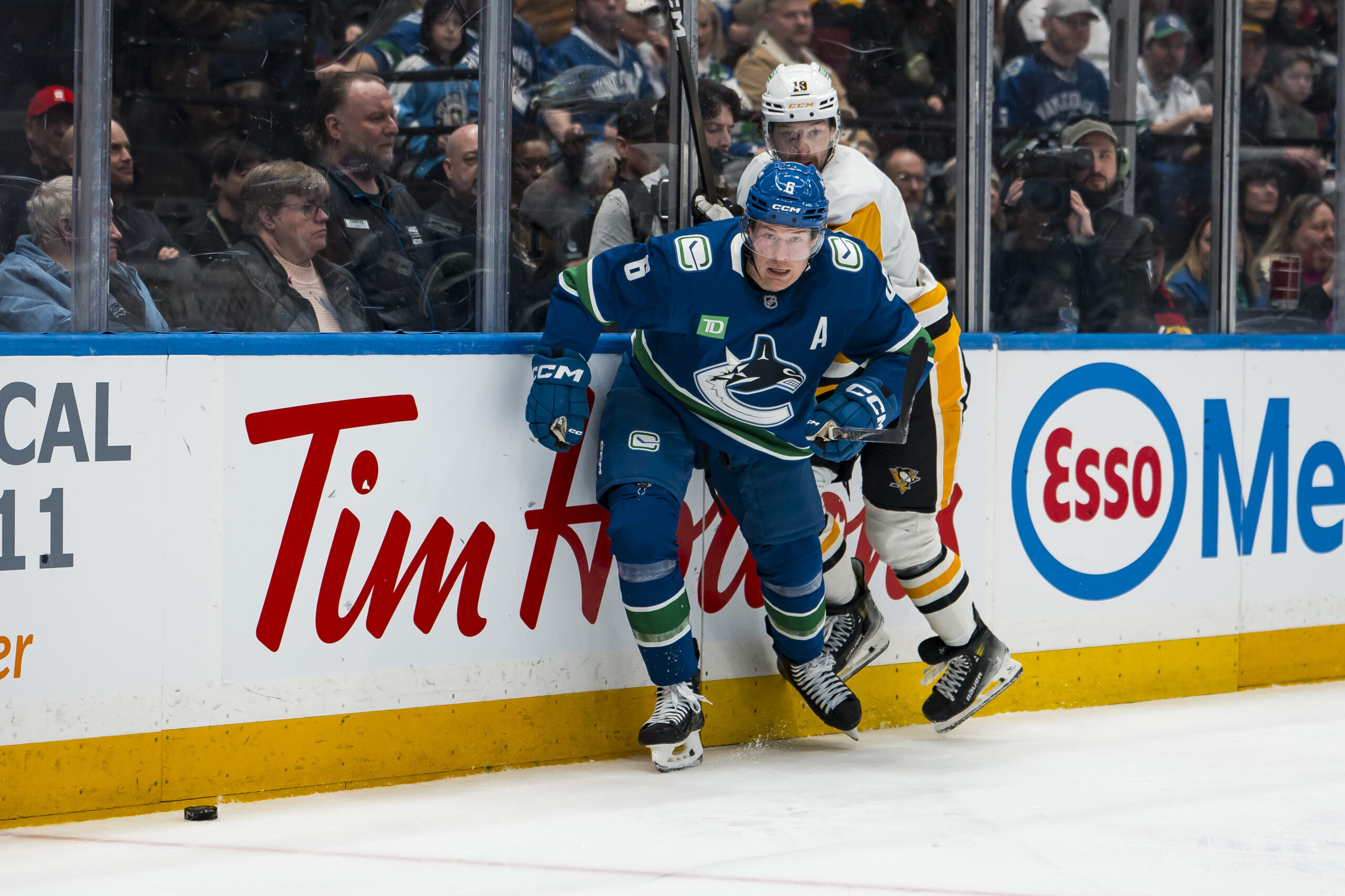
Vancouver's offseason whisper campaign—that the Canucks should trade Elias Pettersson and Brock Boeser to reset the roster—collides with a structural barrier the market doesn't always respect: player control. Pettersson locked in an eight-year deal with a no-move clause when he signed in March 2024, and he holds the keys to any deal involving him. The Canucks can explore interest from other teams all summer. None of it matters if Pettersson declines to waive.
The precedent sits right in Vancouver's own history. Alexander Edler held similar leverage, faced the same pressure to move, and simply chose to stay—so thoroughly that he recently joined the organization's development department. Pettersson is experiencing the same dynamic now. The gap between "teams interested in trading for Pettersson" and "teams Pettersson is willing to join" is not a minor detail; it's the entire negotiation. If the Swede isn't sold on relocating, the Canucks either absorb a fire-sale return or commit to reconstructing his role and confidence in-house.
Boeser complicates the picture differently. He appears in trade speculation partly because he's tradeable—veteran right wing, cap-friendly $7.25M hit through 2031, experience in the market. But reporting suggests he wants to remain in Vancouver. That preference doesn't lock the Canucks into keeping him, but it does shift the calculus. Shipping out a player who's opted to stay is the kind of move that corrodes locker-room culture. It signals that loyalty isn't reciprocated, a message that travels fast in a league where player movement is constant and agents talk freely.
For bettors, the implication is structural: Vancouver's cap structure and forward depth are unlikely to experience the dramatic roster churn that whisper campaigns suggest. Pettersson's production volatility has historically made him a difficult player to model on single-game props—his game-to-game shot volume and assist totals fluctuate sharply—but the constancy of his presence in Vancouver means his linemate assignments and role won't shift as drastically as a midseason trade would require. Boeser's goal-scoring streaks remain similarly anchored. Neither player's point-pace or shot volume should be priced with elevated risk of mid-season departure. The market may overcorrect if rumors accelerate; bettors should resist chasing volatility that organizational structure doesn't support.
This isn't a story about rebuilding futures or trade value in the marketplace. It's a story about organizational limitations: Vancouver signed two cornerstone players to long-term deals, one of whom carries contractual exit rights, and now faces the reality that intention and execution are not the same thing.