Canucks Strip Down for Rebuild: Aman's Exit Opens the Lineup, Malhotra's Arrival Sets Long-Term Bets
By Erik Schwartz ·
Vancouver is clearing veteran depth to make room for a top-three prospect with elite credentials—a structural shift that will reshape both short-term and long-term win totals.
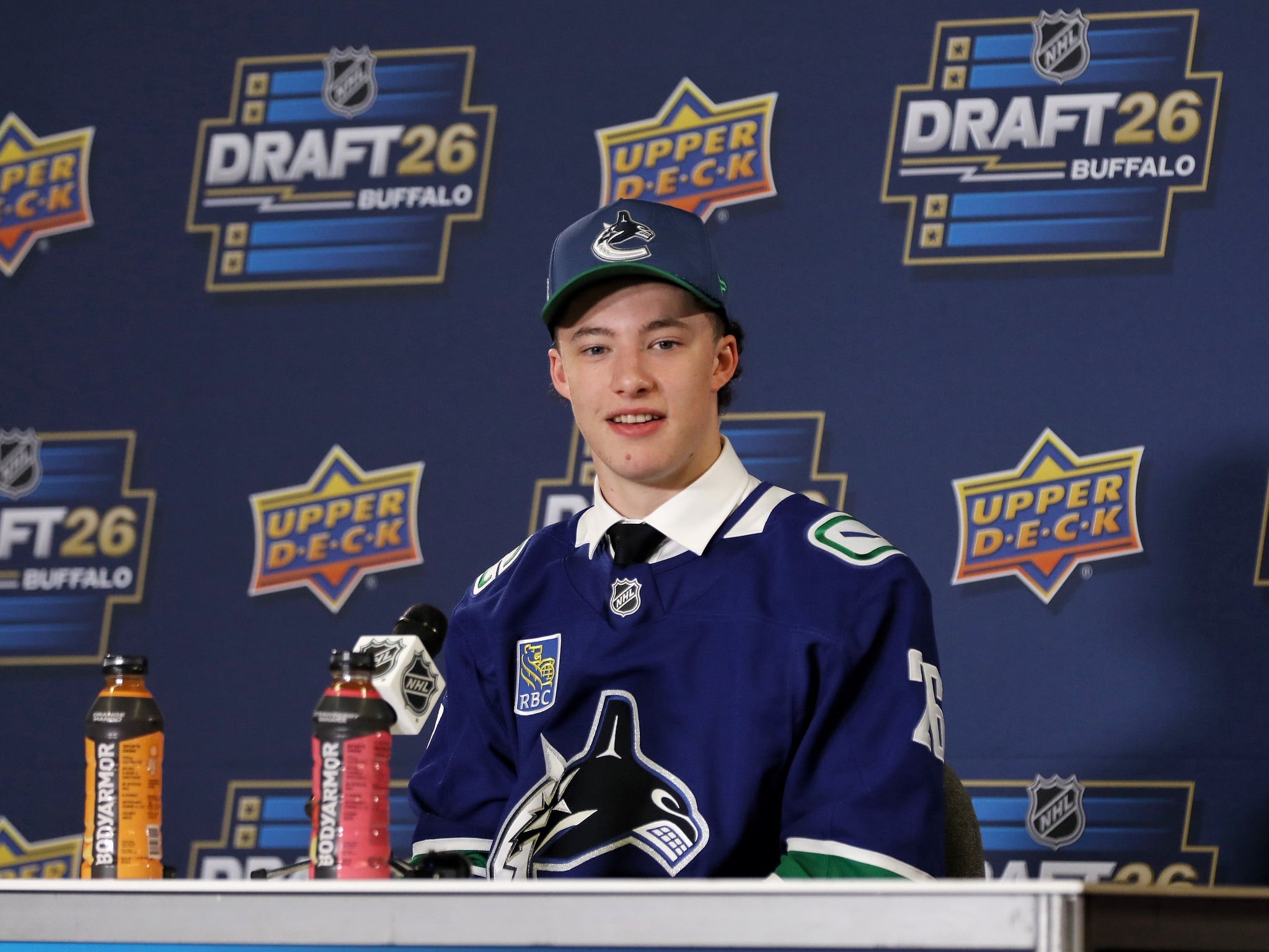
The Vancouver Canucks are executing a deliberate organizational pivot. Nils Åman, a 26-year-old centre who spent four seasons in the system, is leaving as an unrestricted free agent and has signed a three-year deal with Swedish Hockey League club Djurgården IF. In his final season with Vancouver, Åman appeared in just two NHL games, spending most of 2025–26 with the AHL affiliate in Abbotsford. His departure is not about losing a productive player—it is about making intentional space for the next wave.
Åman's NHL tenure never quite delivered on the promise Vancouver saw when it signed him as a free agent in 2022. He compiled 132 games with the organization, posting career highs of four goals and 16 points during his rookie season. That offensive ceiling was always the constraint. A centre with solid size, skating mechanics, and defensive responsibility cannot anchor a depth line if he cannot produce at even a third-line pace. The Canucks have decided the experiment is over. For Åman, the return to Sweden at 26 represents a reset rather than a retirement—his production environment changes, but his age still permits a genuine comeback arc if a strong SHL season opens European doors back toward North America.
The real story is on the incoming side. Caleb Malhotra, selected third overall in the 2026 NHL Draft, is already receiving comparisons to franchise cornerstones like Trevor Linden and Dale Tallon. Those comps are not about on-ice accomplishment—Malhotra has yet to play an NHL game—but rather about the scope of his toolkit: skill, hockey intelligence, leadership presence, and a strong British Columbia pedigree. The fact that he is the son of head coach Manny Malhotra adds organizational alignment and narrative weight, but the scouting language around Malhotra's two-way completeness is what matters for lineup construction. This is a prospect the Canucks believe can anchor a top line, not occupy depth.
For betting purposes, the Malhotra effect has immediate and delayed components. In the short term—the 2026–27 season—expect the Canucks' win total to face downward pressure. A prospect, no matter how elite, takes time to translate college or junior-level dominance into 82-game NHL consistency. Vancouver is entering a season where Malhotra will be learning the speed and leverage of professional play, and the organization has signaled it is prioritizing development over immediate contention by clearing out depth bodies like Åman. That structural honesty usually correlates with lower win totals than a team still in denial about its window. The market may not immediately reprice Vancouver's O/U if it assumes Malhotra is plug-and-play; he is not.
Longer-term, if Malhotra develops as advertised—and his pedigree suggests a 60+ point ceiling within three seasons—Vancouver's win total for 2028–29 and beyond will be a contrarian value bet. The Canucks are building a clear timeline. Teams that strip assets and make space for elite young talent in July often look prescient by year three. For now, unders on Vancouver's 2026–27 total and overs on their 2029–30 total represent the market's most likely slow adjustment to a franchise in genuine transition.